




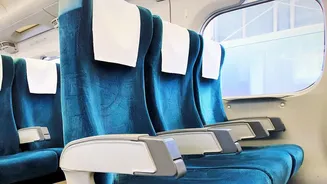

Anyone who has travelled on an Indian train knows the silent lottery of berth allocation. Get a side berth, and you brace for a night of compromise and discomfort. But a proposed new layout aims to change that narrative for good.
The Unspoken Hierarchy of Berths
In the world of Indian
Railways, not all berths are created equal. There is a clear, unspoken hierarchy understood by millions of passengers. At the top are the coveted lower berths, offering convenience and easy access. The upper berths provide a sense of privacy and uninterrupted sleep. And then there are the side berths. Specifically, the side-lower berth, which often feels like drawing the short straw in the great Indian train journey lottery. For decades, travellers have quietly accepted their fate, contorting their bodies to fit the awkward dimensions and uneven surfaces. It’s a shared cultural experience, a minor hardship that bonds strangers in mutual understanding. This collective sigh of resignation upon being allotted a side berth is precisely what a new wave of design thinking aims to eliminate, promising a future where every ticket holder gets a comfortable ride.
Anatomy of an Uncomfortable Night
What exactly makes the side-lower berth so notoriously uncomfortable? The problem lies in its dual-purpose design. By day, it functions as two seats facing each other. By night, the backrests of these seats are flipped down to supposedly form a flat bed. The reality, however, is a berth split in the middle by a jarring gap. This gap becomes the central point of discomfort, creating an uneven surface that puts pressure on the spine and hips. Compounding the issue is the berth's slightly shorter length and reduced width compared to its main-cabin counterparts, leaving taller passengers with their feet dangling in the aisle. Add the constant foot traffic, the noise from the coach entrance, and the rattling of the doors, and you have a perfect recipe for a restless night. It's a design that prioritises daytime utility over nighttime comfort, a trade-off that passengers have long wished they didn't have to make.
Reimagining the Entrance-Side Space
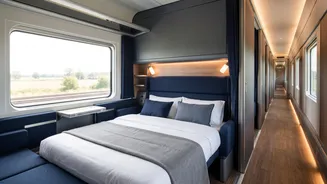
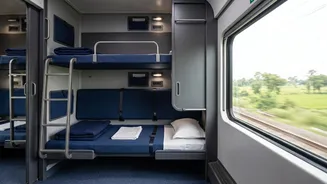
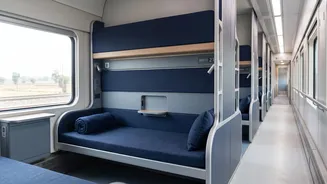
The proposed new layout tackles the core problem head-on. Instead of the flawed two-piece folding system, innovative concepts introduce a more elegant solution. One popular idea features a single, solid bench for daytime seating. When it's time to sleep, a continuous, cushioned slab slides out from underneath, creating a seamless, gap-free surface. Another approach involves a dedicated, single-piece bed that does not need to be converted from seats at all, offering a permanent, comfortable sleeping area. These designs not only eliminate the infamous gap but also often incorporate features like extra padding and a slight increase in width. Some concepts even include small personal touches like dedicated charging points and foldable snack trays, transforming the neglected side berth into a desirable spot. The goal is simple yet revolutionary: to provide a uniform, comfortable sleeping surface that feels like a proper bed, not an afterthought.
More Than Just a Good Night's Sleep
The benefits of such a redesign extend far beyond just comfort. For elderly passengers and those with chronic back pain, a flat, supportive surface is not a luxury but a necessity. The current design can be a significant physical hardship, turning what should be an enjoyable journey into a painful ordeal. A redesigned berth would offer them greater dignity and accessibility. For families travelling with small children, a gap free bed means a safer space for a child to sleep without the risk of falling into the crevice. It would also improve overall passenger experience, potentially reducing the minor conflicts and requests for seat exchanges that often arise from berth allocation. Ultimately, a comfortable journey leads to a happier, more rested passenger, improving the overall quality and perception of train travel in India.
The Long Road to a Revamped Ride
While these innovative designs spark hope, it is important to set realistic expectations. As of now, these new layouts are largely in the conceptual and prototype stage. Indian Railways has not announced an official, systemwide rollout or a firm timeline for implementation. The logistical challenge is immense; retrofitting the thousands of sleeper coaches currently in circulation across the countrys vast network would be a monumental undertaking, requiring significant time and financial investment. Any large scale change will likely be introduced gradually, perhaps appearing in newly manufactured coaches first before any older ones are considered for an upgrade. This innovation should be seen as a promising glimpse into the future of train travel, rather than a change you can expect on your next journey.