
Why a Strong Core Matters
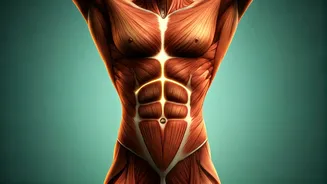
Before you get down on the mat, it’s important to understand what you’re working towards. Core strength is about much more than a flat stomach. Your core muscles—which include your abs, obliques, and lower back—act as the central support system for your entire
body. A strong, stable core provides a solid foundation for almost every movement you make, from walking up the stairs to lifting groceries. The benefits are immense: it dramatically improves your posture, helps alleviate and prevent chronic lower back pain, enhances your balance and stability, and boosts your performance in other sports and physical activities. Think of it as building a natural, internal corset that supports you throughout the day.
Mastering the Perfect Plank Form
Form is everything when it comes to planking. Holding a plank incorrectly won't give you the benefits and can even lead to injury, particularly in your lower back. To perform a standard elbow plank correctly, start by lying on your stomach. Place your forearms on the floor with your elbows directly under your shoulders and your hands facing forward. Lift your hips off the floor, keeping your back flat and your body in a straight line from your head to your heels. Engage your abdominal muscles by pulling your belly button towards your spine. Avoid the two most common mistakes: letting your hips sag towards the floor, which strains the lower back, or pushing your hips up too high, which reduces the engagement of your abs. Your gaze should be on the floor just in front of your hands to keep your neck in a neutral position.
Your 10-Day Plank Challenge Schedule
Consistency is the goal, not immediate perfection. This schedule is a guideline; listen to your body and adjust as needed. The aim is to hold a perfect plank for the specified time. If you need to, break it down into smaller sets (e.g., two 15-second holds instead of one 30-second hold). * **Day 1:** 20 seconds * **Day 2:** 20 seconds * **Day 3:** 30 seconds * **Day 4:** 30 seconds * **Day 5:** 40 seconds * **Day 6:** Rest Day or a light 30-second hold * **Day 7:** 45 seconds * **Day 8:** 45 seconds * **Day 9:** 60 seconds * **Day 10:** As long as you can hold with good form! Remember to breathe steadily throughout the hold. Don't hold your breath, as this can increase blood pressure and reduce stability.
Introducing Variations for Better Results
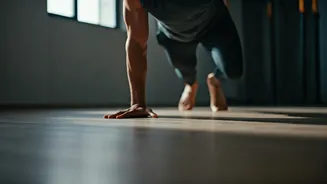
Once you feel comfortable with the standard elbow plank, introducing variations can challenge your muscles in new ways and prevent boredom. This helps in developing a more well-rounded core. **Side Plank:** This variation is fantastic for targeting your obliques (the muscles on the sides of your abdomen). Lie on your side with your elbow directly beneath your shoulder. Lift your hips until your body is in a straight line. Hold for half of your daily time on each side. **High Plank:** This is the top position of a push-up, performed on your hands instead of your forearms. Your hands should be directly under your shoulders. This variation engages your shoulders and chest more. Try alternating between these variations every other day to keep your routine fresh and effective.
Beyond Day 10: Building a Lasting Habit
Congratulations on completing the 10-day challenge! While you may not have achieved 'ultimate' core strength in such a short time, you have built something far more valuable: a foundation and a habit. The key to long-term strength is consistency. Don't stop now. Your next step is to integrate planking into your regular routine. You can aim for three to four plank sessions a week, continuing to slowly increase your hold time or the number of sets. You can also explore more advanced variations like plank jacks, planks with leg raises, or using a stability ball. This 10-day challenge isn't the finish line; it’s the starting block for a stronger, healthier you.