

Safety Above All Else
Sending humans to space is an endeavor where there is no margin for error. For ISRO's ambitious Gaganyaan programme, astronaut safety is the single most important driver of the mission timeline. Every component, from the launch vehicle to the crew capsule,
must be tested, re-tested, and certified to be 'human-rated'. This philosophy of absolute safety is why the mission has progressed in a deliberate, step-by-step manner. In recent months, ISRO has successfully completed thousands of ground tests and several critical qualifications for the crew module's systems. This exhaustive process ensures that when the Vyomanauts—India's astronauts—finally board the spacecraft, every foreseeable risk has been mitigated through relentless engineering and validation.
The Ultimate Escape Plan
One of the most critical safety components of any human spaceflight mission is the Crew Escape System (CES). This is essentially a high-powered ejector seat for the entire astronaut capsule, designed to pull the crew to safety in the event of an emergency during launch. ISRO spectacularly proved the effectiveness of its CES during the Test Vehicle Abort Mission-1 (TV-D1) in October 2023. During this test, a simulated anomaly triggered the CES, which fired its powerful motors to jettison the crew module away from the rocket. The module then deployed its parachutes and made a soft, controlled splashdown in the Bay of Bengal, demonstrating that the escape plan works flawlessly under real-world conditions. This successful trial was a monumental confidence booster for the entire Gaganyaan team.
The Road to Orbit
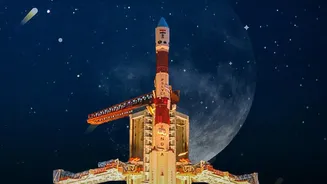
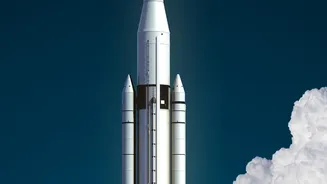
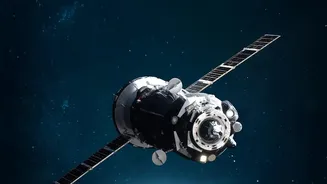
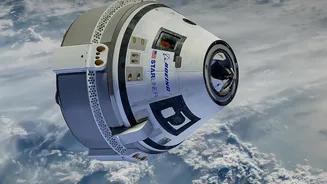
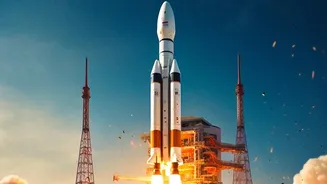
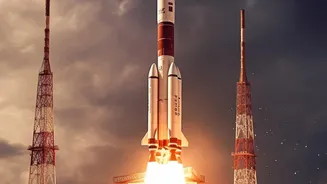
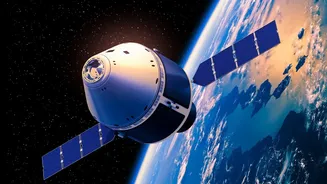
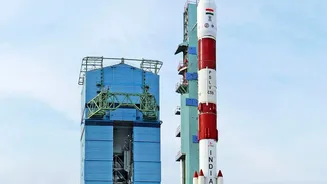
The Gaganyaan mission's objective is to launch a crew of three into a 400 km orbit for a mission lasting up to three days, and bring them safely back to Earth. To achieve this, ISRO is using its most powerful and reliable rocket, the Geosynchronous Satellite Launch Vehicle Mark III (GSLV Mk III), which has been specially modified and human-rated for this mission, now known as the Human Rated LVM3 (HLVM3). The spacecraft itself, called the Orbital Module, consists of the Crew Module where the astronauts will live and the Service Module that houses the propulsion and power systems. The journey to this point has involved years of dedicated development, including the successful Crew Module Atmospheric Re-entry Experiment (CARE) in 2014, which tested the capsule's ability to withstand re-entry into Earth's atmosphere.
Meet the Vyomanauts and Their Robotic Companion
At the heart of this technological endeavor is the human element. Four decorated Indian Air Force test pilots have been selected as the nation's first astronaut-candidates: Group Captain Prashanth Balakrishnan Nair, Group Captain Ajit Krishnan, Group Captain Angad Pratap, and Wing Commander Shubhanshu Shukla. These 'Vyomanauts' (from the Sanskrit word 'Vyom' for space) have undergone extensive training in Russia and are continuing mission-specific preparation in India. However, before they fly, a humanoid robot named Vyommitra will venture into space on the uncrewed test flights. Vyommitra, meaning 'space friend' in Sanskrit, is designed to simulate human functions, operate switch panels, and monitor the cabin environment, ensuring all systems are perfectly tuned for human presence.
What Comes Next?
With many ground and system-level tests now complete, ISRO is gearing up for the final phase of validation: uncrewed orbital flights. The first of these, the G1 mission, is slated for launch in the coming months. This mission, carrying Vyommitra, will be an end-to-end test of the launch vehicle, orbital module, and re-entry systems. Following the successful completion of at least two uncrewed validation missions, ISRO will give the green light for the historic crewed flight. The first human spaceflight, Gaganyaan-H1, is currently targeted for 2027. This mission will make India the fourth country in the world—after the United States, Russia, and China—to possess independent human spaceflight capability, a landmark achievement for the nation.