








Why Thunder Frightens Your Pet
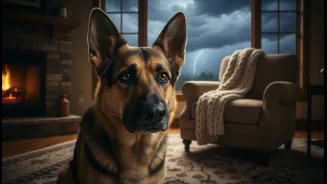
For pets, a thunderstorm is a multi-sensory assault. It’s not just the deafening booms of thunder that are frightening. Dogs and cats have hearing far more sensitive than our own, allowing them to detect the low-frequency rumbles of an approaching storm long
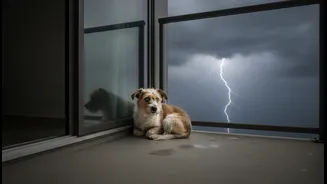
before we can. But the fear goes beyond noise. Many animals can sense changes in barometric pressure, which can be unsettling. Furthermore, the buildup of static electricity in the air can cause an uncomfortable tingling sensation in their fur, and they may even receive small, startling shocks if they touch a metal object with their nose. This combination of loud noises, flashing lights, pressure changes, and physical discomfort can create an overwhelming sense of panic.
The Real Risks of Storm Phobia
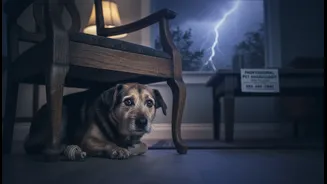
A pet’s reaction to this intense fear isn't always just trembling under a bed. For many, the instinct is to escape. A panicked dog or cat will often try to flee from the perceived threat, leading to destructive behaviours like chewing through drywall, scratching at doors, or breaking through windows in a desperate attempt to get away. This creates a significant risk of the pet becoming lost, injured, or worse. Even if they don't escape, the intense stress can manifest in other ways, such as excessive panting, drooling, pacing, or inappropriate soiling inside the house. Ignoring this phobia can allow it to worsen over time, making each storm a more traumatic event for your companion.
Selecting the Perfect Safe Haven
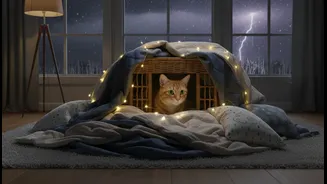
The key to managing this fear is to provide a space where your pet feels protected and in control. This “safe haven” should be a place they can retreat to willingly. The ideal location is often a small, enclosed, and insulated area of your home where the storm’s effects are minimized. A room without windows, like a basement, a large closet, or an internal bathroom, can be perfect. These spots naturally muffle sound and block out the startling flashes of lightning. If you use a crate, you can make it the centerpiece of the safe zone. The most important factor is that the pet can access it freely; never force them into the space, as this will only increase their anxiety.
How to Create the Comfort Zone
Once you’ve chosen a location, it's time to make it comfortable. Fill the space with familiar and reassuring items. A soft bed or their favourite blankets are a must. Include a few beloved toys to serve as a distraction. An article of your clothing, such as an old t-shirt, can also be incredibly soothing, as your scent provides a sense of security. Make sure a bowl of fresh water is available. To further insulate from the storm, you can play calming background noise, like classical music or a white noise machine, which can help mask the sound of thunder. Some owners also find success with pressure wraps or thunder shirts, which apply gentle, constant pressure that can have a swaddling, calming effect on some animals.
Training for a Calm Response
A safe zone is most effective when your pet already has a positive association with it before the sky turns dark. Encourage your pet to use the space during calm weather by leaving treats or new toys inside. Let them see it as a pleasant place for a nap or quiet time. This process of positive reinforcement is crucial. You can even practice by playing recordings of storm sounds at a very low volume while they are in their space, gradually increasing it over time as long as they remain calm. The goal is to desensitize them to the sounds of a storm, teaching them that their safe haven is a place of peace, no matter what is happening outside. Punishing a fearful pet will only confirm that there is something to be afraid of and will make the anxiety worse.