





The Foundation: Compound Movements
The secret to an efficient workout in a small space is focusing on compound exercises. These are movements that engage multiple muscle groups simultaneously, giving you the most bang for your buck. Think of exercises like squats, push-ups, and lunges
as the bedrock of your routine. A single set of squats works your quadriceps, hamstrings, and glutes while also engaging your core for stability. Similarly, a push-up targets your chest, shoulders, and triceps, all while demanding core strength. By building your workout around these foundational movements, you ensure a full-body workout that builds functional strength without needing to switch between different machines or stations. This approach saves time and space, making it perfect for home fitness.
Build Your Upper Body Power
You don't need weights to sculpt a strong upper body. The classic push-up is your best friend here, and it's incredibly versatile. If a standard push-up is too challenging, start with incline push-ups against a wall or sturdy table. As you get stronger, you can progress to doing them on your knees, and finally to a full push-up on your toes. To target your shoulders and triceps more directly, try pike push-ups, where you raise your hips into an inverted 'V' shape and press down. For your triceps, dips using the edge of a chair or even the floor are highly effective. These variations ensure you're continuously challenging your muscles, which is key to seeing results.
Forge Lower Body Strength
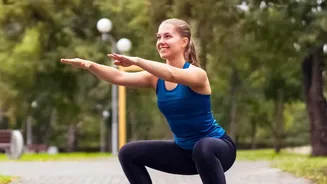
Your legs are your largest muscle group, and training them is crucial for overall fitness and metabolism. Bodyweight squats are the cornerstone of any lower-body routine. Focus on proper form: keep your chest up, back straight, and lower your hips as if sitting in a chair until your thighs are parallel to the floor. Lunges are another fantastic exercise because they train each leg independently, which helps improve balance and correct strength imbalances. You can do forward, reverse, or even walking lunges if you have a little more space. For targeting your glutes and hamstrings specifically, the glute bridge is an excellent and simple movement you can do lying on your back. To increase intensity, try adding a pause at the bottom of your squat or performing jumping (plyometric) variations.
Carve a Rock-Solid Core
A strong core is about more than just aesthetics; it's the centre of your stability and power, protecting your lower back from injury. Move beyond endless crunches and embrace more functional core exercises. The plank is a champion of core stability. Try to hold a high plank (on your hands) or a forearm plank for 30-60 seconds, ensuring your body forms a straight line from your head to your heels. To target your obliques, incorporate side planks. Another great exercise is the 'bird-dog', where you start on all fours and extend your opposite arm and leg, which enhances balance and deep core muscle engagement. Leg raises, performed while lying on your back, are also excellent for the lower abdominals.
Don't Skip the Cardio
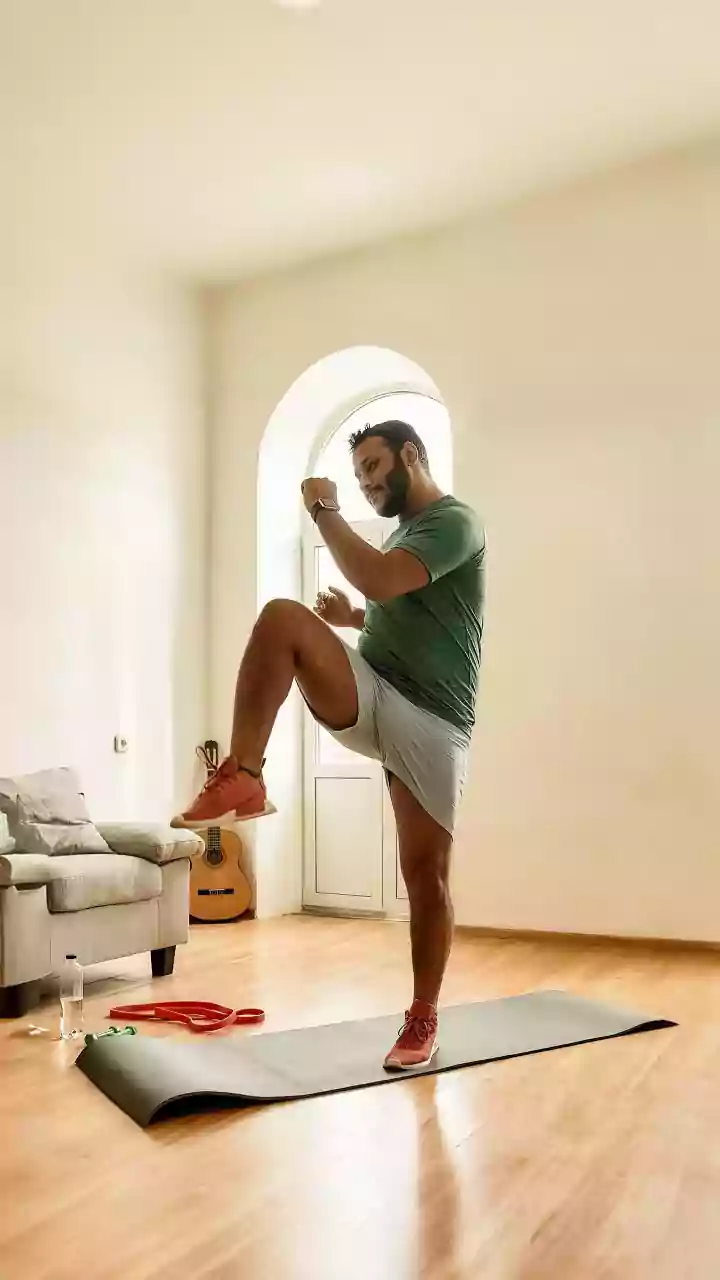
Cardiovascular health is a vital component of fitness, and you can absolutely get your heart rate up without a treadmill or an open road. High-Intensity Interval Training (HIIT) is perfectly suited for small spaces. Exercises like high knees, mountain climbers, burpees, and jumping jacks require very little room but can be incredibly taxing. A 'quiet burpee' or walkout, where you walk your hands out to a plank instead of jumping, is a great neighbour-friendly alternative. The key is to perform these exercises with high intensity for a short period (e.g., 30-45 seconds), followed by a brief rest (e.g., 15-20 seconds), and repeat in a circuit. This method is highly effective at burning calories and improving cardiovascular endurance in a short amount of time.
Putting It All Together: A Sample Routine
Consistency is what turns effort into results. Aim for three to four workouts per week, allowing for rest days. A simple, effective full-body weekly split could look like this: Day 1: Full-Body Strength (3 rounds of 10-15 push-ups, 15-20 squats, 10 lunges per leg, and a 45-second plank). Day 2: Cardio & Core (A HIIT circuit of 45 seconds on, 15 seconds off for moves like high knees, mountain climbers, and burpees, followed by core work). Day 3: Rest or Active Recovery (like stretching or a walk). Day 4: Full-Body Strength (repeat Day 1, trying to increase reps or add a more challenging exercise variation). Listen to your body and focus on 'progressive overload'—gradually making your workouts more challenging over time. This is how your muscles adapt and grow stronger.