



The Sun's Violent Outbursts
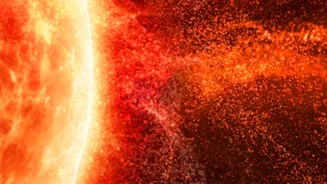
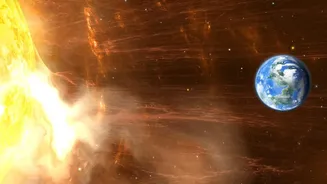
The threat is called space weather, and it refers to the changing conditions in space driven by the sun's activity. While our star usually seems calm from 150 million kilometres away, it periodically has violent outbursts. The two main culprits are solar
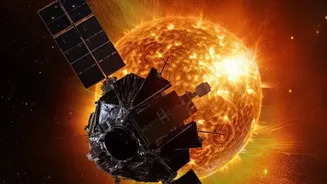
flares, which are intense bursts of radiation, and coronal mass ejections (CMEs), which are colossal explosions of plasma and magnetic fields from the sun's outer atmosphere, the corona. When a powerful CME is aimed at Earth, it hurls billions of tonnes of energised particles into space. If these particles reach our planet, they can trigger a geomagnetic storm, severely disrupting Earth's magnetic field and the technology within it.
Satellites in the Firing Line
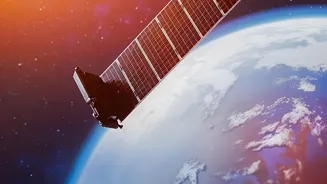
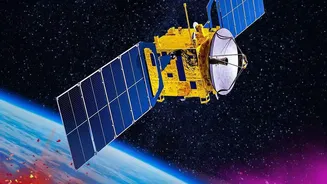
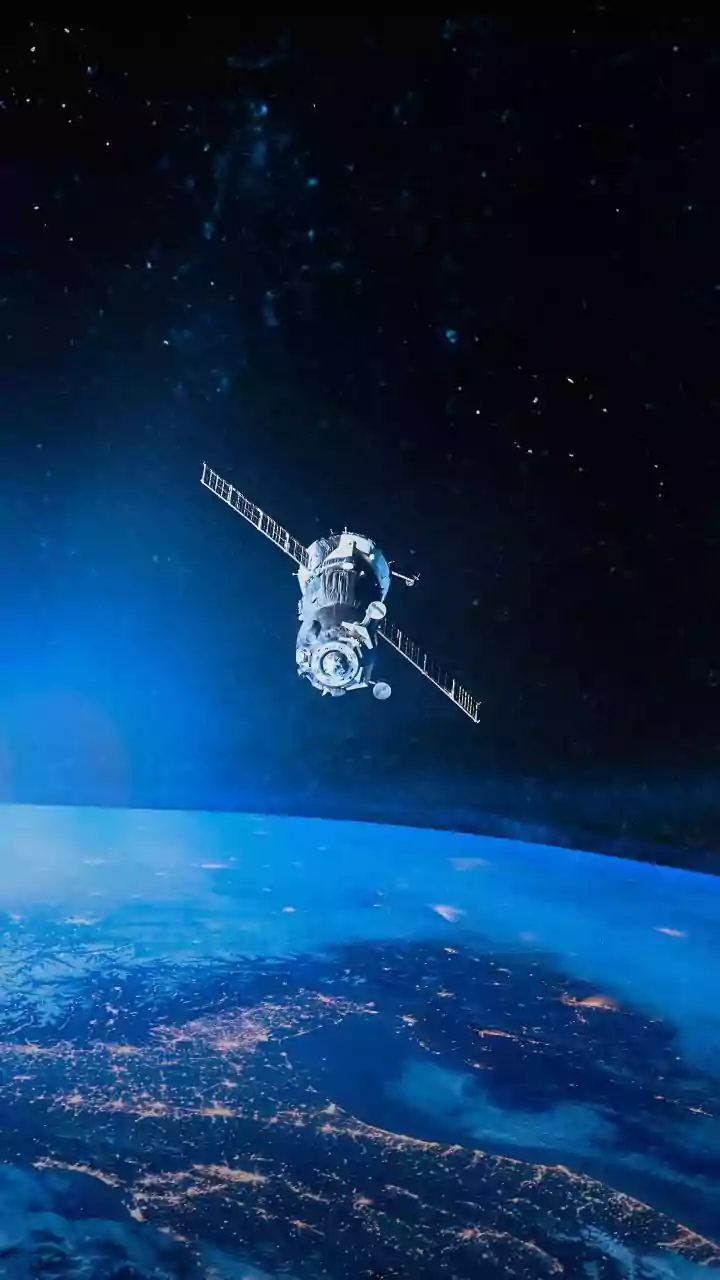
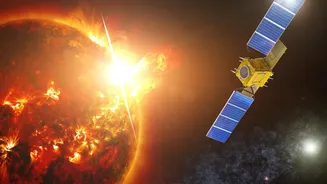
Satellites are particularly vulnerable to these solar tantrums. A geomagnetic storm can harm them in several ways. Firstly, the influx of high-energy particles can damage or destroy sensitive electronics, causing malfunctions or permanent failure. Secondly, the storm heats and expands Earth's upper atmosphere. This increases atmospheric drag on satellites in low-Earth orbit (LEO), slowing them down and causing their orbits to decay. Without correction, they could re-enter the atmosphere and burn up, as happened to a batch of 38 Starlink satellites in 2022. Finally, space weather disturbs the ionosphere, a layer of the atmosphere that radio signals pass through. This can distort or completely block the signals used for GPS navigation and satellite communications, leading to widespread service outages.
Earth's Watchtowers on the Sun
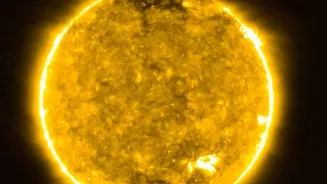
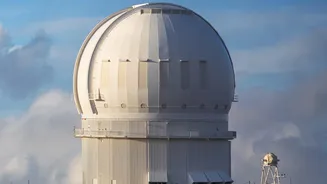
This is where ground-based observatories come in. They are our planet's first line of defence, acting as watchtowers that constantly monitor the sun. Using specialised instruments like solar telescopes, magnetometers, and radio antennas, scientists can detect the early signs of solar activity. By observing changes in the sun's magnetic fields and tracking the formation of sunspots—cooler, magnetically active areas that often precede flares and CMEs—these observatories can spot a potentially hazardous event as it happens. This continuous monitoring provides the crucial first piece of the puzzle: knowing that a threat may be on its way.
From Prediction to Actionable Warning
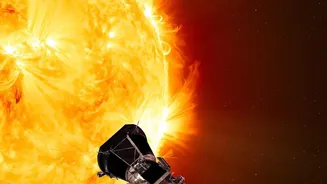
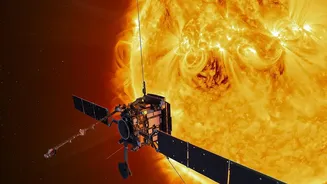
Observing a solar eruption is only the beginning. The real 'prevention' comes from turning that observation into an actionable warning. Once a ground observatory detects a CME, scientists analyse its size, speed, and direction to determine if it poses a threat to Earth. This data, often combined with information from space-based satellites like the Solar and Heliospheric Observatory (SOHO), allows forecasters to predict its arrival time, typically one to four days later. This gives satellite operators a critical window to take protective measures. This early warning system is the key to preventing catastrophic blackouts; it doesn't stop the storm, but it allows us to brace for impact.
The Art of Satellite Self-Preservation
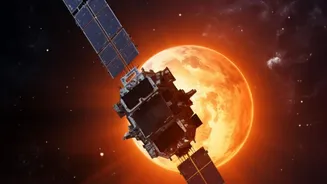
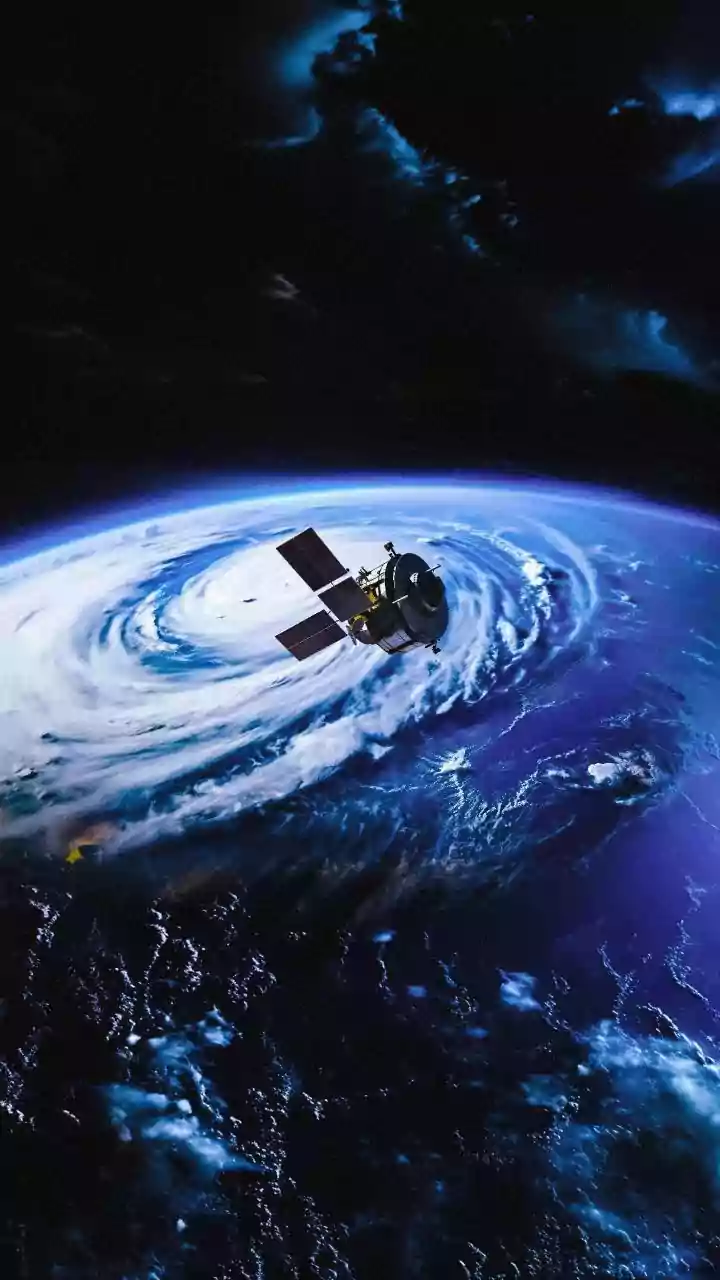
With an incoming storm confirmed, satellite operators can command their spacecraft to enter 'safe mode'. This is a state of hibernation where all non-essential systems, particularly sensitive scientific instruments and electronics, are shut down to protect them from damaging electrical surges and radiation. Operators can also reorient the satellite to present a smaller profile to the incoming particle stream or adjust its orbit to minimise the effects of atmospheric drag. For communication and navigation systems, operators can anticipate signal disruptions and prepare ground-based backup systems to maintain service continuity. These proactive steps, made possible by the early warnings from ground observatories, are what prevent temporary disruptions from becoming permanent satellite failures and widespread system blackouts.
India's Eye on the Sky
India plays a significant role in this global effort. The Udaipur Solar Observatory (USO), managed by the Physical Research Laboratory and uniquely located on an island in Lake Fatehsagar to ensure clearer observations, is a key facility for monitoring the sun. Along with other institutions like the Aryabhatta Research Institute of Observational Sciences (ARIES) and the Center of Excellence in Space Sciences India (CESSI) in Kolkata, Indian scientists contribute vital data to the worldwide network of space weather prediction. The Regional Warning Centre in India is part of an international service that collects and disseminates solar data, ensuring that our nation's critical infrastructure is protected by the latest forecasts.