






The End of the Boom Barrier
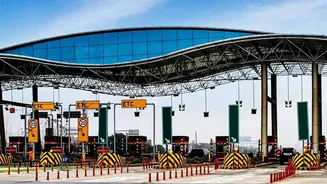
For years, FASTag automated toll payments but still required vehicles to slow down or stop for the boom barrier to lift. That final hurdle has now been removed on the busy Manesar-Jaipur corridor of NH-48. The National Highways Authority of India (NHAI)
has implemented a Multi-Lane Free Flow (MLFF) tolling system across all three major toll plazas on this route: Daulatpura, Manoharpura, and Shahjahanpur. This means you can now drive through at normal highway speeds without any physical barriers stopping you, transforming the tolling experience from a brief pause into a completely uninterrupted journey. The goal is to reduce travel time, cut down on fuel consumption, and lower vehicle emissions caused by congestion at toll plazas.
How Your Toll Is Collected Now
The magic behind this open-road tolling lies in Automatic Number Plate Recognition (ANPR) technology. As your vehicle passes under the overhead gantry, high-resolution cameras capture a clear image of your number plate. This system works in tandem with the existing FASTag infrastructure. The ANPR system identifies your vehicle's registration number, cross-references it with your linked FASTag account, and automatically deducts the correct toll amount. This dual system of number plate recognition and RFID scanning ensures accuracy and allows for a smooth, continuous flow of traffic. For commuters, the process is designed to be entirely invisible.
What Happens After You Pass
Once you drive past the tolling gantry, the system processes the transaction in the background. You'll receive an SMS notification confirming the toll deduction, just as you did with the old FASTag system. The key responsibility for drivers now is to ensure their FASTag account is always active and sufficiently funded before starting their journey. Without a physical barrier to stop vehicles with low balances, the onus is entirely on the user. The system is built on trust, but with clear consequences for non-compliance. It's more important than ever to keep your FASTag wallet topped up and your KYC details updated to avoid any issues.
When Things Go Wrong
The NHAI has a process for vehicles that pass through with an insufficient balance, an invalid tag, or a non-functional FASTag. In such cases, an electronic notice (e-Notice) is issued for the non-payment of the toll. You will have 72 hours from receiving the notice to pay the standard toll fee through a designated online portal or the Rajmarg Yatra mobile app. If you fail to pay within this window, the penalty is steep: you will be charged double the normal toll rate applicable to your vehicle category. Persistent non-payment can even lead to your FASTag being blacklisted.
A Glimpse into India's Tolling Future
The successful implementation on the Delhi-Jaipur highway is not just a local upgrade; it's a critical pilot for a much larger vision. The MLFF system, based on ANPR, is seen as a stepping stone towards a nationwide satellite-based tolling system using the Global Navigation Satellite System (GNSS). This future system aims to charge motorists based on the exact distance they travel on a highway, rather than a flat fee at a plaza. While there are privacy and implementation hurdles to overcome, the barrier-free experience on NH-48 offers a tangible preview of how highway travel across India is set to become faster, more efficient, and completely seamless in the years to come.