


Welcome to the Weather on Alien Worlds
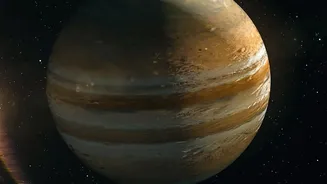
The universe is filled with planets far more extreme than anything in our solar system. Astronomers have long theorised about these 'hot Jupiters'—gas giants orbiting incredibly close to their stars. Now, thanks to advanced infrared telescopes, we are moving
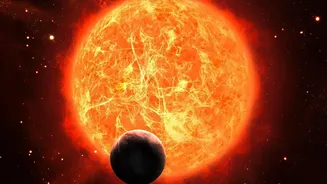
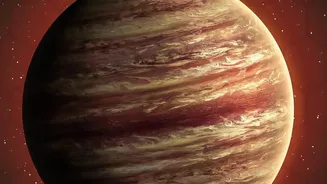
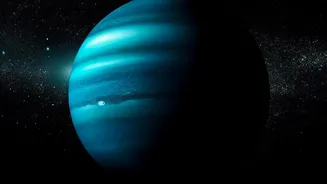
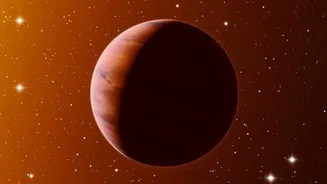
beyond detection to detailed characterisation. Scientists have confirmed weather systems on worlds like WASP-76b, a planet located about 640 light-years away. On its surface, temperatures soar to over 2,400 degrees Celsius, a heat intense enough to vaporise metals like iron. This creates an atmosphere laced with metallic vapour, a far cry from the water clouds of Earth. These discoveries are forcing us to rethink how weather works, revealing atmospheric dynamics that challenge existing models.
Seeing the Unseen with Infrared Light
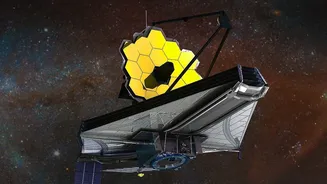
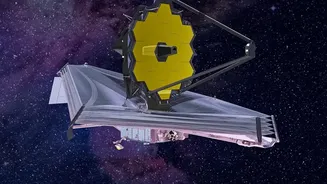
So how can we possibly know this from light-years away? The key is infrared astronomy. While we see the universe in a narrow band of visible light, planets and stars emit energy across a much wider spectrum. Infrared radiation is essentially heat. Telescopes like the James Webb Space Telescope (JWST) and ground-based instruments like the ESPRESSO at the Very Large Telescope (VLT) are designed to detect this faint heat signature. When an exoplanet passes in front of its star, a tiny fraction of the starlight filters through the planet's atmosphere. By analysing this light with a technique called spectroscopy, scientists can identify the chemical elements present, almost like reading a barcode of the atmosphere. This 'transmission spectrum' reveals which elements are absorbing the starlight, giving us a detailed chemical inventory.
How to Clock a Storm from Afar
Mapping wind is even more complex. It relies on a principle called the Doppler effect—the same phenomenon that makes an ambulance siren change pitch as it passes you. As iron vapour is whipped across the face of an exoplanet by powerful winds, the light it absorbs is shifted. If the vapour is moving towards our telescopes, the light shifts towards blue wavelengths; if it's moving away, it shifts towards red. By measuring this tiny shift in the spectral lines of iron, astronomers can calculate the wind speed. On WASP-76b, these winds are ferocious, moving at thousands of kilometres per hour. They are strong enough to carry the iron vapour from the planet's permanent, scorching 'dayside' to its cooler 'nightside'.
From Iron Clouds to Liquid Metal Rain
The concept of iron rain is a direct consequence of these violent winds and extreme temperatures. Planets like WASP-76b are 'tidally locked', meaning one side permanently faces its star while the other is in perpetual darkness. The dayside receives thousands of times more radiation than Earth gets from the Sun, vaporising elements like iron into a gas. The incredibly fast winds then blow this iron vapour across the planet to the nightside. On the cooler, dark side—where temperatures are still a blistering 1,500 degrees Celsius—the iron vapour condenses, much like water vapour forming clouds on Earth. These clouds then release their contents, resulting in a downpour of liquid iron droplets.
Why These Hellish Worlds Matter
While planets that rain metal are inhospitable, studying them is crucial for the search for life elsewhere. These extreme worlds are natural laboratories that test our understanding of atmospheric physics and planetary formation. By observing how atmospheres behave under such intense conditions, scientists can refine the computer models they use to predict the climates of all planets, including potentially habitable ones. The same techniques used to find iron on a hot Jupiter could one day be used to find biosignatures—like oxygen and methane—in the atmosphere of a distant, Earth-like world. Every discovery, no matter how bizarre, provides another piece of the puzzle, helping us understand the incredible diversity of planets our galaxy holds and, ultimately, our own place within it.