




A Veteran Explorer's New Target
The Japan Aerospace Exploration Agency's (JAXA) Hayabusa2 probe is already a legend in space exploration circles. After launching in 2014, it successfully rendezvoused with the asteroid Ryugu, collected surface and subsurface samples, and returned them
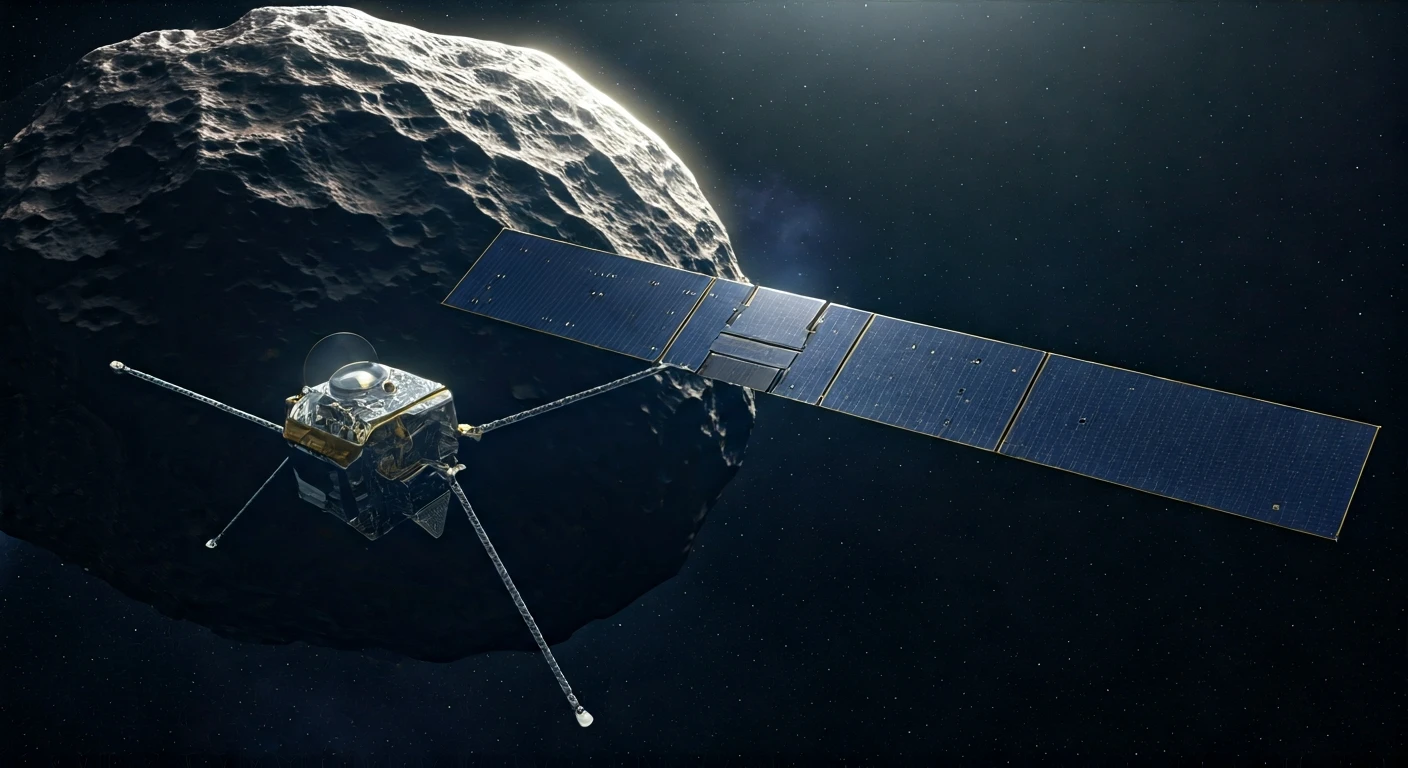
to Earth in December 2020. But with the spacecraft still healthy and about half its fuel remaining, JAXA sent it on a new, decade-long extended mission. The latest highlight of this new journey occurred on July 5, 2026, when the probe executed a daring, high-speed flyby of a near-Earth asteroid named Torifune. This encounter wasn't just for scientific curiosity; it was a crucial test of technologies that could one day help protect our planet.
The Torifune Encounter
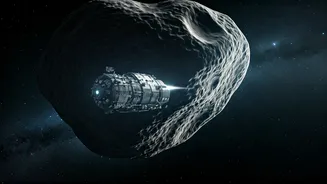
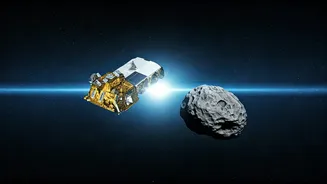
Torifune, formerly known as 2001 CC21, is an asteroid estimated to be about 450 meters wide. On Sunday, Hayabusa2 streaked past it at a blistering relative speed of approximately 18,000 kilometres per hour (about 5 km per second). The goal was to get as close as possible without impact to gather data. Reports from JAXA confirm the spacecraft passed the asteroid at an incredibly close range, with initial plans aiming for just a few hundred meters. During this fleeting encounter, the probe used its suite of instruments, including cameras and spectrometers, to observe the asteroid's surface. The high-stakes maneuver is considered one of the closest flybys ever attempted, a testament to the mission's advanced navigation capabilities.
A Dress Rehearsal for Deflection
The primary purpose of the Torifune flyby was to contribute to planetary defence. While Hayabusa2 was not designed to collide with the asteroid, the precision guidance required for such a close, high-speed pass is a foundational technology for future asteroid deflection missions. The ability to accurately guide a probe to a small, fast-moving target millions of kilometres away is the same skill needed to send a kinetic impactor—like NASA’s DART spacecraft, which successfully altered an asteroid's orbit in 2022—to nudge a potentially hazardous object onto a safer path. This successful demonstration makes Japan the second country, after the United States, to have proven this high-precision control technology, a vital component of a planetary defence toolkit.
Why This Data Matters
Beyond testing guidance systems, observing Torifune up close provides invaluable scientific data. Understanding an asteroid's physical properties—its size, shape, rotation, and whether it's a solid rock or a loose pile of rubble—is critical for planning any potential interception mission. The type of force needed to divert a solid body is very different from that required for a loosely-held collection of gravel. The data from this flyby will add to our 'zoo' of asteroid knowledge, helping scientists build better models and strategies for dealing with different types of near-Earth objects (NEOs). This information is vital for the entire international community, as the threat of an asteroid impact is a global issue that requires collaborative solutions.
A Global Shield in the Making
Hayabusa2's latest achievement is not an isolated effort. It is a key contribution to a growing global network of planetary defence initiatives. JAXA formally established its own Planetary Defence Team in 2024 to collaborate with agencies like NASA and the European Space Agency (ESA). This flyby serves as a reconnaissance test for future missions, including ESA's Hera, which will visit the asteroid that NASA's DART mission impacted. For Hayabusa2, the journey is far from over. After this flyby and a few Earth swing-bys, its ultimate destination is a tiny, rapidly rotating asteroid named 1998 KY26, which it is scheduled to reach in 2031. That encounter will provide another unique dataset, further honing the skills needed to protect Earth from cosmic threats.