




A Land of Millennial Monasteries
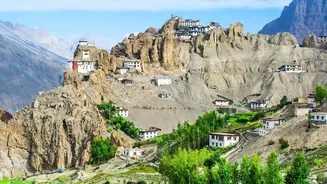
Spiti Valley, often called 'The Middle Land' as it sits between India and Tibet, is a bastion of living history. Its culture is deeply rooted in Tibetan Buddhism, a heritage visible in its spectacular monasteries that seem to grow organically from the
barren, beautiful landscape. The most iconic of these is Key Monastery, a labyrinthine complex perched at over 4,100 metres, which has served as a religious training centre for lamas for centuries. Equally significant is the Tabo Monastery, often called the 'Ajanta of the Himalayas'. Founded in 996 AD, its unassuming mud-brick walls hide some of the oldest and most spectacular Buddhist murals in the world, earning it consideration as a UNESCO World Heritage site. Then there is Dhankar, once a fortress, now a monastery clinging precariously to a cliff 800 metres above the confluence of the Spiti and Pin rivers. These are not relics; they are vibrant centres of faith where ancient rituals continue unchanged.
A Window to the Universe
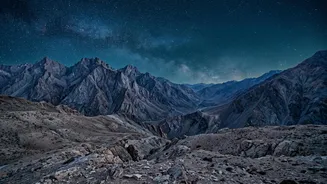
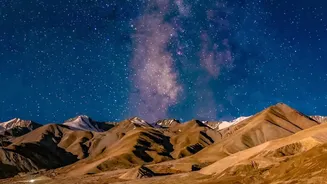
What makes Spiti a world-class astronomy destination is its unique geography. The valley sits at an average altitude of over 4,000 metres in the rain shadow of the Himalayas, resulting in exceptionally dry air and more than 250 clear nights a year. Far from any major cities, light pollution is virtually non-existent. This combination creates what astronomers call a 'Bortle Class 1' sky in many areas like Langza and Komic — the darkest classification possible. Here, the Milky Way is not a faint smudge but a brilliant, textured band of light so bright it can cast a soft shadow. To the naked eye, the Andromeda Galaxy is visible, and meteors frequently streak across a canvas crowded with countless stars. These are some of the most pristine viewing conditions available anywhere on Earth.
Where Culture and Cosmos Meet
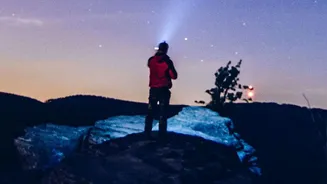
The magic of Spiti lies in how seamlessly it merges these two worlds. A typical journey involves exploring the region's cultural side by day and turning your gaze skyward at night. Travellers visit the ancient murals of Tabo in the afternoon and, after sunset, witness the galaxy rising above the thousand-year-old structure. The experience is becoming more structured as astro-tourism takes root. Local homestays in villages like Kibber and Langza, known for their clear skies, now offer rooftop access for stargazing, and some hosts are trained in basic astronomy. Tour operators run guided night-sky sessions with telescopes, often setting up near iconic landmarks like Key or Dhankar Monastery. This synergy provides a unique travel experience: one moment you are learning about ancient Buddhist traditions from a monk, and the next, you are tracing constellations in one of the world's darkest skies.
A Journey Through Time and Space
Visiting Spiti is an act of immersion. Days are spent on the road, winding through lunar landscapes to reach villages that feel frozen in time, like Hikkim, home to the world's highest post office, or Langza, where a giant Buddha statue watches over a valley rich in prehistoric marine fossils. The days connect you to Earth's deep past and a resilient human culture. The nights, however, connect you to something far larger. Standing in the profound silence of the high desert, with the dome of a monastery silhouetted against a sky ablaze with stars, is to feel simultaneously humbled and expanded. It's a journey that doesn't just cross miles, but bridges the ancient history of humanity with the infinite history of the cosmos.