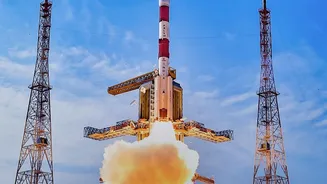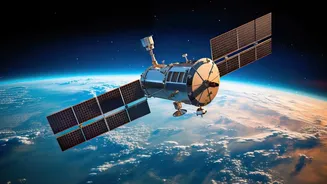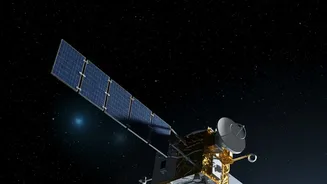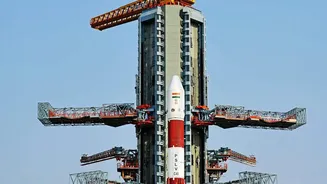


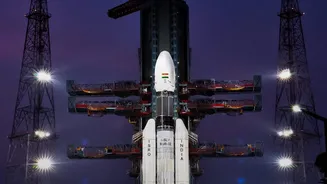
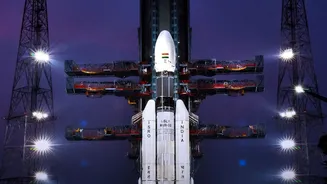
In the race for technological self-reliance, India's homegrown navigation system, NavIC, is undergoing a critical upgrade. The recently launched NVS-03 satellite represents another major test in ensuring this indigenous alternative to GPS is robust and
reliable.
What is NavIC?
NavIC, which stands for Navigation with Indian Constellation, is India's autonomous regional satellite navigation system, developed by the Indian Space Research Organisation (ISRO). Think of it as India’s answer to the US-owned Global Positioning System (GPS). However, unlike GPS which has global coverage, NavIC is designed to serve India and a region extending about 1,500 kilometres beyond its borders. The system was born out of a crucial lesson from the 1999 Kargil War, when India was reportedly denied access to foreign-controlled satellite data. This highlighted the strategic need for an independent system to guide military assets like precision missiles and to support troop movements without relying on other nations.
The Need for a Modernisation
The original constellation of NavIC satellites, known as IRNSS, began facing significant issues, primarily the failure of their imported rubidium atomic clocks. These clocks are the heart of any navigation satellite; even a minuscule timing error can lead to a positioning error of hundreds of metres. Over the years, multiple satellites in the first-generation fleet lost their ability to provide navigation services due to these clock failures, crippling the system's capacity. With some satellites also reaching the end of their operational life, ISRO initiated a vital upgrade with a new generation of satellites, the NVS series, to ensure the continuity and reliability of NavIC services.
Enter the NVS Series and NVS-03
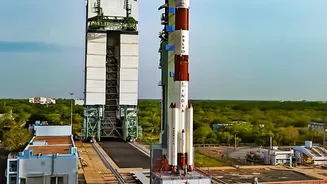
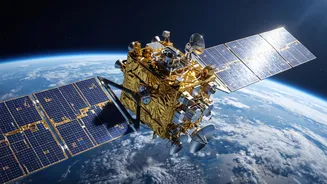
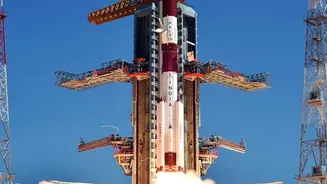
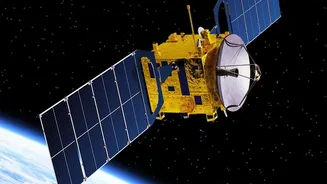
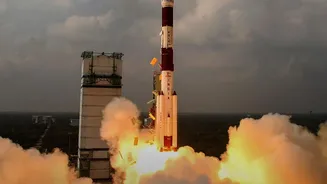
The NVS (Navigation Satellite) series is ISRO’s next-generation fleet, designed to replace the aging satellites and enhance NavIC's capabilities. The first of this series, NVS-01, was launched in May 2023. A key upgrade in the NVS series is the inclusion of an indigenously developed atomic clock, a major step towards self-reliance. The NVS-03 satellite, which successfully launched on October 30, 2026, is the third in this new line-up. Its successful deployment was crucial as it restored the NavIC constellation to the minimum of four operational satellites required for basic positioning services. Weighing around 2,250 kg, NVS-03 has a planned mission life of 12 years and carries both indigenous and imported atomic clocks to bolster redundancy.
A Boost for Civilian Use
One of the most significant upgrades in the NVS series, including NVS_03, is the addition of the L1 frequency band. While the older satellites operated on L5 and S bands, the L1 band is one of the most widely used frequencies for civilian and commercial navigation systems globally, including GPS. Its inclusion is a game changer for making NavIC more easily compatible with a wide range of consumer devices like smartphones and vehicle trackers. This move is expected to accelerate the adoption of NavIC in the mass market, breaking down previous barriers that required specialised hardware.
The Strategic Imperative
Beyond tracking trains or guiding fishermen, NavIC's primary importance is strategic. Having a sovereign navigation system ensures that India's defence forces have an assured, encrypted service for navigation, targeting, and operating advanced platforms like drones and fighter jets, especially during conflicts when access to foreign systems could be denied or degraded. The NVS_03 mission is a critical test of ISRO’s ability to sustain this vital national asset, proving the reliability of its new indigenous technologies and ensuring the network remains robust for both military and civilian applications. Each successful launch in the NVS series strengthens India's 'space sovereignty' and its position as a major spacefaring nation.