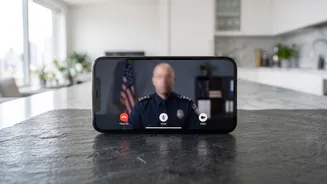









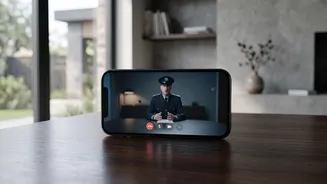
A stern voice on the phone claims you're implicated in a crime. Suddenly, you're on a video call with an 'officer' in a 'police station'. This is a digital arrest scam, a sophisticated fraud costing Indians crores.
Anatomy of a Digital Arrest
The scam begins with an unexpected call.
Fraudsters, posing as officials from the CBI, RBI, or local police, accuse you of a serious crime, like money laundering or drug trafficking. They claim your Aadhaar, bank account, or mobile number has been compromised and linked to illegal activity. The goal is to create panic. They might share forged FIRs or ID cards to appear legitimate. The scam culminates in a demand to connect over a video call for 'interrogation'. Victims are then coerced into staying on the call, sometimes for hours or even days, isolating them from friends and family who might otherwise intervene.
The Virtual Police Station
The video call is where the most elaborate deception occurs. Fraudsters invest heavily in making their environment look like a real police station to enhance their credibility. This is a carefully staged production. Scammers wear police uniforms and sit in front of backgrounds designed to look like official government facilities. These 'sets' can be quite detailed, featuring official-looking emblems, flags, and files to create an atmosphere of authority. In some cases, these are physical rooms rented and decorated for the express purpose of the scam. In others, they use digital tools like green screens or convincing virtual backgrounds to project the illusion of a police station. The effect is designed to be psychologically overwhelming, making the victim believe they are in a real, high-stakes legal situation.
The Psychology of Fear and Authority
Digital arrest scams are effective because they exploit basic human psychology. The impersonation of law enforcement triggers a powerful response based on respect for authority and fear of legal consequences. Scammers create immense urgency, telling victims they face immediate arrest unless they cooperate. This sense of panic impairs judgment and suppresses the instinct to verify the claims. By isolating the victim on a continuous video call, fraudsters prevent them from thinking clearly or seeking outside advice. This combination of authority, urgency, and isolation is a potent formula for manipulation, convincing even educated individuals to comply with outrageous demands.
The Financial Demand
After establishing control, the fraudsters make their move. They demand the victim transfer money to a specific account, often under the guise of 'verification' or to 'clear their name'. They might falsely claim the money will be held temporarily in a secure government or RBI account and returned once the 'investigation' is complete. This is always a lie. The accounts are 'mule accounts'—regular bank accounts controlled by the criminals to launder the stolen funds, making recovery incredibly difficult. Between January and August 2026 alone, over 21,900 complaints were filed in India, with losses exceeding ₹647 crore.
How to Protect Yourself
The most important thing to remember is that no legitimate law enforcement agency in India will ever conduct an arrest over a phone or video call. They will never ask you to transfer money to 'resolve' a case. If you receive such a call, hang up immediately. Do not share any personal information, bank details, or OTPs. If the call has made you anxious, independently verify the claim by calling your local police station's official, publicly listed number—not a number given to you by the potential scammer. Report any suspected fraud immediately to the National Cyber Crime Helpline at 1930 and file a complaint on the National Cyber Crime Reporting Portal (cybercrime.gov.in).