




A Vessel with a Soul
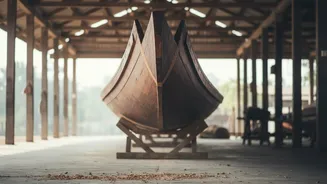
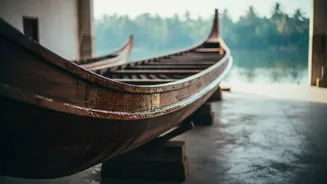
The Chundan Vallam, or snake boat, is more than just a watercraft; it is the pride of a village and a living deity in the Kuttanad region. Stretching over 100 feet, with a distinctive curved prow resembling a striking serpent, these boats are the stars
of Kerala's famed boat races, like the prestigious Nehru Trophy Boat Race held on Punnamada Lake. Many of these boats are centenarian, having been passed down through generations. They are not merely objects but revered entities, touched only by barefoot men and cared for with a devotion that blurs the line between craft and worship. This deep cultural connection transforms annual maintenance from a simple task into a sacred community ritual.
The Ancient Art of Waterproofing
The secret to the snake boat's longevity and speed lies in a unique, all-natural oil treatment that has been used for centuries. Before each racing season, the boats are hauled ashore for their annual renewal. This is where the master artisans, known as 'Acharis' or 'Moothashari', begin their meticulous work. The primary ingredient is a potent mixture of fish oil, which waterproofs and preserves the wood. This is blended with other traditional components: the carbon-rich ash of burnt coconut shells and eggs. This organic varnish serves a dual purpose. It prevents the Anjili wood—a type of wild jackfruit timber known for its water resistance—from absorbing water and rotting, and it creates an incredibly slick surface on the hull. This reduces friction, allowing the massive boat to glide through the water with minimal resistance, a critical factor in a race decided by fractions of a second.
A Labour of Love and Legacy
The application process is as traditional as the recipe itself. The work is done entirely by hand, a physically demanding task that requires immense skill and coordination. First, any old, flaky layers of the previous year's coating are carefully scraped off. Then, the new pungent mixture is painstakingly rubbed into every inch of the hull. This isn't a quick paint job; it's a slow, deliberate process of feeding and sealing the wood, ensuring the boat remains both strong and slippery. This knowledge is not learned from textbooks but is passed down orally from one generation of boat builders to the next. The village carpenter or a master craftsman oversees the repairs, ensuring that the structural integrity of the boat, built according to ancient naval architecture principles from the 'Sthapatya Veda', is perfectly maintained.
Guardians of a Disappearing Craft
The skilled boat builders who perform this work are the unsung heroes of the Vallam Kali (boat game). These artisans, often from families who have been building and maintaining boats for centuries, possess a deep, intuitive understanding of wood and water. They know how to join the long planks with iron bolts in a way that allows the hull to flex in the water without cracking, a feat of traditional engineering. However, this heritage craft faces challenges. With changing economic landscapes, fewer young people are taking up the trade, and the number of master boat builders is dwindling. The craft relies on an apprenticeship model, where skills are honed over decades of hands-on experience, a system that is becoming harder to sustain in the modern world.