




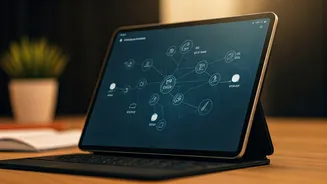


What Exactly Are These AI Assistants?
Imagine a super-smart version of your spellchecker, but instead of just fixing typos, it analyses the very skeleton of your academic paper. These new AI assistants, being integrated into personal education portals and available as standalone tools, promise
to do just that. They are not just grammar bots like early versions of Grammarly. Powered by large language models (LLMs)—the same technology behind chatbots like ChatGPT—these tools are designed to understand context, argument flow, and logical structure. For a student staring at a mountain of research and a blank page, the pitch is irresistible: an AI co-pilot to help organise thoughts, ensure coherence, and structure a thesis or dissertation from introduction to conclusion.
The Promise: More Than Just a Grammar Check
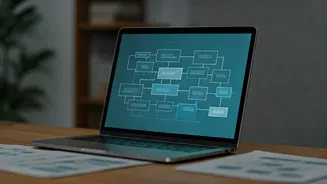
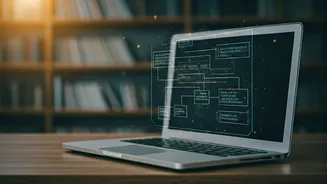
The key selling point is “structural review.” Traditional tools could flag a misplaced comma or a passive sentence. These next-generation assistants claim to offer much more. For instance, an AI might suggest that your third chapter logically belongs before your second, or that the evidence presented in a paragraph doesn't adequately support your topic sentence. It can check for consistency in argumentation, ensuring the claims you make in your introduction are actually addressed in the body and reinforced in your conclusion. Some tools can even generate outlines based on a research question or summarise long academic articles to help students find relevant sources faster. For the millions of students in India juggling coursework, exams, and often a part-time job, this promises to save dozens of hours and reduce the immense stress of high-stakes academic writing.
The Student’s New Best Friend?
The benefits seem obvious. Many students, particularly those from non-English medium backgrounds, struggle with the formal conventions of academic writing. A tool that helps them structure their arguments more clearly can level the playing field, allowing their ideas to shine through. It can act as a tireless, 24/7 tutor, offering instant feedback when a human guide or professor is unavailable. It can help students overcome writer’s block by suggesting transitions or rephrasing clunky sentences. In an education system where student-to-faculty ratios are often high, these AI assistants can fill a critical gap, providing personalised feedback that was previously a luxury. The goal, proponents argue, is not to replace the student’s thinking but to augment it, freeing them from the mechanics of writing to focus on the quality of their research and ideas.
The Professor’s New Headache?
However, the academic community is watching this trend with a mix of curiosity and concern. The line between assistance and cheating is becoming blurrier than ever. Where does “structural review” end and AI-generated writing begin? If an AI re-orders your entire thesis for better flow, is the final structure still your own work? This raises profound questions about academic integrity. Plagiarism detectors are already in an arms race with AI, but detecting an AI’s influence on structure is far more difficult than spotting copied text. Furthermore, there's a pedagogical risk. The struggle of organising a complex argument is a crucial part of the learning process. It’s where students develop critical thinking, synthesis, and analytical skills. If AI smooths over these difficulties, are students being robbed of a fundamental part of their education? They might get a better-structured thesis, but emerge as less capable thinkers.
Navigating the New Academic Reality
This technology is not going away. Just as calculators became standard in math class, AI writing assistants are likely to become a permanent fixture in higher education. The challenge for Indian universities and educators is not to ban them, but to develop clear guidelines for their ethical use. This could mean teaching students how to use these tools critically—as a brainstorming partner or a feedback mechanism, not a ghostwriter. It will require a shift in assessment, moving away from simply grading the final written product to evaluating the student’s research process, their original data, and their ability to defend their arguments verbally. Professors will need training to understand what these tools can and cannot do, and how to spot over-reliance.