





Whispers from a Lake Bed
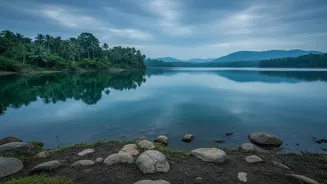
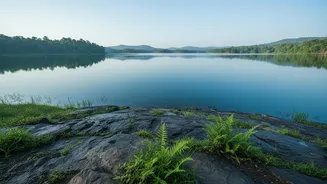
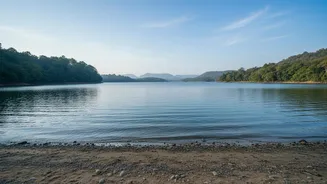
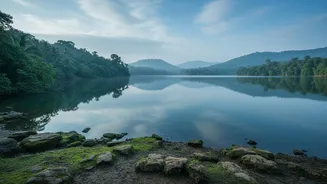
Scientists have found evidence of a surprisingly strong Indian Summer Monsoon that occurred centuries ago, hidden in the sediment of a lake in Chhattisgarh. Researchers from the Birbal Sahni Institute of Palaeosciences (BSIP) in Lucknow extracted a 40-centimetre-long
core of mud from Raja Rani Lake in the Korba district. This core acts as a natural archive, with its layers revealing environmental changes stretching back about 2,500 years. By analysing the microscopic contents of this mud, they were able to piece together a history of the region's climate, discovering a period of intense rainfall that reshaped the landscape.
The Science of Pollen Analysis
The key to this research lies in a science called palynology—the study of pollen grains and spores. Plants release enormous quantities of pollen, which gets preserved in environments like lake beds for thousands of years. Since different plants thrive in different climatic conditions, the type and quantity of pollen found in each sediment layer serve as a direct proxy for the past environment. For example, a high concentration of pollen from forest-loving plants suggests a warm, humid climate with plenty of rain. In contrast, an abundance of grass and herb pollen points to drier, more arid conditions. By meticulously identifying and counting these ancient grains, scientists can reconstruct a detailed picture of the past vegetation and, by extension, the climate.
A Stronger Monsoon in the Middle Ages
The study revealed a dramatic shift in central India's climate during what is known as the Medieval Climate Anomaly, a global warm phase that occurred roughly between 1060 and 1725 CE. During this period, the pollen record from Raja Rani Lake showed a clear dominance of species from moist and dry tropical deciduous forests. This indicates a significant intensification of the Indian Summer Monsoon, which brought strong rainfall and created a warm, humid environment across the region. Crucially, the researchers found no evidence of contrasting dry periods within India's Core Monsoon Zone during this time, suggesting a consistently powerful monsoon season for centuries.
Why Chhattisgarh is a Climate Treasure
The state of Chhattisgarh is uniquely positioned for this kind of research because it lies in the heart of India’s Core Monsoon Zone (CMZ). This is a region where rainfall is overwhelmingly controlled by the Indian Summer Monsoon, making it highly sensitive to any fluctuations in its strength. By studying sediment cores from lakes like Raja Rani, scientists can get a direct and relatively undisturbed record of the monsoon's past behaviour. This specific location provides a clearer signal of regional climate patterns compared to areas influenced by multiple weather systems. The findings from this one lake allow researchers to make broader inferences about the monsoon's history across the entire central Indian subcontinent.
Why Ancient Climate Matters Today
Understanding the monsoon's past is not just an academic exercise; it has critical implications for our future. Reconstructing historical climate variability helps scientists test and refine the climate models used to predict future trends. This study links the stronger medieval monsoon to a combination of factors, including La Niña-like conditions in the Pacific and high solar activity, providing valuable data points for modelers. As modern India faces the challenges of climate change, knowing how the monsoon system has responded to natural warming periods in the past can help us better anticipate its behaviour in a warming world, ultimately aiding in water resource management and agricultural planning for millions.