





A Groundbreaking Catch for Starship
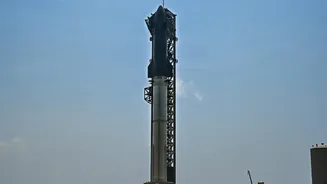
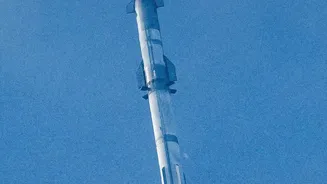
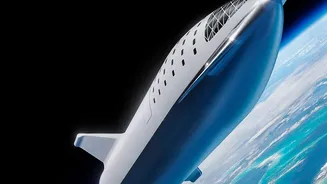
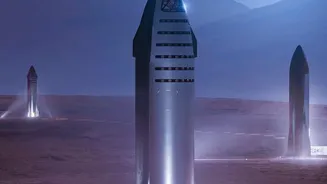
The biggest win from Starship's 15th flight test was the successful recovery of the upper stage, known as 'Ship'. After launching on November 13, completing 14 orbits of Earth, and deploying 26 Starlink satellites, the spacecraft returned to its Texas
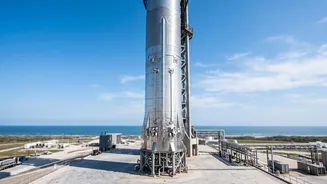
launch site 22.5 hours later. In a maneuver never before accomplished in the history of spaceflight, the launch tower's giant mechanical arms—nicknamed 'Mechazilla'—caught the 171-foot-tall vehicle as it descended for a soft landing. This was the first time an orbital-class upper stage has ever been recovered this way, a feat one SpaceX commentator called 'the holy grail of spaceflight'. Previously, SpaceX had only managed to catch the Super Heavy booster stage, making this a far more complex and significant achievement due to the Ship returning from orbit at much higher speeds.
The Booster's Unplanned Detour
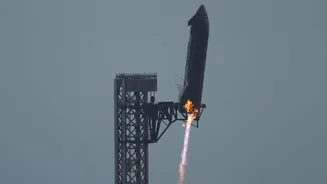
While the Ship's return was a triumph, the mission's first stage, the Super Heavy booster, did not share the same success. The plan was to catch the booster with the same Mechazilla arms just minutes after launch. However, an alarm for low fuel mass triggered during the booster's return burn. This burn ended early, and as a result, the booster's automated guidance system determined it was not in the correct position for a safe catch. Acting as designed, the system aborted the landing attempt and diverted the massive booster to a designated splashdown zone in the Gulf of Mexico. Long-range cameras captured the booster hovering over the water before its flight termination system was triggered, resulting in a fiery explosion upon impact.
What Caused the Booster Alarm?
SpaceX is still investigating the root cause of the low fuel reading that led to the booster's diversion. CEO Elon Musk stated on social media that 'slight underperformance' of the booster's engines during ascent was the likely reason for it being low on fuel for the return trip. During the boostback burn, where the booster reverses course, it lit 32 of its 33 Raptor engines. Though the low fuel alarm cut this burn short, the guidance system's decision to abort the catch and divert to the Gulf was a successful demonstration of its safety protocols, preventing a potentially dangerous situation at the launch site. The system worked correctly by responding to the off-nominal fuel situation.
Why This Test Still Counts as a Huge Success
Despite the loss of the booster, the overall mission is being hailed as a monumental success for SpaceX. The primary goal of achieving full reusability hinges on recovering both stages. Catching the Ship upper stage was the more difficult and previously unproven part of that equation. Proving it can be done is a crucial step toward the company's ultimate goal of dramatically lowering the cost of access to space. Fully reusable rockets could cut the cost of launching a kilogram into orbit by over 75% compared to SpaceX's own Falcon 9, according to some analyses. This test, while not perfect, provided invaluable data and validated the most challenging part of the recovery architecture, reinforcing the company's 'fail fast, learn faster' approach to development.
What Happens Next?
The immediate next step for SpaceX engineers will be to diagnose the booster's fuel issue to ensure it doesn't happen on future flights. For the recovered Starship, the focus will be on inspecting the vehicle and preparing it for a potential re-flight, which would be another major first. The success of the catch brings SpaceX closer to its high-cadence launch plans, which are essential for deploying its next-generation Starlink V3 satellite constellation and, eventually, for missions to the Moon and Mars. Each test flight, whether a complete success or a mixed result like this one, provides critical information that propels the world's most powerful rocket system toward its operational phase, where rapid and repeated reuse becomes routine.