





The Silent Crisis Beneath Our Feet
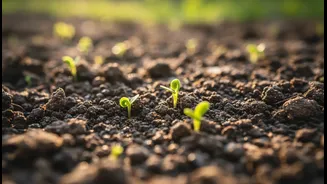
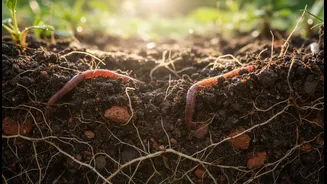
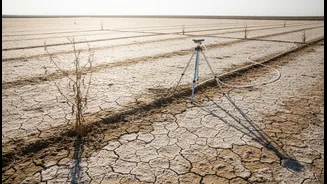
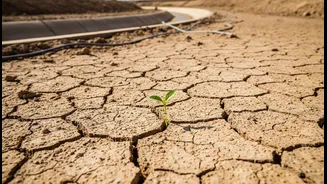
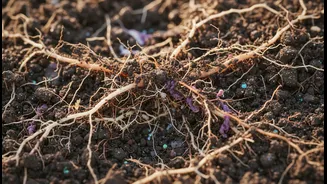
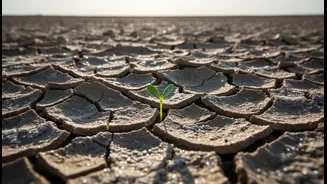
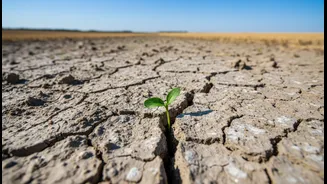
Soil is much more than dirt; it is a living, breathing ecosystem. However, decades of conventional agricultural practices, such as intensive tilling and heavy reliance on chemical fertilisers, have led to widespread soil degradation. This isn't just an environmental
issue; it directly impacts farmers' livelihoods. Degraded soil has a reduced ability to hold water and nutrients, which means farmers need more inputs for the same output, increasing costs and shrinking profits. This silent crisis threatens long-term food security and makes farms more vulnerable to extreme weather events like droughts and floods, which are becoming more frequent.
Thinking Smarter: The Rise of Regenerative Farming
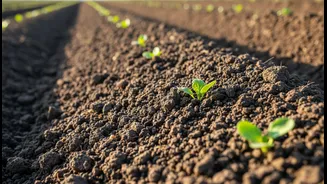
The response to this crisis is a movement toward what is called regenerative agriculture. Unlike sustainable farming, which aims to maintain the status quo, regenerative agriculture actively seeks to improve and rebuild the land. The core idea is simple: work with nature, not against it, to restore the soil's natural fertility and balance. This involves a range of practices, some ancient and some new, all designed to treat the farm as a holistic ecosystem. Key techniques include minimising soil disturbance through no-till or reduced-till farming, using cover crops to protect bare soil, increasing crop diversity, and integrating livestock.
Ancient Wisdom Meets Modern Tech: Agroforestry
One of the most powerful regenerative methods being re-examined is agroforestry—the practice of intentionally integrating trees and shrubs into crop and animal farming systems. This ancient idea is being updated with modern science to maximise its benefits. Research shows that agroforestry can significantly enhance soil health by improving its physical, chemical, and biological properties. Trees act as natural windbreaks, reduce soil erosion, and their deep roots help improve water infiltration by 30-50%. Their leaf litter enriches the soil with organic matter, and certain trees can fix nitrogen, reducing the need for synthetic fertilisers. This creates a more resilient and productive farm that can better withstand climate shocks.
Precision Agriculture: Data-Driven Restoration
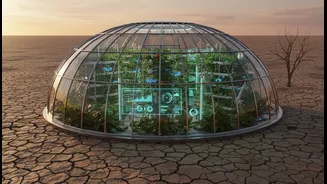
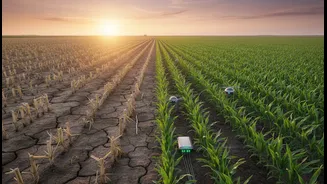
Another 'smarter' approach involves leveraging technology. Precision agriculture, or smart farming, uses tools like GPS, drones, sensors, and AI to make farming more exact and efficient. Instead of treating a whole field uniformly, farmers can get real-time data on soil moisture, nutrient levels, and crop health on a micro-level. This allows for the precise application of water and fertilisers only where they are needed, drastically reducing waste and environmental runoff. For smallholder farmers, who make up a large portion of India's agricultural sector, these technologies can improve yields, minimise resource waste, and ultimately enhance profitability and sustainability.
From the Lab to the Land
While these smarter approaches hold immense promise, their widespread adoption faces hurdles. High initial costs for technologies like drones and sensors can be a significant barrier for many small farmers. There is also a need for more training and institutional support to help farmers learn and implement these new techniques effectively. Insecure land tenure can also discourage long-term investments like planting trees in agroforestry systems. Overcoming these challenges will require a concerted effort from policymakers, researchers, and farming communities to create supportive policies, financial incentives, and knowledge-sharing platforms.