




Plants and Air Quality: What's the Real Story?
The idea that houseplants can purify indoor air became popular after a 1989 NASA study. This research showed that in a sealed chamber, certain plants could remove common household toxins like formaldehyde and benzene from the air. However, our homes are
not sealed chambers. More recent studies have clarified that in a normal room with natural ventilation, you would need a very large number of plants—potentially hundreds—to significantly impact air quality. So, while a few plants won't replace an air purifier or good ventilation, they are far from useless. They contribute modestly to cleaner air, and their psychological benefits, like reducing stress and boosting mood, are well-documented. Think of them as a beautiful, living supplement to a healthy home.
The Perfect Beginner Plant: Pothos
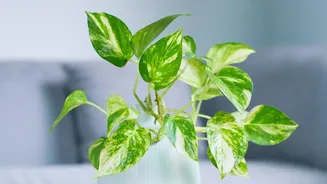
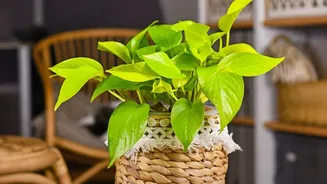
Often called Money Plant in India, Pothos (Epipremnum aureum) is a forgiving and fast-growing vine that’s ideal for new plant parents. With its heart-shaped leaves, often variegated with yellow or white, it adds a lush, trailing accent to shelves and desks. According to the original NASA research, Pothos was noted for its ability to filter pollutants such as benzene, formaldehyde, and xylene. Its hardy nature means it can tolerate a wide range of conditions, making it a reliable green companion.
How to Care for Your Pothos
Pothos is famously low-maintenance. It thrives in bright, indirect light but can easily adapt to lower-light areas, though you might see less variegation. It’s best to water your Pothos only when the top inch or two of soil feels dry to the touch. These plants are quite resilient and will even start to wilt slightly to let you know they're thirsty. You can prune the vines to encourage a fuller look at the base and control its length, keeping your desk space tidy.
The Nearly Indestructible Snake Plant
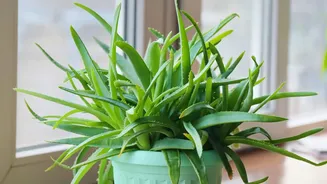
The Snake Plant (Dracaena trifasciata), also known as Mother-in-Law's Tongue, is another champion of low-maintenance greenery. Its stiff, upright leaves give it a modern, architectural look. What makes it particularly special for the bedroom is its ability to perform a type of photosynthesis that allows it to release oxygen at night, unlike most other plants. The NASA study also highlighted its effectiveness at filtering toxins. Its resilience to neglect and low light makes it a perfect fit for busy individuals or dimly lit corners.
Simple Care for Your Snake Plant
The number one rule for snake plant care is to avoid overwatering, as they are susceptible to root rot. Allow the soil to dry out completely between waterings—this could mean watering as little as every 2-6 weeks, depending on the conditions. They are adaptable to nearly any light condition, from low light to bright, indirect sun. A well-draining potting mix, like one designed for cacti or succulents, is ideal. Simply wipe the leaves with a damp cloth occasionally to keep them dust-free and looking their best.
Making Your Greenery Work for You
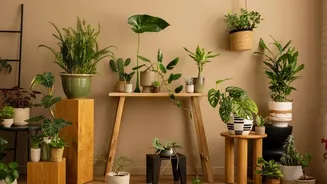
To make the most of your bedroom plants, placement matters. A few plants scattered around a standard-sized bedroom can offer benefits. For a small but noticeable improvement in a typical room, some studies suggest one or two plants can make a difference. Placing a Snake Plant by your bedside can contribute to a supply of fresh oxygen throughout the night. Pothos can be placed on a high shelf or dresser, allowing its vines to trail down gracefully. Remember that the psychological boost of seeing nature indoors is just as important as any air-purifying effect, so choose plants you love and place them where you can enjoy them.