




An Indian Startup's Leap into Deep Space
In a significant milestone for India's burgeoning private space industry, space-tech startup HEX20 has been chosen by the UAE Space Agency to play a key part in an interplanetary mission. While Indian startups have made headlines for developing private rockets
and satellites for Earth orbit, HEX20's involvement marks a pivotal step into deep-space exploration, a domain historically reserved for national government agencies. The company, with its engineering hub in Technopark, Thiruvananthapuram, and operations in the UAE, is the first Indian private firm to be selected for such a mission by the Gulf nation. This collaboration places an Indian startup at the heart of one of the most complex robotic space missions ever planned.
The Ambitious MBR Explorer Mission
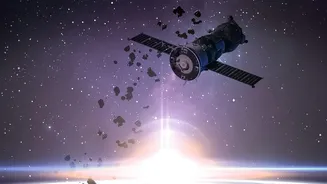
The mission, named the Emirates Mission to the Asteroid Belt (EMA), is a monumental undertaking. Scheduled for launch in March 2028, the MBR Explorer spacecraft will embark on a five-billion-kilometre journey to the main asteroid belt located between Mars and Jupiter. The probe's itinerary is packed: it will perform gravity-assist manoeuvres around Venus, Earth, and Mars to build speed and trajectory. Along its path, it will conduct fly-bys of six different asteroids before arriving at its final and most intriguing destination in 2034: a unique asteroid named 269 Justitia. The timeline is incredibly tight, with only a three-week window for the launch in 2028 to make all the planned planetary encounters.
HEX20’s Critical Contribution
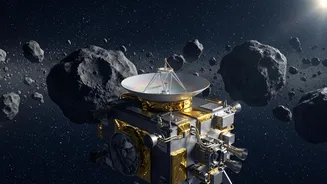
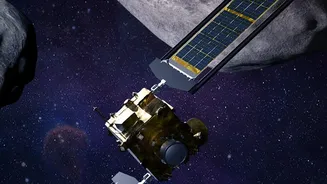
HEX20's role is not minor; the startup is responsible for developing core components of a sophisticated lander probe that the MBR Explorer will carry. Their team is engineering the spacecraft bus—the fundamental structure that houses and supports all the probe's systems—as well as the mission-critical software. This includes designing the onboard computer and power systems robust enough to survive the extreme radiation and harsh conditions of deep space. The probe they helped build was assembled in Abu Dhabi and will eventually be integrated with the main MBR Explorer spacecraft in Colorado, USA. HEX20's expertise, developed through prior satellite projects, proved crucial in being selected for this demanding task.
Targeting Clues to the Solar System's Origin
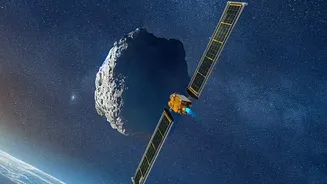
The mission's primary scientific target, 269 Justitia, is what makes this journey so compelling. This asteroid is unusually red, with a color spectrum that suggests it may not have formed in the asteroid belt. Scientists believe it might be a 'transplant' from the far-off Kuiper Belt, a region beyond Neptune. If true, Justitia could be rich in the primordial organic materials and water that were the building blocks of our solar system. Upon reaching Justitia, the MBR Explorer will orbit it for several months before deploying the lander probe. This small probe will then descend autonomously and impact the surface, capturing unprecedented close-up images and data that could rewrite our understanding of planetary formation.
A Watershed Moment for India's Space Economy
HEX20’s participation is a powerful symbol of the maturation of India's private space ecosystem. The government's push to open the sector has fueled a startup boom, with hundreds of new companies entering the field. Until now, the focus has largely been on launch services and Earth-observation satellites, which are vital parts of the space economy. However, contributing to an interplanetary scientific mission demonstrates a higher level of technological capability and trust on the global stage. This achievement signals that Indian companies are ready not just to launch payloads, but to build the sophisticated hardware and software needed to explore other worlds, positioning India as a key player in the future of commercial space exploration.