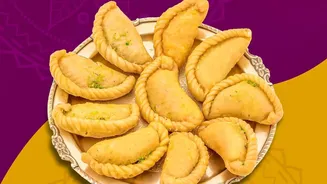



That first bite into a perfectly crisp, golden-brown Karanji is pure bliss. The flaky pastry gives way to a sweet, aromatic filling, creating a festival of textures and flavours that has been cherished in Indian homes for generations.
A Sweet by Any Other Name
Known as Karanji
in Maharashtra, this delightful crescent-shaped pastry is a beloved staple during festivals like Diwali and Ganesh Chaturthi. But its family tree has branches across the country. In North India, you'll find its famous cousin, Gujiya, which is often filled with khoya (milk solids) and closely associated with Holi. Travel to Gujarat and you'll bite into a Ghughra, head to Goa for a Nevri, or enjoy a Karjikai in Karnataka. While the half-moon shape is a common thread, the fillings reflect regional tastes, from coconut and jaggery in the west and south to richer mawa fillings in the north.
The Art of the Perfect Pastry
Making Karanji is an art form passed down through generations, a true labour of love. The process begins with the dough, typically a firm but pliable mix of maida (all-purpose flour), a little semolina (rava) for crispness, and a crucial measure of hot ghee. This 'mohan'—the hot fat rubbed into the flour—is what creates the signature flaky, melt-in-the-mouth texture. The dough is kneaded and left to rest, allowing the gluten to relax, which makes it easier to roll into paper-thin discs. Sealing the edges correctly is vital; a simple smear of water helps the two sides stick together, ensuring the precious filling doesn't spill out during frying.
A Filling of Fragrant Flavours
The traditional Maharashtrian filling, or 'saran', is a beautiful medley of textures and aromas. It starts with roasted desiccated coconut, which provides a nutty sweetness. To this, toasted poppy seeds (khuskhus) and sesame seeds are added for a subtle crunch. Finely chopped nuts like cashews and almonds bring richness, while powdered sugar or jaggery provides the sweetness. The mixture is tied together with the warm, fragrant notes of cardamom powder and sometimes a hint of nutmeg. Every family has its own recipe, a secret balance of ingredients that makes their Karanji unique.
A Modern Renaissance in the Kitchen
In an era of global food trends, a new generation of home cooks and chefs is looking back at traditional Indian sweets with fresh eyes. There's a growing appreciation for authentic flavours and the culinary heritage that dishes like Karanji represent. This renewed interest is fuelled by social media, where beautifully crafted traditional foods are finding a new audience. But it's not just about nostalgia. Creative cooks are giving this classic a modern makeover. Some are baking them instead of frying for a healthier take, while others are experimenting with inventive fillings like chocolate, mango, and even gulkand (rose petal jam), blending familiar comfort with exciting new tastes.