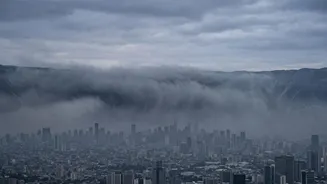





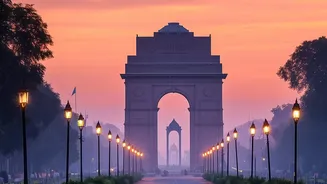

On a clear, still day in Delhi, the sky might look deceptively calm. But in the world of air pollution, tranquility is the enemy. The very absence of wind is a primary reason why the city’s air quality can plummet into the 'very poor' or 'severe' category.
The Atmosphere’s Self-Cleaning Service
Under normal conditions, the atmosphere has its own cleaning mechanisms. Wind is the most effective of these, acting like a giant broom that sweeps pollutants away from their source. This process, known as dispersion, scatters harmful particles like PM2.5 and PM10, as well as noxious gases from traffic and industry, across a wider area, diluting their concentration and impact. Rain also helps by washing pollutants out of the air. But during Delhi's high-pollution season, particularly from October to February, these natural processes are severely hampered.
When the Wind Stops, Pollution Stays
When surface wind speeds drop, often to near zero, this atmospheric broom stops working. Pollutants emitted from vehicles, construction sites, industrial facilities, and seasonal stubble burning are no longer carried away. Instead, they hang in the air, accumulating close to the ground where people live and breathe. According to the India Meteorological Department (IMD) and other agencies, wind speeds below 10 km/h are considered unfavourable for the dispersion of pollutants. As of early November 2026, Delhi's air quality has sharply deteriorated, with the AQI entering the 'very poor' category precisely as calmer wind conditions have set in.
The Invisible Lid: Temperature Inversion
Calm winds often go hand-in-hand with another, more critical phenomenon: temperature inversion. Typically, the air closer to the ground is warmer and rises, allowing pollutants to mix vertically and disperse. However, during autumn and winter nights, the ground cools rapidly, making the air near the surface colder and denser than the air layer above it. This creates a stable atmospheric condition where a layer of warm air acts like a lid, trapping the cooler, pollutant-laden air below. This 'trapping' effect prevents the vertical mixing necessary for cleansing the air, turning the entire city into a gas chamber. This effect is particularly pronounced in the early morning hours, which is why AQI levels often peak after sunrise.
Delhi’s Unique Pollution Cocktail
This meteorological trap is especially dangerous in Delhi due to the sheer volume and variety of pollutants being pumped into the air. The city contends with a constant onslaught of emissions from one of the world's largest urban transport networks, widespread construction dust, and industrial output. Added to this are seasonal factors like smoke from agricultural fires in neighbouring states like Punjab and Haryana, which are transported by northwesterly winds and then trapped by local calm conditions. The combination of these sources with low wind speeds and temperature inversions creates a perfect storm for severe pollution events, a situation confirmed by authorities like the System of Air Quality and Weather Forecasting and Research (SAFAR).
From Science to Sensation
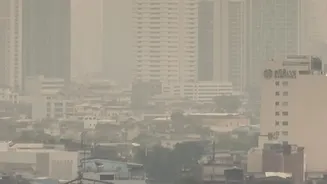
This science directly translates into the physical sensations experienced by Delhi's residents. The trapped pollutants, particularly fine particulate matter like PM2.5, are small enough to penetrate deep into the lungs, causing respiratory distress, burning eyes, and other health problems. The thick, greyish brown haze that blankets the city on still winter days is a visible manifestation of this trapped pollution. The 'mixing height' — the altitude to which pollutants can disperse — can shrink from a kilometre in the summer to just a few hundred metres in the winter, concentrating the pollution in a much smaller volume of air and making its effects far more potent.