




What is Sumac?
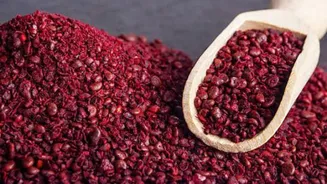
Often found in Middle Eastern and Mediterranean kitchens, sumac is a coarse powder made from the dried berries of the Rhus coriaria shrub. Its name comes from the Aramaic word 'summaq', which means 'dark red', a nod to its beautiful, deep crimson hue.
It’s important to distinguish this culinary spice from poison sumac, which is a different plant entirely and has white berries. True culinary sumac is treasured for its ability to add acidity and brightness to a dish without adding any extra liquid, unlike lemon juice. You can find it in the spice aisle of many grocery stores, at Middle Eastern markets, or online.
A Burst of Tangy Flavour
The dominant flavour of sumac is a pleasant, lemon-like tartness. But it’s more complex than just sour; it has subtle fruity, earthy, and even slightly smoky undertones that give it a unique depth. Unlike chilli powder, which it can sometimes resemble in colour, sumac is not spicy at all. The taste is bright but not overpowering, making it an incredibly versatile finishing spice. A simple sprinkle can liven up a dish just before serving, adding a pop of colour and a zesty finish that complements a wide range of ingredients. It's a key ingredient in the popular spice blend za'atar.
Transforming the Humble Chickpea Salad
One of the best ways to experience sumac is in a chickpea salad. The spice's acidity cuts through the earthiness of the chickpeas beautifully. A popular technique involves massaging thinly sliced red onions with sumac, salt, and other spices. This process softens the onion's sharp bite while infusing it with a tangy flavour. Combine these sumac-laced onions with cooked chickpeas, fresh parsley, mint, and a simple dressing of olive oil and lemon juice for a refreshing and hearty salad. Some variations also include roasted red peppers, feta, or a creamy tahini-based dressing to round out the dish.
Elevating Roasted Vegetables
Roasting vegetables brings out their natural sweetness, and sumac provides the perfect counterpoint. Its dry, zesty nature means it clings to vegetables without making them soggy. It works wonderfully with a wide array of vegetables, including root vegetables like carrots, beets, and sweet potatoes, as well as cauliflower, broccoli, bell peppers, and zucchini. For a simple preparation, toss your chopped vegetables with olive oil, salt, and a generous amount of sumac before roasting at a high temperature (around 200°C). The spice will help create a delicious, caramelised exterior. For a richer flavour, you can combine sumac with balsamic vinegar or honey in the marinade.
Beyond the Basics
Sumac's utility doesn't end with chickpea salads and roasted vegetables. Its bright flavour is a welcome addition to countless meat-free dishes. Sprinkle it over hummus, baba ghanoush, or a simple bowl of Greek yoghurt. Use it to make a tangy dressing for grain bowls or leafy green salads, where it pairs especially well with ingredients like feta, pomegranate seeds, and fresh mint. You can even get creative and incorporate it into pasta sauces or use it to season fried eggs. Some have even used sumac in desserts, pairing its tartness with sweet fruits like strawberries.
A Spice with History and Health Perks
Sumac has been used for thousands of years, not just for its flavour but also for its medicinal properties. It is packed with antioxidants, including flavonoids and tannins, which help protect the body from cellular damage. Some studies suggest that sumac may have anti-inflammatory properties and could play a role in promoting balanced blood sugar levels. It's also a source of vitamins and minerals like Vitamin C and potassium. While more research is needed, it's clear this ancient spice offers more than just great taste.