


Murshidabad: A Glimpse of Nawabi Grandeur
Just a train ride of about three to four hours north of Kolkata lies Murshidabad, the last capital of independent Bengal before British rule. Stepping into this city on the banks of the Bhagirathi river feels like walking onto the set of a historical
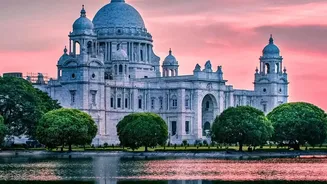
drama. The air is thick with stories of the Nawabs, their immense wealth, and the political intrigue that defined the 18th century. The star attraction is undoubtedly the Hazarduari Palace, or the 'Palace with a Thousand Doors'. This imposing European-style structure now serves as a museum, housing an incredible collection of armour, paintings, and antiquities from the Nawabi era, offering a tangible connection to the region's opulent past.
Beyond the Palace Walls
But Murshidabad's appeal isn't limited to its most famous monument. A short ride on a local toto or horse-drawn carriage can take you to the Katra Mosque, a grand structure where the tomb of its builder, Nawab Murshid Quli Khan, lies beneath the entrance steps. You can also explore the sprawling Nizamat Imambara, the Jafarganj Cemetery where many Nawabs including Mir Jafar are buried, and the palatial gardens of Kathgola Bagan. The city offers a journey through a past defined by grandeur, power, and eventual decline, making it a fascinating destination for history enthusiasts and anyone looking for a story-filled escape. The famous Murshidabadi silk and delectable Nawabi cuisine add another layer to the experience.
Bishnupur: Where Terracotta Tells Tales
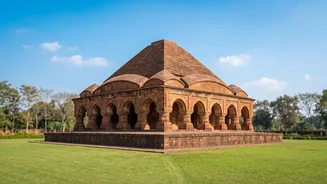
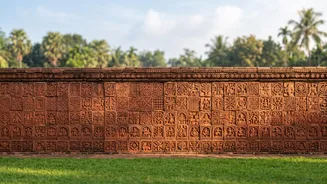
Travel southwest from Kolkata for about three to four hours, and you'll arrive in a completely different world: Bishnupur. This is the land of the Malla kings, who ruled from the Bankura region for nearly a thousand years. Their legacy is not in grand palaces but in a unique and captivating form of temple architecture. The town is famous for its stunning terracotta temples, where baked clay panels narrate tales from Hindu epics like the Ramayana and Mahabharata. These structures, built mostly in the 17th and 18th centuries, have placed Bishnupur on the tentative list for UNESCO World Heritage status.
Artistry in Clay and Silk
Each temple in Bishnupur has a distinct personality. The Rasmancha, a massive pyramidal structure, is unique in its design and was used to display idols during the Ras festival. The Jor Bangla Temple resembles two traditional Bengali huts joined together, while the Shyam Rai Temple is a 'Pancha Ratna' or five-pinnacled structure, both covered in breathtakingly detailed terracotta art. Beyond the temples, Bishnupur is a hub of culture. It is the home of the Baluchari saree, known for its intricate woven mythological scenes, and the iconic, stylized Bankura horse terracotta craft. A trip here is an immersion into a world of incredible artistry and devotion.
Choosing Your Historical Getaway
So, which escape is right for you? If you're drawn to the history of empires, palatial architecture, and stories of power and politics, Murshidabad is your destination. It offers a sense of scale and grandeur that speaks of its past as a major political centre. If your interests lie in unique art forms, intricate craftsmanship, and a more spiritual and rustic atmosphere, Bishnupur's terracotta wonders will captivate you. Both destinations are easily accessible for a weekend trip from Kolkata, with regular train services and manageable road journeys. The best time to visit either location is during the cooler months, from October to March, when the weather is ideal for exploring these open-air museums.