






The Engines of Our Digital Lives
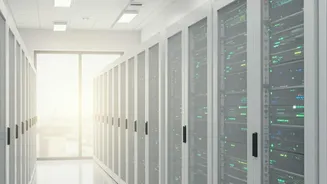
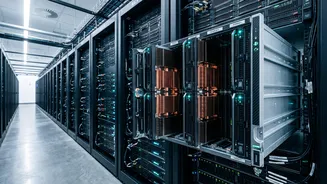
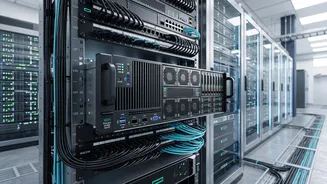
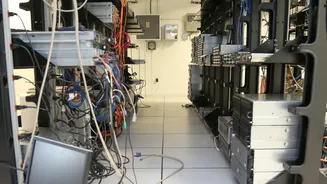
Data centres are the physical backbone of the internet. These secure, warehouse-sized buildings are filled with thousands of powerful computer servers, storage systems, and networking gear that process, store, and share the data behind nearly every digital
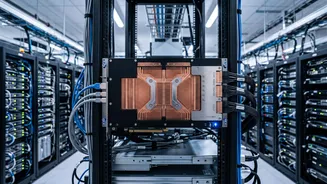
service we use. Currently, they consume about 1.5% of the world's total electricity, a figure that has been growing steadily. This immense power usage is necessary not just for running the servers themselves, but also for the extensive cooling systems required to prevent the equipment from overheating. In fact, cooling alone can account for up to 40% of a data centre's total power consumption.
AI and Crypto: The Great Accelerants
The primary reason for the IEA's dramatic forecast is the explosive growth of artificial intelligence (AI) and, to a lesser extent, cryptocurrency operations. Training a large AI model, like those behind generative AI services, is an incredibly energy-intensive process. But the bigger driver is 'inference'—the energy used every time an AI application answers a query, generates an image, or translates text. The IEA's World Energy Outlook 2026 report, released on November 19, 2026, projects that electricity demand from data centres will double to around 1,000 terawatt-hours (TWh) by 2030. This is roughly equivalent to the entire current electricity consumption of Japan. AI is expected to account for a huge portion of this increase.
What This Means for India
For India, this global trend is particularly significant. The country's data centre market is one of the fastest-growing in the world, fuelled by data localisation policies, the 'Digital India' initiative, and a booming digital economy. India's data centre capacity has grown from just over 500 MW in 2020 to around 1.6 GW in mid-2026 and is projected to triple by 2029. This boom is attracting billions in investment but also places immense pressure on the nation's energy grid. Projections suggest India's data centre electricity consumption could grow nearly fivefold by 2030, potentially accounting for up to 2.6% of the country's total electricity generation. This presents a major challenge to meeting the nation's growing energy needs while also pursuing ambitious renewable energy targets.
A Looming Climate Challenge
While many major tech companies are the largest corporate buyers of renewable energy, the sheer pace of data centre growth means this is not enough to offset the rising demand. The IEA warns that this surge in electricity needs is driving a renewed reliance on fossil fuels, particularly natural gas in the United States and coal in China, to power these new facilities. As a result, the agency projects that carbon emissions from the data centre sector could rise by as much as 70% by 2030, complicating global efforts to combat climate change.
The Search for Sustainable Solutions
Addressing this challenge requires a multi-pronged approach. Improving energy efficiency is paramount. This includes developing more efficient cooling technologies, like liquid cooling and better airflow management, and using metrics like Power Usage Effectiveness (PUE) to benchmark and reduce waste. Beyond efficiency within the centres, the choice of power source is critical. The IEA notes that while renewables are projected to meet nearly half of the new demand, fossil fuels are set to cover over 40% of the increase until 2030. A much faster transition to clean energy sources, including renewables and potentially nuclear power, will be essential to power the future of AI and the digital economy sustainably. AI itself may also offer solutions, with the potential to optimise energy grids and improve the efficiency of industrial processes, though these benefits are not yet guaranteed.