






The Universal Prescription for Screen Fatigue
We live in an age of infinite scrolling and constant notifications. The result is a low-grade hum of anxiety and a feeling of being perpetually drained. Our focus is fractured, our necks are sore, and our sense of wonder is often buried under a pile of emails
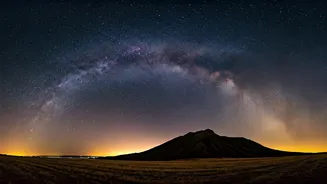
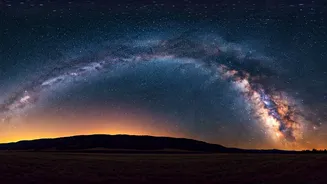
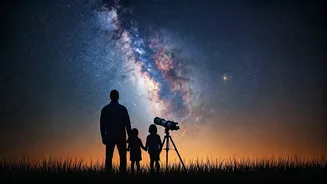
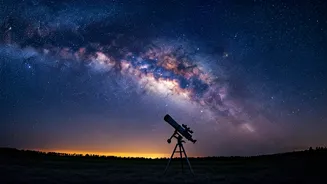
and social media feeds. The solution doesn't have to be a complicated wellness retreat or an expensive new hobby. In fact, it's the oldest solution there is: looking up. Stargazing is more than just an astronomical activity; it's a psychological reset. It forces a change in perspective, both literally and figuratively. By stepping outside and tilting your head back, you are physically breaking the hunched-over posture of screen time. Mentally, you’re trading the fleeting dramas of your phone for the silent, humbling scale of the universe. The problems that seemed so large a moment ago shrink when set against the backdrop of galaxies that are millions of light-years away.
Your First Night Out: A Simple Guide
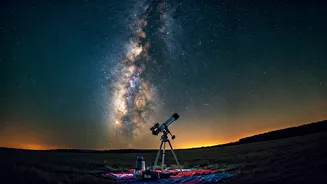
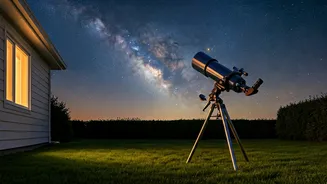
The beauty of stargazing is its simplicity. You don’t need a degree in astrophysics or a thousand-dollar telescope to start. Your first mission is just to see the stars as clearly as possible. Begin by finding the darkest spot you can access safely. This might be your backyard, a local park, or a quiet rural road. Urban dwellers might need to drive a short distance to escape the worst of the city's light pollution, but even a park can be a significant improvement over a street corner. Once you’re there, the most important tool you have is patience. It takes about 20-30 minutes for your eyes to fully adapt to the dark and reveal the fainter stars. To preserve your night vision, avoid looking at your phone. If you need a light, use a flashlight with a red filter or one with a red-light mode. Red light is much less disruptive to your eyes' dark adaptation. Just sit or lie back, breathe, and let the celestial show slowly reveal itself.
What to Look For (No Telescope Needed)
You don't need to identify every dot in the sky to appreciate it. Start with the most obvious and iconic celestial objects. The Moon is a magnificent target, especially during its quarter phases when the shadows along the terminator (the line between light and dark) reveal craters and mountains in stunning detail. From there, find the Big Dipper. It's visible year-round for most people in the Northern Hemisphere and acts as a cosmic roadmap. You can use its two “pointer stars” to find Polaris, the North Star. Depending on the time of year, you can spot the hunter Orion with his famous three-star belt or the “W” shape of Cassiopeia. Planets are another easy win. To the naked eye, they look like very bright, steady stars that don’t twinkle as much. Jupiter, Saturn, Mars, and Venus are all frequently visible. A simple pair of binoculars, even bird-watching ones, can dramatically enhance your view, revealing Jupiter’s four largest moons or the faint rings of Saturn.
Using Technology to Get Away From Technology
It may sound counterintuitive, but your smartphone can be a powerful tool for getting started—if you use it correctly. The key is to use it as a map, not a destination. Apps like SkyView, Star Walk, or Stellarium use your phone’s GPS and compass to create an augmented-reality view of the sky. Point your phone up, and the app will identify constellations, planets, and satellites in real time. It’s an incredible way to learn the layout of the night sky in your first few sessions. The trick is to use it for a quick identification, then put the phone back in your pocket and enjoy the real thing. Use the tech to guide your eyes, not replace them.