





What is the Gaganyaan Mission?
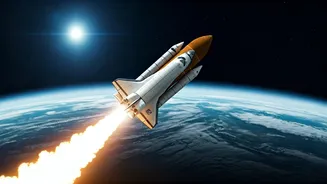
At its heart, the Gaganyaan project is India's first human spaceflight program. Developed by the Indian Space Research Organisation (ISRO), the primary objective is to demonstrate the capability of sending a crew of three members into a Low Earth Orbit
of 400 kilometres. After a mission lasting three days, the crew would be brought back safely, landing in Indian sea waters. Success would make India only the fourth country in the world—after the United States, Russia, and China—to have an independent human spaceflight capability, marking a monumental leap for the nation's technological and scientific prowess.
The Crucial Testing Phase
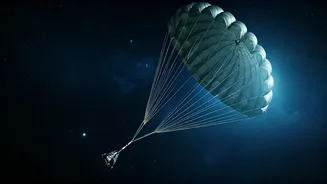
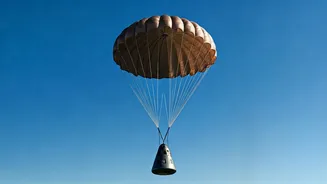
Before astronauts can launch, every single component must be proven to be safe and reliable. This is the stage ISRO is deeply immersed in now. A series of critical precursor missions and tests are underway to validate the technology. One of the most important are the Integrated Air Drop Tests (IADT). Recent tests, such as the second IADT conducted in April 2026, involved dropping a simulated Crew Module from a helicopter to validate the complex parachute system designed to slow its descent for a safe splashdown. This system uses a sequence of ten parachutes to ensure the crew's safety during their return to Earth. These tests are vital for proving the reliability of the landing and recovery operations.
The Technology Behind the Dream
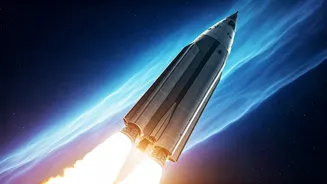
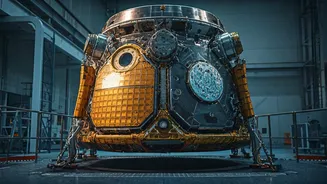
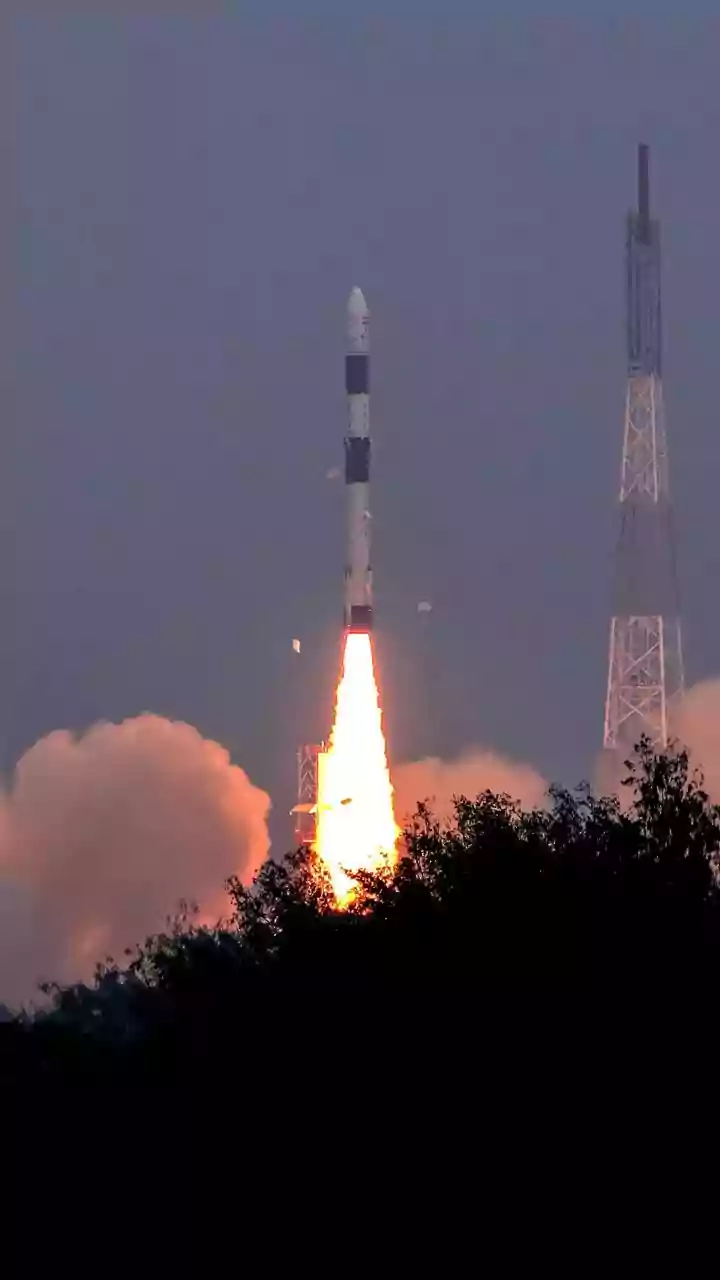
The Gaganyaan mission relies on three main components. The workhorse is the LVM3 rocket, ISRO’s reliable heavy-lift launcher, which has been re-configured and human-rated for this mission, earning it the name HLVM3. Sitting atop the rocket is the Orbital Module, which consists of the Crew Module and the Service Module. The Crew Module is a pressurized capsule where the astronauts will live and work. It is designed to withstand re-entry into Earth's atmosphere. The Service Module provides support, containing the propulsion systems, power, and other essential equipment. A critical component is the Crew Escape System, which can jettison the crew module away from the rocket in case of an emergency during launch.
Meet the 'Vyomanauts'
While technology is the enabler, the human element is the soul of the mission. India's chosen astronauts, dubbed 'Vyomanauts' from the Sanskrit word 'Vyoma' for space, have been undergoing rigorous training. The four selected Group Captains from the Indian Air Force have completed training modules in India and Russia, covering everything from flight simulations and physical fitness to survival techniques. They are being prepared for every eventuality of spaceflight. ISRO is also utilizing advanced simulators, including virtual reality systems, to create realistic mission scenarios. Ahead of the crewed flight, uncrewed missions will be conducted. One of these will feature 'Vyommitra', a female humanoid robot, to test the life support systems and collect data from inside the capsule.
Why This Mission Matters for India
Gaganyaan is more than just a scientific mission; it's a statement of national ambition. It will inspire a new generation to pursue careers in science and technology, boost the domestic aerospace industry, and open up new avenues for research in space medicine and microgravity experiments. The development of cutting-edge technologies for Gaganyaan is expected to have spin-off benefits across various sectors. Furthermore, achieving human spaceflight capability enhances India's geopolitical stature, cementing its position as a major player in the global space community and paving the way for future collaborations on projects like international space stations or even missions to the Moon and Mars.