








What Exactly Happened?
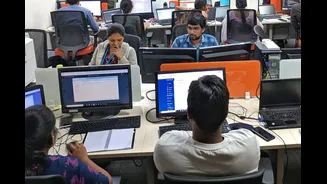
On November 12, 2026, a significant technical failure within Microsoft's cloud services began disrupting access to its popular 365 suite. This included widely used applications like Outlook, Teams, and other backend services that run on the Azure cloud platform.
The outage was global, affecting organisations in over 70 countries and lasting for more than 12 hours. Microsoft attributed the problem to server configuration issues, ruling out a malicious cyberattack but exposing the fragility of highly integrated global systems. The event caused widespread productivity losses and highlighted how dependent critical services have become on a handful of major technology providers.
Were Indian Government Systems Affected?
The impact on India's core government systems was less severe than in other nations, thanks to strategic decisions made years ago. Crucially, India's central government email services do not run on Microsoft 365, but on a sovereign system managed by the National Informatics Centre (NIC). This insulated core administrative communication from the disruption. Similarly, critical financial infrastructure like the Unified Payments Interface (UPI) and the Aadhaar authentication system are built on their own resilient, independent architectures. However, the outage wasn't without consequence. Various public sector departments and agencies that use Microsoft's cloud services for non-core functions—such as data analytics, specific web portals, or internal collaboration tools—likely experienced disruptions. Microsoft has been actively courting Indian public sector clients, offering MeitY-empanelled services designed to meet local data residency and security guidelines. The outage serves as a real-world test of the contingency plans for these adopted services.
Understanding India's Digital Infrastructure
At the heart of this issue is India's National Digital Infrastructure, often called 'India Stack'. It is not a single application but a collection of open APIs and public systems that provide a foundation for digital services. Key components include Aadhaar for identity verification, UPI for payments, DigiLocker for document storage, and the Account Aggregator framework for data sharing. This 'digital plumbing' has been instrumental in driving financial inclusion and enabling paperless, presence-less governance, moving hundreds of millions of Indians into the formal digital economy. The government's 'MeghRaj' policy provides guidelines for departments to adopt cloud services from empanelled providers, including global giants like Microsoft and AWS, to deliver these e-services efficiently.
The Double-Edged Sword of Reliance
Partnering with global cloud providers offers significant advantages, including access to cutting-edge technology, massive scale, and advanced security features. Microsoft, for example, has invested billions in its Indian data centres to offer AI-enabled, sovereign-ready cloud services. However, this reliance also introduces risks. Experts point to the dangers of over-concentration, where the failure of one or two dominant providers can have cascading effects across entire economies. Outages are the most visible risk, but concerns also revolve around data sovereignty, where foreign laws like the US CLOUD Act could potentially compel U.S.-based companies to provide access to data regardless of where it is stored. This creates a complex legal and strategic challenge for nations that depend on this infrastructure for critical government functions.
What This Means For You and The Future
For the average citizen, the direct impact of this specific outage was likely minimal due to the resilience of core systems like UPI and Aadhaar. However, it is a powerful reminder of the complex, interconnected web of technologies that underpin modern life. As more services—from healthcare records to educational platforms—move to the cloud, ensuring their stability is paramount. The incident will almost certainly intensify the debate within the Indian government about digital sovereignty. Expect renewed focus from the Ministry of Electronics and Information Technology (MeitY) and other bodies on creating robust contingency plans, promoting multi-cloud strategies to avoid vendor lock-in, and potentially developing more sovereign alternatives for a wider range of services, balancing the benefits of global technology with the need for national resilience.