




A Tale of Two Performances
To understand the final result, one must look at Manu Bhaker's performance across the day. In the qualification round, she was in fine form, shooting a strong 579 to finish third and comfortably book her spot in the eight-shooter final. This performance suggested
she had the rhythm and precision required for a podium finish, setting a clear expectation of a medal for one of India’s premier shooting talents. The qualification round is a marathon, testing consistency over 60 shots. Bhaker aced this test, demonstrating her world-class ability and raising hopes for the medal round. Her entry into the final was not just a formality; it was a statement of intent.
The Final's Strong Start
The final began just as promisingly. In the initial stages, Bhaker was right in the mix, with her scores keeping her firmly in medal contention. After the first two five-shot series, she had a solid score of 100.3. The early shots in a final are critical for building momentum and confidence, and Bhaker appeared composed and focused. She was trading shots with the best in Asia, holding her own as the field began to narrow. At one point, she was even briefly in a tie for the bronze medal position, highlighting how close the competition was. But in a final, momentum can be fleeting.
The Decisive Moments
In precision shooting, a medal can be won or lost in a fraction of a second on a single shot. The turning point for Bhaker came deep into the elimination stages. While she was battling for a spot on the podium, a single shot of 9.6 pushed her down the rankings at a critical juncture. In a high-stakes final where competitors are consistently hitting scores over 10, a sub-10 shot can be incredibly costly. This dip in an otherwise steady performance created a gap that was difficult to close. As the pressure mounted with each elimination, she couldn't regain the momentum needed to challenge the leaders, ultimately bowing out in fifth place with a final score of 181.1.
The Razor's Edge of Pressure
Beyond the numbers, the psychological pressure of a final cannot be overstated. Unlike the qualification round, every shot in the final is an event in itself, with instant eliminations and a roaring crowd. For shooters, this environment can increase anxiety, affecting everything from breathing to trigger control. While Bhaker is a seasoned competitor with Olympic medals to her name, the pressure of representing a nation's hopes is immense. Experts note that in high-pressure situations, athletes can struggle with finding the perfect moment to shoot, leading to hesitation or a rushed shot. The difference between a 10.8 and a 9.6 is often not a technical flaw, but a momentary lapse in mental calm. This psychological battle is the unseen drama of every shooting final.
A Sport of Millimeters
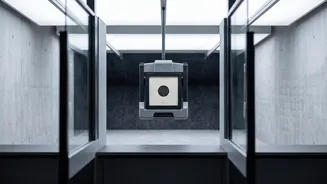
Bhaker’s result is a stark reminder that shooting is a sport of incredibly fine margins. Her exit in fifth place wasn't the result of a catastrophic failure, but rather the cumulative effect of a few shots landing just outside the highest scoring rings. The day's earlier team event provided another painful example of this. The Indian women's team, comprising Bhaker, Esha Singh, and Suruchi Inder Singh, missed out on a bronze medal despite having the same aggregate score as Vietnam. They lost the medal simply because Vietnam had two more 'inner 10s'—a count of the most precise shots. This tiny difference underscores how brutally competitive the sport is at the elite level.