

Not Just Red Dirt
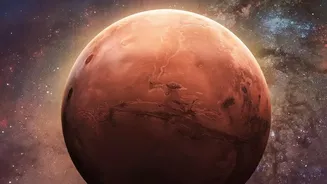
The iconic red dust that blankets Mars is fundamentally different from what we find on Earth. Martian dust particles are incredibly fine, with an average size of just 3 micrometres, small enough to bypass the natural filters in human lungs. Unlike Earth dust,
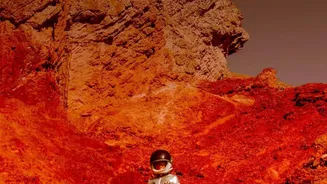
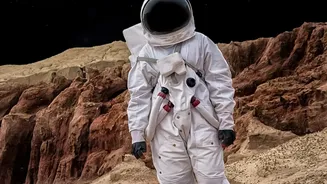
which is weathered and rounded by water and atmospheric processes, Martian dust particles can be irregularly shaped and abrasive. This dust is also electrostatically charged, causing it to cling tenaciously to every surface it touches, from solar panels to spacesuits. This clingy nature was a known issue for Apollo astronauts on the Moon, but Mars adds another layer of danger. The soil is rich in toxic compounds, including perchlorates, which are rare on Earth but widespread on Mars. This chemical cocktail makes the dust not just a physical irritant but a serious chemical hazard.
A Threat to Human Health
Long-term exposure to Martian dust presents significant health risks for future colonists. The fine silicate particles can be inhaled and become lodged deep within the lungs, potentially leading to a condition similar to silicosis, a chronic lung disease found in miners and glass blowers on Earth for which there is no cure. Once in the lungs, these tiny particles can even be absorbed into the bloodstream, circulating throughout the body. The chemical hazards are just as alarming. Perchlorates are known to interfere with the thyroid gland's ability to absorb iodine, which can disrupt metabolism and other critical bodily functions. Even inhaling a few milligrams could be dangerous. Furthermore, Martian soil contains other toxic elements like hexavalent chromium, arsenic, and beryllium, which are known carcinogens and can cause a range of health issues from respiratory distress to organ damage. For astronauts already stressed by radiation and microgravity, chronic exposure to this toxic dust could be catastrophic.
The Silent Equipment Killer
Humans are not the only ones at risk. The abrasive and pervasive nature of Martian dust is a nightmare for mechanical and electronic systems. The fine, gritty particles can infiltrate seals, jam moving parts in rovers and tools, and scratch helmet visors, compromising visibility and safety during spacewalks. As seen with NASA's Spirit and Opportunity rovers, dust accumulation on solar panels is a major problem, drastically reducing power generation and threatening mission longevity. The electrostatic properties of the dust mean it sticks to everything, creating a constant battle to keep critical surfaces clean. This can lead to overheating as thermal radiators become coated, and short circuits as the conductive dust penetrates sensitive electronics. Simply bringing a dusty spacesuit inside a habitat risks contaminating the entire environment, posing a danger to both the crew and the internal life support systems.
Designing a Dust-Proof Future
Solving the dust problem is non-negotiable for any long-term human presence on Mars. Researchers and engineers are developing a multi-pronged approach to mitigate the threat. This includes designing advanced air filtration systems for habitats that can capture the ultra-fine particles. Spacesuits and airlocks are being re-imagined to minimize the amount of dust brought inside. One promising technology is the Electrodynamic Dust Shield (EDS), which uses changing electric fields to actively repel and remove dust from surfaces like solar panels, camera lenses, and even spacesuit fabric. Tests have shown these systems can be highly effective. Other strategies include developing specialized fabrics that resist dust adhesion and creating operational protocols, such as cleaning stations, to manage contamination before crew members re-enter their living quarters. Prevention is seen as the most critical strategy, as treating dust-related illnesses or repairing intricate equipment millions of miles from Earth would be incredibly difficult.