






First, Let's Clear the Air: You Are Not Being Charged
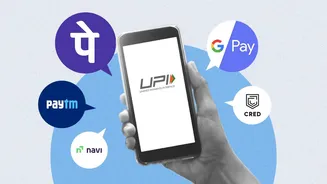
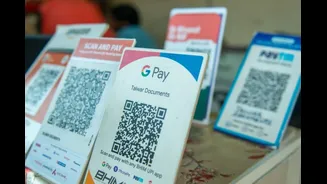
The single most important fact to understand is that for the vast majority of users, nothing has changed. Normal Unified Payments Interface (UPI) transactions remain completely free. If you use an app like Google Pay, PhonePe, or Paytm to scan a QR code
and pay directly from your linked bank account, there is no new fee for you, regardless of the amount. Likewise, sending money to a friend or family member (a peer-to-peer or P2P transaction) also remains free. The confusion stems from a misunderstanding of what the National Payments Corporation of India (NPCI) announced. The charge is not for customers but is an industry-level adjustment for certain types of merchant payments.
So, What is This Fee and Who Pays It?
The fee is called an “interchange fee.” It applies only when a merchant transaction over ₹2,000 is made using a Prepaid Payment Instrument (PPI) through UPI. A PPI is essentially a digital wallet where you pre-load money, such as a Paytm Wallet, PhonePe Wallet, or Amazon Pay Wallet. When you use the money in your wallet—not your bank account—to pay a merchant more than ₹2,000, this interchange fee is triggered. The fee, which can be up to 1.1%, is paid by the merchant’s bank or payment provider to the wallet issuer (e.g., Paytm). It is a back-end cost for the merchant, not an extra charge passed on to the customer at the time of payment. According to NPCI, these specific wallet-based merchant transactions make up less than 0.1% of all UPI transactions, meaning 99.9% of payments are unaffected.
Why Was This Fee Introduced at All?
The introduction of the interchange fee is aimed at ensuring the long-term financial sustainability of the UPI ecosystem. While UPI has been a revolutionary, zero-cost model for users, the companies that run the infrastructure—the payment service providers and banks—incur significant costs. These include expenses for technology, server maintenance, fraud prevention, and round-the-clock customer support. The interchange fee provides a revenue stream for wallet issuers and other payment providers, helping them cover these operational costs. It creates a more viable business model, encouraging them to continue investing in and strengthening the security and reliability of the digital payments network that millions of Indians rely on daily.
Are All Merchants Charged the Same Rate?
No, the system is designed to be fair and not overburden essential services or small businesses. The interchange fee varies by the merchant's category. For example, transactions for fuel, education, agriculture, and utilities attract a lower rate, around 0.5% to 0.7%. Other categories like supermarkets might have a 0.9% rate, while insurance or mutual fund payments could be around 1.1%. Furthermore, many small merchants are exempt from this fee altogether. This tiered structure ensures that the cost is primarily borne by larger, organised businesses that can better absorb it, while protecting small vendors and essential service providers from additional financial burdens.
What This Means for Your Daily Payments
For the average person, day-to-day life with UPI remains unchanged. You can continue to scan and pay at your local kirana store, pay your utility bills online from your bank account, and send money to friends without worrying about new fees. The key distinction is the payment source within your UPI app. As long as you are paying from a linked bank account, all your transactions—P2P and P2M (person-to-merchant)—are free for you. The fee only comes into play for high-value merchant payments made specifically from a pre-loaded wallet balance. To avoid any ambiguity, you can simply ensure your UPI app is set to debit your bank account directly for merchant payments, which is the default for most users anyway.