



The Golden Age of Orbital Repair
The Hubble Space Telescope is arguably the most famous comeback story in science. Launched in 1990 with a flawed mirror, its vision was blurry. The solution was a heroic series of spacewalks by Space Shuttle astronauts in 1993. Over five missions between
1993 and 2009, astronauts visited Hubble to install corrective optics, replace aging gyroscopes, upgrade scientific instruments, and swap out solar panels. These missions were possible for one crucial reason: location. Hubble circles the Earth in a low-Earth orbit (LEO), just over 500 kilometers up. This was close enough for the Space Shuttle to reach, capture the telescope, and provide a platform for astronauts to perform complex repairs. Hubble was specifically designed with this in mind, featuring modular components and handrails for astronauts. These servicing missions dramatically extended Hubble's life and capabilities, making it one of the most productive scientific instruments ever built.
A Million Miles from Home
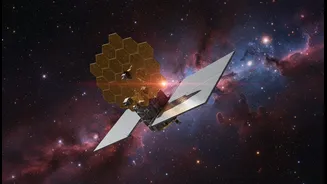
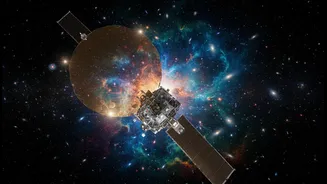
In stark contrast, the James Webb Space Telescope and other modern observatories like the European Space Agency's Gaia and Euclid operate in a vastly different environment: the second Sun-Earth Lagrange point, or L2. This is a specific point in space about 1.5 million kilometers from Earth—nearly four times farther than the Moon. At L2, the gravitational pull from the Sun and Earth balance out in a way that allows a spacecraft to 'hover' and keep pace with Earth's orbit around the Sun. This location is ideal for astronomy. It provides an uninterrupted view of deep space and allows the telescope's massive sunshield to block heat and light from the Sun, Earth, and Moon simultaneously, keeping its sensitive infrared instruments incredibly cold and stable. But this incredible distance—a journey that would take a current crewed vehicle weeks—makes sending astronauts an impossibility with today's technology.
Designed for a Lonely Life
Knowing that a human repair mission was off the table, engineers designed JWST with a completely different philosophy: extreme reliability. The telescope had to work perfectly on its own, enduring a complex, multi-stage deployment process with over 300 potential single points of failure. There are no handholds, no easily swappable modules, and no docking ports for a visiting service vehicle. The decision was made that the added mass, complexity, and cost of making Webb serviceable were not worth it. Instead, the focus was on rigorous testing and building in as much redundancy as possible where it counted. Its operational lifespan isn't limited by component failure in the same way as Hubble's was initially, but rather by the finite amount of fuel it carries to make small orbital corrections to stay in its halo orbit around L2.
Robots to the Rescue?
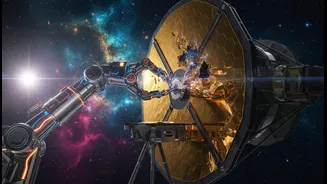
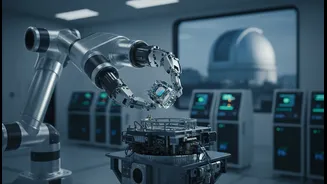
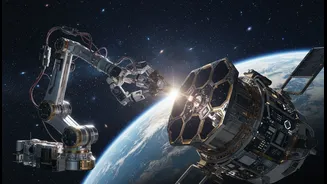
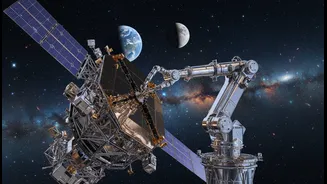
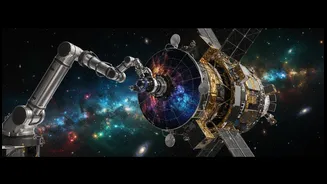
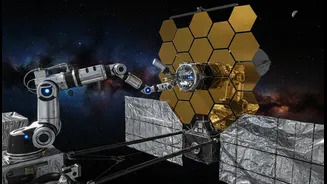
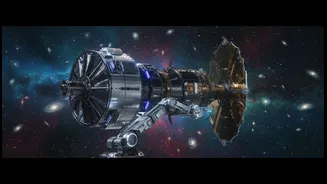
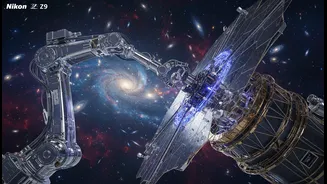
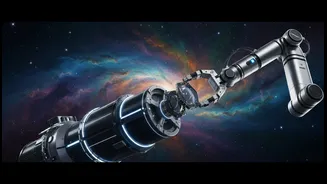
While we can't send astronauts to L2, the idea of servicing distant telescopes isn't dead—it's just going robotic. The lessons learned from both Hubble's success and Webb's limitations are shaping the future of space observatories. NASA's next flagship mission, the Nancy Grace Roman Space Telescope, set to launch in the coming years, is being designed with robotic servicing in mind. This doesn't mean it will be fully serviceable like Hubble, but it will incorporate features like standardized grapple fixtures and accessible components that a robotic spacecraft could interact with for refueling or repairs. Similarly, the proposed Habitable Worlds Observatory (HWO), planned for the 2040s, is being designed from the ground up to be maintained and upgraded by robotic missions. This could allow future scientists to install next-generation instruments without having to build and launch an entirely new multi-billion-dollar observatory.