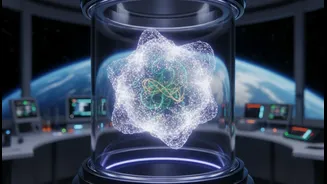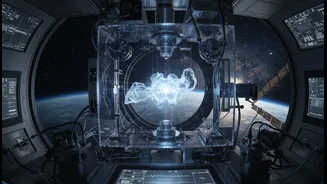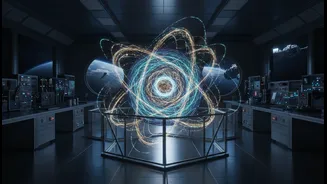









The Coolest Experiment in Orbit
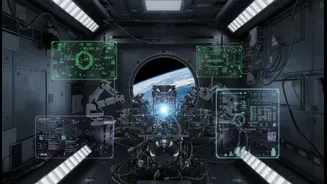
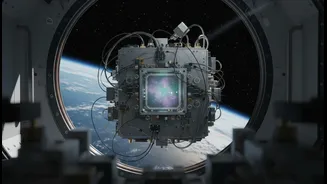
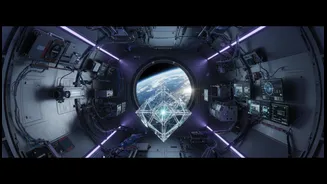
Aboard the International Space Station (ISS) is a facility about the size of a mini-fridge that is officially the coldest known spot in the universe. It’s called the Cold Atom Laboratory (CAL), a quantum physics facility developed by NASA's Jet Propulsion
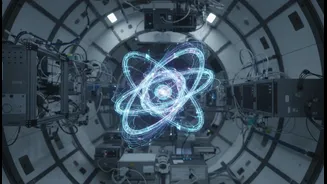
Laboratory. Since its installation in 2018, it has been operated remotely from Earth to chill atoms to temperatures just a fraction of a degree above absolute zero, which is minus 273.15 degrees Celsius. At these extreme temperatures, atoms slow to a near standstill and start to behave in ways not seen in our everyday world. They can form a fifth state of matter, distinct from solids, liquids, gases, and plasmas, known as a Bose-Einstein Condensate (BEC). This work carries special significance due to its connection to Indian physicist Satyendra Nath Bose, who, alongside Albert Einstein, predicted this state of matter in the 1920s.
A Quantum Leap Explained
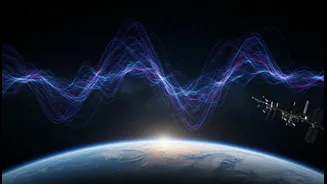
In a Bose-Einstein Condensate, the lines between individual atoms blur. Instead of behaving like tiny billiard balls, they act as a single, collective matter wave. This allows scientists to observe quantum phenomena—which are normally confined to the subatomic scale—at a macroscopic level. Conducting these experiments in the microgravity of space is a game-changer. On Earth, gravity constantly pulls on the atoms, limiting how long researchers can observe them and how cold they can get. In space, free from this constraint, scientists can create BECs that are colder, larger, and can be studied for much longer periods—up to 10 seconds, compared to fractions of a second on the ground. Recent upgrades to the lab in 2026 have further enhanced these capabilities, allowing for more complex experiments.
The Promise: Navigating Without Satellites
One of the most exciting potential applications of this research is in quantum navigation. Current Global Positioning System (GPS) technology relies on a constant signal from orbiting satellites, which can be blocked, jammed, or simply unavailable in deep space or underwater. Quantum sensors, however, could offer a revolutionary alternative. These devices, known as atom interferometers, use the wavelike properties of cold atoms to measure motion, acceleration, and gravity with incredible precision. By splitting a matter wave and then recombining it, scientists can detect minuscule changes in its path. A vehicle equipped with such a sensor could calculate its own position with extreme accuracy without any external signals. This could be transformative for everything from submarines and long-duration space missions to autonomous vehicles on Earth.
The Other Frontier: Questioning Gravity
Beyond practical applications, the Cold Atom Lab is a tool for probing the fundamental laws of the universe. The sensitivity of these ultracold atoms makes them perfect for testing principles of general relativity, such as the equivalence principle, which states that all objects fall at the same rate regardless of mass or composition. By creating dual-species BECs—using two different types of atoms like rubidium and potassium—and observing their behavior in microgravity, scientists can look for tiny deviations that might hint at new physics. These experiments could provide clues about mysterious cosmic phenomena like dark matter and dark energy, pushing the boundaries of our understanding.
The Reality Check: Evidence and Patience
While the potential is enormous, the headline's caution that "evidence still matters" is crucial. The work being done on the Cold Atom Lab is foundational research. Turning these quantum phenomena into reliable, compact, and commercially viable technologies is a long and challenging road. The instruments are incredibly complex, and each new discovery is the result of years of painstaking effort by international teams of scientists. Creating the first BEC in orbit was a major milestone, but it is just one step. The path from a laboratory breakthrough on the ISS to a quantum navigation system in your car or phone will require decades of further development, engineering, and validation. The purpose of CAL is to build that fundamental knowledge base, proving what's possible before the engineers take over.