

The Moon's Hidden Ocean of Air
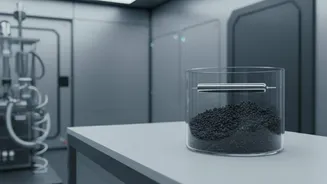
At first glance, the Moon is a desolate, airless world. But its surface is a treasure trove of oxygen. The fine, grey dust and rock covering the Moon, known as lunar regolith, is composed of roughly 45% oxygen by weight. This isn't gaseous oxygen floating
around; it's chemically locked inside oxide minerals, combined with elements like silicon, iron, and aluminium. To make it breathable, scientists must break these strong chemical bonds. The sheer abundance of this resource is staggering. The European Space Agency (ESA) notes that a cubic metre of lunar regolith could theoretically contain enough oxygen to sustain a person for an extended period, making in-situ resource utilization (ISRU) — the practice of living off the land — a game-changer for lunar exploration.
The Science of 'Rock Breathing'
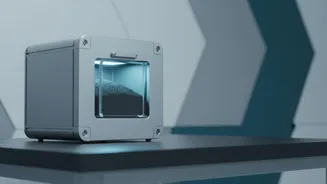
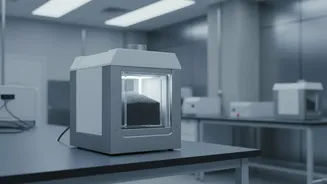
So, how do you get oxygen out of a rock? One of the most promising methods is called molten salt electrolysis. The process works by placing regolith into a chamber heated to around 950°C. In this intense heat, the regolith is submerged in a molten salt, which acts as an electrolyte. An electrical current is then passed through the mixture. This current splits the mineral oxides, causing the oxygen to separate and collect at an electrode, where it can be captured as a pure, breathable gas. This process has been successfully demonstrated in labs by both NASA and ESA using simulated moon dust that closely mimics the real thing. The goal is to create efficient, automated plants that can perform this task on the lunar surface with minimal human intervention.
More Than Just Breathable Air
The benefits of this technology extend far beyond life support. The primary use for bulk oxygen produced on the Moon would likely be as a rocket propellant oxidizer. Refueling rockets for return trips to Earth or for missions deeper into space, like to Mars, becomes vastly more feasible and affordable if you can make the propellant on-site. Furthermore, the electrolysis process leaves behind a valuable byproduct: a mixture of metal alloys. These leftover metals, including iron, aluminum, and silicon, could be fed into 3D printers to manufacture building materials, tools, and spare parts. This creates a powerful cycle of local manufacturing, reducing the lunar base's dependence on Earth for essential hardware and infrastructure.
The Key Players and Prototypes
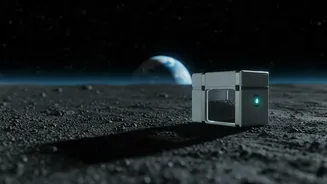
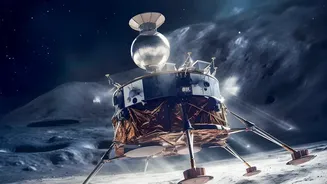
Multiple space agencies and private companies are racing to perfect this technology. The ESA has established a prototype oxygen plant in the Netherlands and is working with industrial partners to design a flight-ready version to be sent to the Moon. NASA, through its Artemis program, is also heavily invested. At Kennedy Space Center, engineers have successfully demonstrated oxygen extraction from a lunar simulant in a vacuum chamber that mimics the harsh lunar environment. Companies like Sierra Space and Blue Origin are developing their own reactors, such as the Carbothermal Oxygen Production Reactor, which recently passed crucial thermal vacuum testing at NASA's Johnson Space Center. The next critical step is to test these systems on the Moon itself, using real regolith under lunar gravity, which is only one-sixth that of Earth's.