


A Diagnostic Revolution in a Single Breath
Imagine a world where detecting complex diseases like diabetes, cancer, or kidney ailments doesn't require painful blood draws or invasive procedures. This is the promise of nano AI breath sensors, a frontier of medical technology where Indian researchers
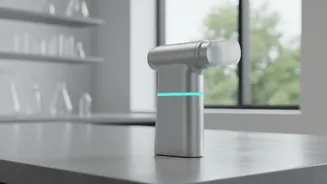
are making significant strides. These handheld devices are designed to analyze the thousands of volatile organic compounds (VOCs) present in human breath. These compounds are byproducts of our metabolic processes, and their specific patterns can act as chemical signatures, or biomarkers, for various health conditions, sometimes even before physical symptoms appear. Recent developments, highlighted at conferences like Bengaluru India Nano 2026, showcase AI-enabled nanosensors capable of screening for conditions like pre-diabetes in under a minute. Researchers from institutions like IIT Jodhpur and IIT Kharagpur are developing these 'electronic noses' that use advanced materials to capture and identify these tell-tale biomarkers from a single exhaled sample.
The AI Brain Behind the Sensor
The 'nano' part of the sensor refers to the microscopic materials engineered to be highly sensitive to specific VOCs. But it's the Artificial Intelligence (AI) that makes the device truly smart. A single breath sample contains a complex mixture of compounds, and distinguishing a disease signature from this background noise is a massive analytical challenge. This is where AI and machine learning algorithms come in. Researchers train these algorithms on vast datasets of breath samples from both healthy individuals and patients with confirmed diseases. The AI learns to recognize the subtle patterns and 'breath prints' associated with specific conditions. For example, a senior scientist from TCS Research explained how an AI-enabled nanosensor for pre-diabetes analyzes multiple biomarkers simultaneously to classify a person's status, a task too complex for simple sensors. This AI-driven approach allows the device to make a reliable decision even when multiple health conditions are present, which can create overlapping and confusing biomarker signals.
Why Real-World Testing is the Real Hurdle
While the technology is groundbreaking, its journey from a research lab to a doctor's clinic is paved with rigorous validation. This is where the headline's emphasis on "Independent Real-World Testing" becomes critical. A device that works perfectly under controlled lab conditions might falter in the real world, where patients have diverse diets, lifestyles, and co-existing health issues. This is why India’s regulatory body, the Central Drugs Standard Control Organisation (CDSCO), places a strong emphasis on robust clinical evidence. For a medical device to be approved, especially a higher-risk or novel one, it must go through extensive trials to prove its safety and effectiveness in actual clinical practice. This process, known as generating Real-World Evidence (RWE), moves beyond traditional, insulated clinical trials to reflect how a device performs in everyday healthcare settings with a diverse patient population. It is a necessary step to gain regulatory approval and, just as importantly, to build trust with doctors and patients.
The Road to Approval in India
Bringing a new medical device to the Indian market involves a structured, risk-based process managed by the CDSCO under the Medical Devices Rules, 2017. Devices are classified from low-risk (Class A) to high-risk (Class D). A novel diagnostic tool like an AI breath sensor would likely fall into a higher-risk category, requiring stringent evaluations. Manufacturers must submit a detailed technical dossier, risk management files, and data from clinical investigations to validate their claims. Several of the breath sensor projects currently under development in India are in the clinical trial phase, a crucial step toward gathering this evidence. For instance, an AI breath analyzer from IIT Kharagpur is undergoing trials at institutions like Calcutta Medical College. Success in these independent, real-world trials is the only way to demonstrate that the device is not just a scientific curiosity, but a reliable tool that can improve healthcare outcomes for millions.