



India's Lithium-Ion Challenge
For years, the dream of affordable electric mobility in India has been tied to the lithium-ion battery. This technology powers everything from smartphones to EVs, but it comes with significant challenges. Lithium-ion batteries account for 40-50% of an EV's
total cost, a major factor keeping them out of reach for many Indian consumers. Furthermore, India is heavily dependent on imports for lithium and other critical minerals like cobalt and nickel, most of which are processed in a few countries. This creates geopolitical vulnerabilities and supply chain risks, essentially swapping a dependency on imported fossil fuels for a dependency on imported battery materials.
Enter Sodium-Ion: The Affordable Alternative
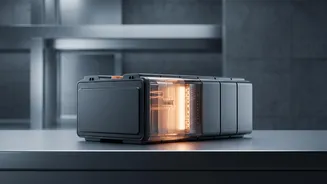
Sodium-ion batteries are emerging as a promising and strategically important alternative. The technology works on a principle similar to lithium-ion, but instead uses sodium ions as its charge carriers. The key advantage lies in its primary raw material: sodium. Sodium is the sixth most abundant element on Earth, found readily in seawater and salt flats, making it significantly cheaper and more environmentally friendly to source than lithium. This abundance presents a massive opportunity for India to build a self-reliant energy storage ecosystem, aligning perfectly with national initiatives like 'Make in India' and 'Atmanirbhar Bharat'.
The Cost and Supply Chain Advantage
The core appeal of sodium-ion technology is its potential to drastically lower costs. Because sodium is abundant and can be sourced domestically, it sidesteps the volatile prices and complex supply chains of lithium, cobalt, and nickel. Some estimates suggest that mass-produced sodium-ion cells could be 30-40% cheaper than their lithium-ion counterparts. This cost reduction directly translates to more affordable EVs. Additionally, existing lithium-ion manufacturing infrastructure can be adapted to produce sodium-ion cells with relatively minor adjustments, accelerating the path to commercialisation. Several Indian companies are already developing the domestic supply chain, from producing cathode materials to creating anodes from agricultural waste like crop stubble.
Performance and Practicality: Are There Trade-Offs?
While sodium-ion batteries excel in cost and safety, they are not a perfect one-to-one replacement for lithium-ion in all scenarios. Their primary drawback is lower energy density, meaning they are bulkier and heavier for the same amount of energy stored. This makes them less ideal for high-performance, long-range passenger cars where a lightweight, compact battery is crucial. However, they are exceptionally well-suited for applications where weight is less of a concern and cost is paramount. This includes two- and three-wheelers, commercial vehicles, and stationary energy storage for homes and grids. Advances are also being made in improving charging speeds and performance in extreme temperatures, making them a robust choice for Indian conditions.
The 'Make in India' Game-Changer
Sodium-ion technology represents a significant opportunity for India to become a leader, rather than a follower, in battery manufacturing. The technology is still globally in its early stages of mass commercialisation, giving Indian companies a window to build a competitive ecosystem from the ground up. Firms like Reliance Industries, through its acquisition of UK-based Faradion, and startups like Indi Energy, GODI, and Rechargion are making significant strides. These companies are focused on localising the entire value chain, from raw materials to finished battery packs, ensuring that the economic and strategic benefits of the next wave of clean transport stay within India.