
The Classic Shooting Star
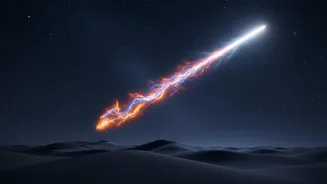
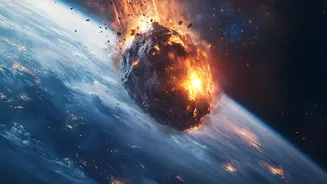
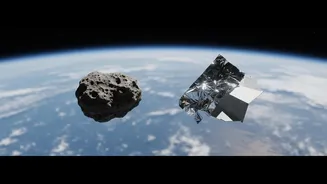
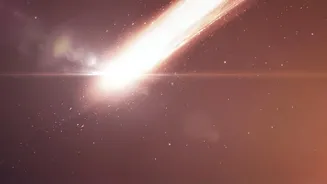
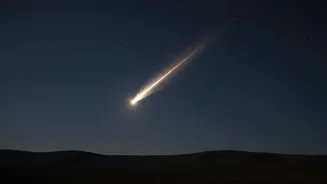
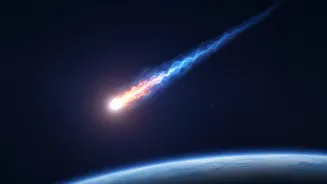
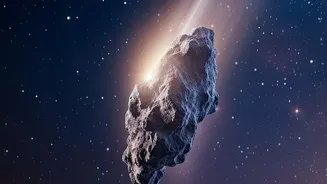
What we call a 'shooting star' is a meteor, a natural object burning up in our atmosphere. These objects are meteoroids—bits of dust, rock, or ice, often no bigger than a grain of sand, shed by comets or chipped off asteroids. They enter Earth's atmosphere at incredible
speeds, ranging from 11 to 72 kilometres per second. This immense velocity compresses and heats the air in front of them, creating a bright, fleeting trail of light. The whole event is usually over in a flash, lasting just a second or two. The colours you might see—like green, yellow, or red—depend on the chemical composition of the meteoroid, such as its iron or magnesium content.
Human-Made Debris Takes a Dive
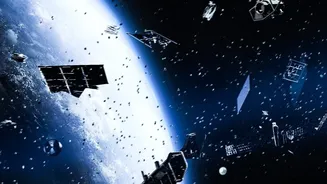
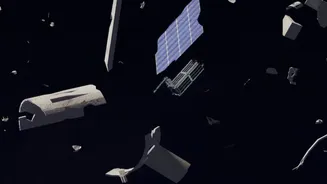
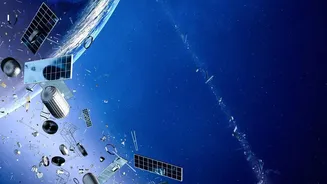
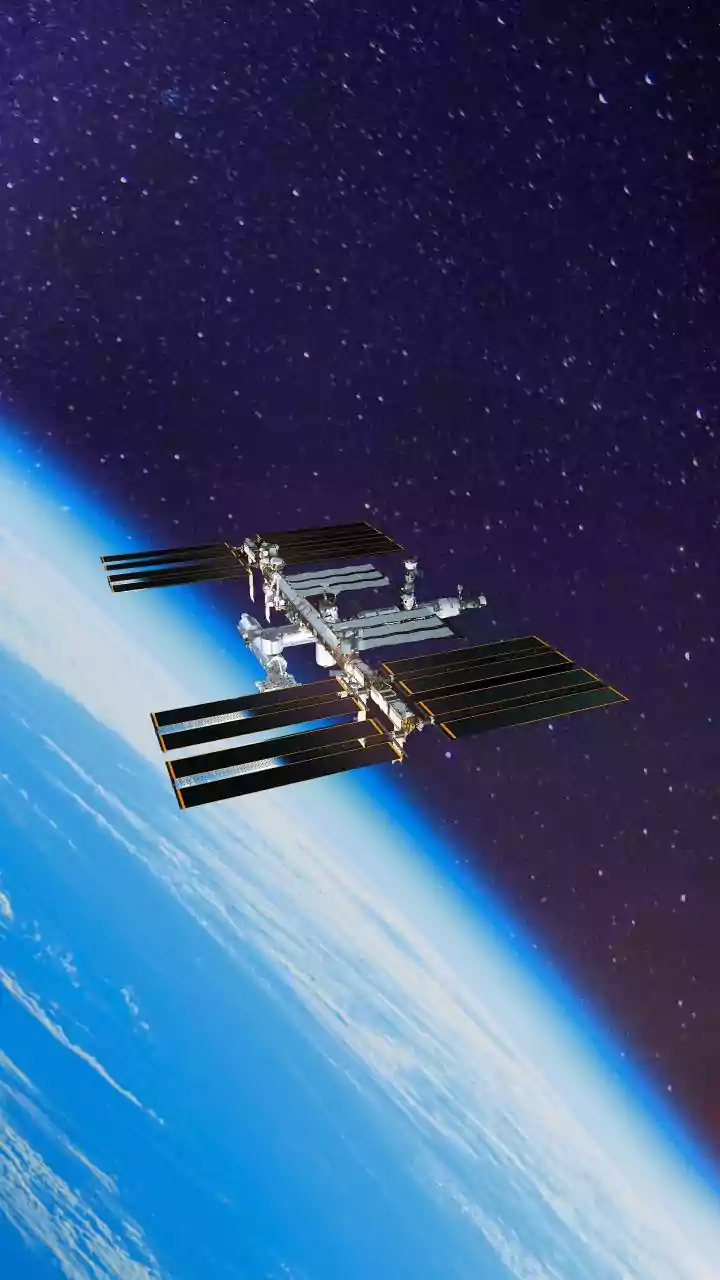
Space junk, on the other hand, is entirely human-made. It consists of defunct satellites, discarded rocket stages, and other fragments from decades of space exploration. Unlike meteors, which arrive from all over the solar system, this debris is already in orbit around Earth. When its orbit decays, it re-enters the atmosphere at a much slower speed than a meteor, typically around 8 kilometres per second. Instead of a swift flash, the re-entry of space junk is a more drawn-out affair. It travels at a shallower angle, almost parallel to the ground, because it was following an orbital path.
Why the Confusion?
The main reason for confusion is that both meteors and space junk create a similar visual effect: a fiery streak of light. For a casual observer who catches only a brief glimpse, the two can seem identical. Both events are caused by objects burning up due to atmospheric drag and heat. Large meteors, known as fireballs or bolides, can be exceptionally bright and last for several seconds, mimicking the appearance of re-entering debris. Furthermore, re-entering debris is often composed of materials like aluminium and steel, which can burn with colours that might be mistaken for the natural minerals in a meteor.
Clues for the Sky-Watcher
If you see a streak of light, pay attention to its speed and duration. This is the biggest giveaway. If the event is over in a blink—just a few seconds at most—it is almost certainly a meteor. If, however, you have time to point it out to someone, grab your phone, and maybe even track it across a significant portion of the sky, you are likely witnessing the re-entry of space junk. These events can last from 30 seconds to several minutes. Another key clue is fragmentation. While large meteors can explode, space junk often breaks apart into multiple, distinct pieces that travel in parallel, each with its own glowing tail.
How the Experts Know for Sure
Beyond what the naked eye can see, scientists have definitive methods for telling the two apart. Radar systems can track an object's trajectory and speed with high precision. A meteor's path is typically steep and its speed is very high. In contrast, space junk follows a predictable, shallow orbital path, and its re-entry can often be anticipated by tracking agencies. Spectral analysis, which examines the light emitted as an object burns, reveals its chemical makeup. This can distinguish the elements in a natural space rock from the alloys and materials used in spacecraft construction. For known meteor showers like the Perseids or Geminids, experts also know to look for meteors appearing to radiate from a specific point in the sky, known as the radiant.