



Choose and Prepare Your Saree
The first step is selecting the right saree. Look for fabrics that are still relatively strong, without major tears in the sections you plan to use. Sarees with rich colours, intricate borders, or beautiful pallus are perfect candidates. Before you begin
cutting, it's crucial to prepare the delicate fabric. Gently hand wash the saree in cold water with a mild detergent suitable for silks. Avoid harsh scrubbing. If the saree is heavily embellished or very old, consider professional dry cleaning to ensure it is clean without sustaining damage. Once clean, air dry it away from direct sunlight and iron on a low heat setting, preferably with a pressing cloth to protect the fibres from scorching.
Crafting a Statement Cushion Cover
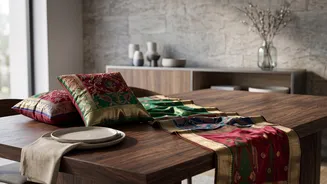
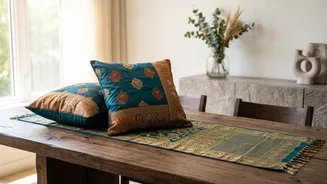
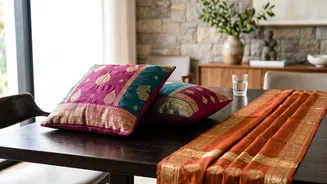
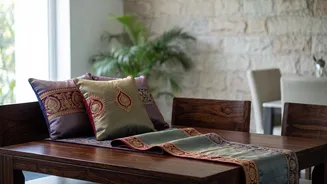
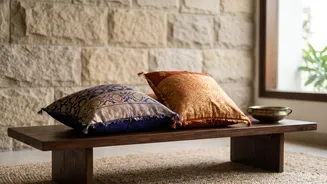
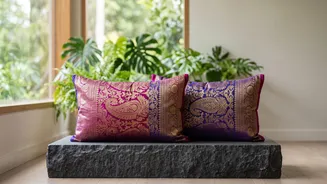
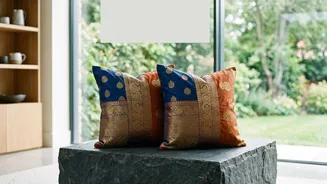
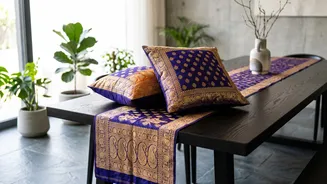
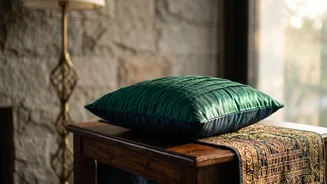
Cushion covers are one of the easiest ways to start your upcycling journey. For a standard 16x16 inch cushion, you'll need two square pieces of fabric, slightly larger to allow for seams. A great technique is to use the most decorative part of the saree, like the border or pallu, for the front of the cushion and a plainer section or a sturdy backing fabric for the back. Measure and cut your pieces carefully. Since silk can be slippery, use sharp scissors or a rotary cutter and consider placing weights on the fabric to hold it steady. For a simple envelope-style cover, cut one long back piece that can be folded to create an opening, eliminating the need for a zipper. If you prefer a no-sew option, you can wrap the fabric around the cushion insert and secure it with fabric glue or by tying the ends in a decorative knot.
Designing an Elegant Table Runner
A table runner can instantly add a festive touch to your dining space. The length and width of your runner will depend on your table size. A good rule of thumb is for the runner to be about one-third the width of your table and hang over each end by about 6-12 inches. Measure your table and decide on the final dimensions before cutting the fabric. Sarees with beautiful, continuous borders are ideal for this project, as you can position the border along the long edges of the runner. For lighter silks, you might want to add a lining of plain cotton or a similar fabric to give the runner more weight and durability. Simply cut the lining to the same size as your saree piece, place the right sides of the fabrics together, sew around the edges leaving a small opening, and then turn it right-side out before stitching the opening closed.
Sewing and Finishing Touches
When sewing with old silk, patience is key. Use a fine, sharp needle (a 60/8 or 70/10 is a good choice) and high-quality silk or polyester thread. Sew slowly to avoid puckering the delicate fabric. To prevent fraying, which silk is prone to, finish your internal seams. A simple zigzag stitch or a French seam will give your creations a professional and durable finish. Once your cushion covers and runner are stitched, elevate them with embellishments. Adding tassels, beads, or decorative trim to the corners and edges can enhance the luxurious feel. You can even use different parts of another saree to create patchwork designs, adding more texture and colour.