







The Rise of the People's Telescope
Welcome to the world of citizen science, a rapidly growing movement where the public participates in professional scientific research. While it sounds new, the concept is as old as amateur naturalists collecting specimens. Today, the internet has supercharged
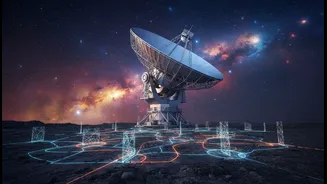
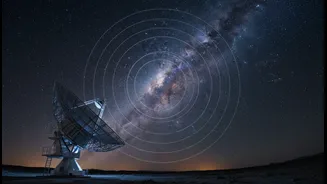
this collaboration. Platforms like Zooniverse allow anyone with a computer to contribute to cutting-edge research. In India, initiatives like RAD@home, the country's first citizen science astronomy project, train undergraduates and enthusiasts to analyse complex data from world-class telescopes like the Giant Metrewave Radio Telescope (GMRT). These volunteers aren't just labelling images; they are becoming e-astronomers, making genuine contributions to our understanding of the cosmos from their own homes.
From Sikkim's Peaks to Distant Galaxies
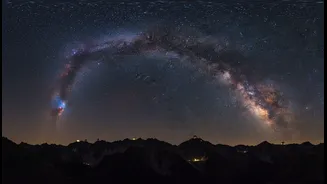
While there isn't one single organisation named 'Sikkim Citizen Science Astronomy', the region embodies the spirit of this movement. Known for its pristine, light-pollution-free skies, Sikkim is a natural hub for astronomy. This environment fosters a culture of stargazing that transitions easily into scientific contribution. Enthusiasts in the Himalayas can log into global and national projects, bringing a unique perspective to the data. In fact, a student from Sikkim University, Pranim Limboo, contributed to research on black hole-galaxy co-evolution through the RAD@home project. This demonstrates how geographic location is no longer a barrier to participating in world-class science. The same clear skies that draw tourists are now a gateway for locals to explore the universe and join a global community of discoverers.
The Brain's Unfair Advantage
In an age of artificial intelligence, why do we still need human eyes? Because our brains are unparalleled pattern-recognition machines, especially for spotting the unexpected. An algorithm trained to find spiral galaxies will find spiral galaxies. A human, however, can spot something utterly bizarre that defies classification. This is how major discoveries are made. Just recently, in mid-2026, a volunteer with the RAD@home network discovered a never-before-seen 'Bow-and-Arrow' shaped galaxy during a weekend training session. Automated systems had previously scanned this object and classified it as ordinary, completely missing its unique shape. It took a human eye to notice the anomaly, proving that our ability to see 'weirdness' and context is something machines still struggle to replicate. This isn't an isolated case; citizen scientists have discovered new planets, mysterious stellar objects, and more.
Taming the Data Tsunami
Modern astronomy is facing a 'data deluge'. Telescopes like the upcoming Vera C. Rubin Observatory will generate unfathomable amounts of information, far too much for professional astronomers to analyse alone. This is not a problem but an opportunity for collaboration. Projects like Galaxy Zoo were born from this necessity, inviting the public to help classify millions of galaxies. The premise is simple but powerful: show a person an image and ask, 'Is this galaxy spiral or elliptical?' By combining the classifications from many volunteers, scientists can build a highly accurate consensus. This people-powered approach is essential for maximising the scientific return on these massive telescope projects. It turns a data problem into a discovery opportunity, ensuring that no potential breakthrough gets lost in the noise.
Collaboration, Not Competition
The future of discovery isn't about humans versus machines; it's about humans and machines working together. Citizen science is the perfect example of this synergy. Volunteers often provide the initial training data for machine learning algorithms. In more advanced systems, AI can perform a first pass, flagging uncertain or unusual objects for human review. This tag-team approach is incredibly efficient. The human brain does what it does best—intuitive pattern recognition—while the computer handles the immense scale of the data. This partnership allows professional researchers to focus their efforts where they are most needed, guided by a global team of dedicated volunteers. It proves that the most powerful tool in science is often a curious mind, amplified by technology.