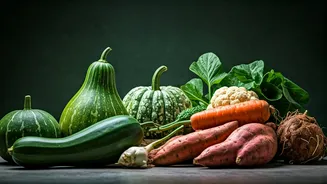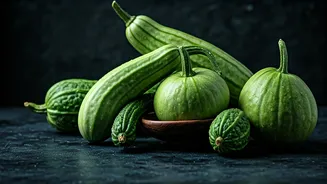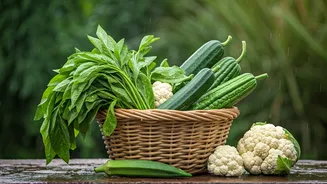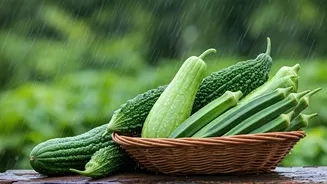




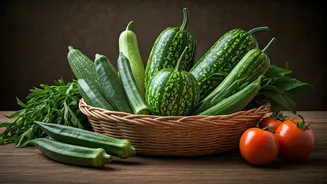
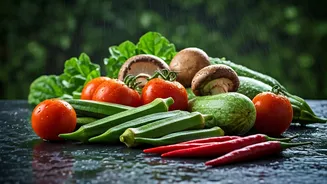
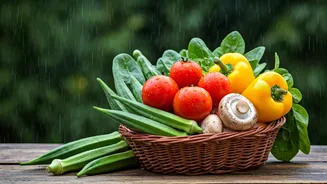


Bottle Gourd (Lauki)
Often overlooked, the humble lauki is a monsoon superstar. Composed of over 90% water, it’s incredibly hydrating and exceptionally easy on the digestive system, which can be sluggish during the humid months. Its high fibre content helps maintain regular
bowel movements and prevents constipation. Rich in vitamins C and B, as well as essential minerals like sodium and potassium, it helps replenish electrolytes lost through sweating. This makes it an excellent choice for maintaining fluid balance and keeping your stomach calm during a season known for digestive troubles. Don’t just think of it as a bland, watery curry. Lauki is wonderfully versatile. Grate it into kofta batter for a soft, melt-in-your-mouth texture. Blend it into a simple, cooling soup with a hint of ginger and black pepper. Or try making Lauki Thepla, a delicious and nutritious flatbread perfect for breakfast or a light dinner. Its mild flavour allows it to absorb the taste of spices, making it a brilliant canvas for your culinary creativity.
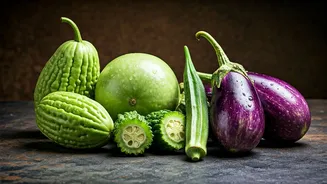
Bitter Gourd (Karela)
The name might be a deterrent for some, but bitter gourd is one of the healthiest vegetables you can eat, especially during the monsoon. It is loaded with powerful antioxidants and antiviral properties that significantly boost your immunity. This is crucial during a season when the risk of colds, flu, and other infections is high. Karela is also renowned for its ability to regulate blood sugar levels and is a fantastic addition to the diet for those managing diabetes or looking for better metabolic health. Its bitter compounds stimulate the liver and improve digestion.
To make karela more palatable, you can reduce its bitterness by soaking sliced pieces in salt water for about 30 minutes before cooking. A classic preparation is a stuffed karela, where the gourd is filled with a spicy mix of onions, fennel, and raw mango powder. Alternatively, slice it thinly, coat with gram flour and spices, and air-fry or shallow-fry for a crunchy, addictive side dish that will make you a bitter gourd convert.
Pointed Gourd (Parwal)
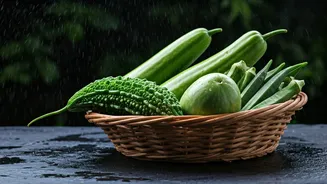
Parwal is a rainy-season staple in many Indian households for good reason. It's packed with Vitamin A and C, which are essential for a strong immune system and healthy skin. Like other gourds, it's rich in fibre and low in calories, making it a great choice for weight management and digestive wellness. According to Ayurvedic tradition, parwal is considered beneficial for balancing kapha and pitta doshas, which are often aggravated during the damp monsoon weather, leading to coughs and colds. Its seeds are also a good source of nutrients, helping to keep the gut healthy.
Parwal is incredibly adaptable in the kitchen. It can be simply pan-fried with turmeric and cumin for a quick and easy sabzi. It shines in rich, tomato-based curries or cooked with potatoes in a dish like Aloo Parwal. For something different, try a Bengali preparation like Parwal Posto, where the gourd is cooked in a creamy poppy seed paste. The vegetable holds its shape well, making it perfect for stews and curries.
Ridge Gourd (Turai)
Known as turai or tori, ridge gourd is another excellent vegetable for the monsoon. It acts as a natural coolant for the body and is a diuretic, which helps in purifying the blood and flushing out toxins. This gourd is an excellent source of dietary fibre, which aids digestion and prevents bloating. Furthermore, it contains a good amount of Vitamin C and zinc, both of which are known to fortify the immune system against common seasonal infections. Its anti-inflammatory properties can also help soothe the system.
The best part about ridge gourd is its delicate, slightly sweet flavour. A simple turai sabzi with moong dal is a comforting and light meal. It's also delicious when added to sambar or other lentil-based dishes. Don't throw away the peels! In many regions, the peels are used to make a spicy and tangy chutney, ensuring you get the most out of this nutritious vegetable. Its soft texture when cooked makes it a favourite for all age groups.
Sweet Potato (Shakarkandi)
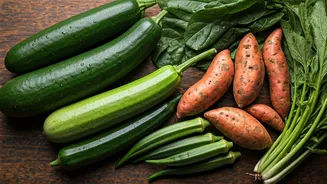
While we often think of gourds, root vegetables like sweet potato are also fantastic monsoon choices. They are a powerhouse of nutrition, loaded with fibre, vitamins, and minerals. Specifically, they are an incredible source of Vitamin A (in the form of beta-carotene), which is vital for good vision, immune function, and skin health. The high fibre content helps promote a healthy gut microbiome, which is the cornerstone of a strong immune system. Unlike regular potatoes, sweet potatoes have a lower glycemic index, providing sustained energy without a sharp spike in blood sugar.
Forget deep-frying. The healthiest and most delicious way to enjoy sweet potatoes is by roasting or boiling them. Roasted shakarkandi, tossed with a pinch of salt, chaat masala, and a squeeze of lime, is a classic street-food snack you can easily replicate at home. You can also mash them to make patties for burgers, cut them into wedges for a healthy alternative to fries, or add cubes to your favourite curry for a touch of sweetness and a creamy texture.