




India's Next Interplanetary Leap
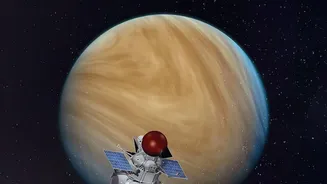
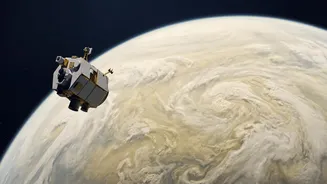
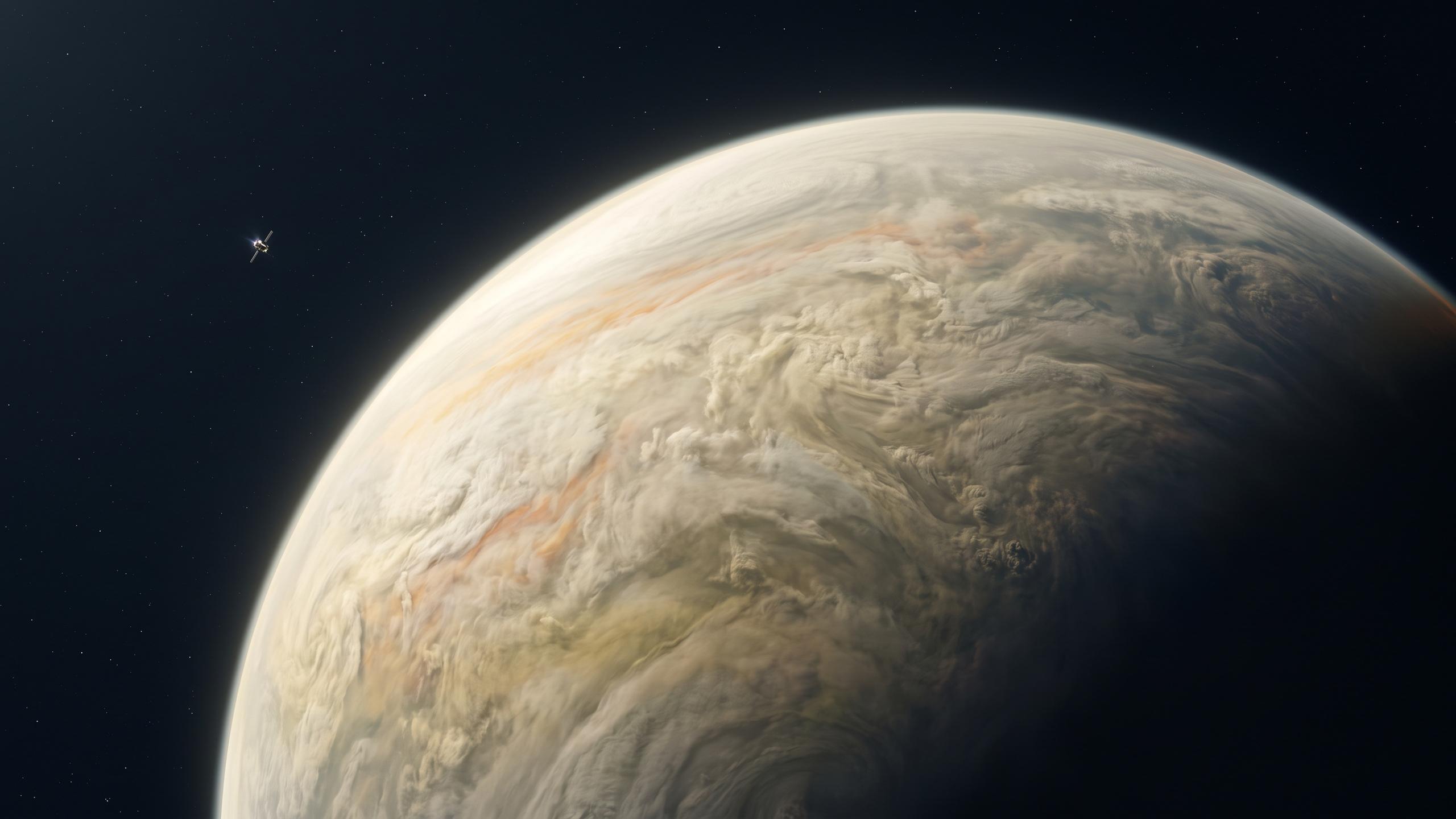
Fresh off the historic triumphs of the Chandrayaan missions to the Moon and the Mangalyaan mission to Mars, ISRO is embarking on its third interplanetary journey. The Venus Orbiter Mission, known as Shukrayaan, represents a new frontier for India's space
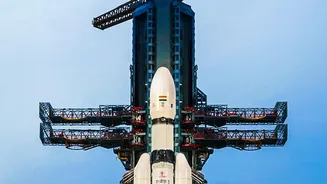
program. Formally approved by the Union Cabinet in September 2024 with a budget of approximately ₹1,236 crore, the mission is currently scheduled for launch on March 29, 2028. The spacecraft is planned to launch aboard the powerful LVM-3 rocket and will undertake a 112-day journey to reach Venus, with orbit insertion expected around July 19, 2028. This mission elevates India into an elite group of space-faring nations that have turned their scientific gaze towards Earth's enigmatic twin.
Why Venus? A World of Extremes
Venus is often called Earth's twin due to its similar size and mass, but it couldn't be more different. It is a cautionary tale of a runaway greenhouse effect, featuring a thick, toxic atmosphere primarily composed of carbon dioxide (about 96.5%) and clouds of sulfuric acid. The atmospheric pressure at the surface is over 90 times that of Earth, and surface temperatures hover around a scorching 467°C, hot enough to melt lead. Scientists believe Venus may have once been more Earth-like, possibly with liquid water oceans. Understanding how it transformed into its current hellish state can provide invaluable insights into planetary evolution, climate change, and the conditions that make a planet habitable. Studying Venus helps us model Earth's own climate and understand the dramatic changes a planet can undergo.
Peering Beneath the Veil of Clouds
The primary objective of Shukrayaan is to conduct a comprehensive investigation of the Venusian surface, subsurface, and atmosphere. One of its key instruments will be a high-resolution Synthetic Aperture Radar (SAR), which has the ability to pierce through the dense cloud cover that permanently shrouds the planet. This will allow ISRO to map the surface with a resolution four times greater than NASA's Magellan mission from the 1990s, searching for evidence of active volcanoes and other geological features. Shukrayaan will also carry a ground-penetrating radar, making it the first mission ever to study the subsurface stratigraphy of Venus, offering clues about its geological history.
The Chemistry of a Toxic Sky
A major focus of the mission is to unravel the mysteries of Venus's atmospheric chemistry. The orbiter will carry a suite of instruments, known as payloads, to analyze the structure, composition, and dynamics of the atmosphere. The thick clouds are mainly composed of sulfuric acid droplets, but their exact composition and the presence of other chemical anomalies remain a puzzle. Scientists are keen to understand the super-rotation of the atmosphere, where winds circle the planet in just four Earth days, far faster than the planet's own 243-day rotation. Instruments will analyze various gases, including sulfur dioxide and water vapour, and investigate how the atmosphere interacts with the solar wind. This research is crucial for understanding the planet's extreme greenhouse effect.
A Collaborative Global Endeavour
The Shukrayaan mission is not just an Indian effort; it's a project marked by significant international collaboration. The orbiter is expected to carry around 19 scientific instruments, with a total payload mass of about 100 kg. While most payloads are Indian, the mission includes key contributions from international partners. Sweden is providing an instrument called the Venusian Neutrals Analyzer (VNA) to study the interaction between the solar wind and the planet's atmosphere. Russia and Germany are also collaborating on instruments designed to study atmospheric gases and the ionosphere. This global partnership underscores the mission's importance to the entire scientific community and strengthens India's position as a reliable partner in complex space projects.