



The Instinct to Be Above It All
Why are cats so obsessed with climbing onto bookshelves, refrigerators, and the highest point of the sofa? The answer is rooted in their evolutionary history. In the wild, vertical space is power. For a cat, height provides a strategic advantage—a secure
vantage point to survey their territory for potential prey (like a scurrying toy mouse) and threats (like the dreaded vacuum cleaner). Climbing is not just a playful quirk; it's a core behavioural need. Being up high gives cats a sense of security and confidence. In multi-cat households, access to different vertical levels can also help establish social hierarchy and reduce conflict, allowing a less dominant cat to retreat to a safe space without confrontation.
The Risks of a Grounded Life
While keeping cats indoors is the safest choice, a strictly horizontal environment can lead to a host of problems. Without adequate stimulation, cats can easily become bored, which can manifest as anxiety, stress, and destructive behaviours like scratching furniture or over-grooming. A sedentary lifestyle is also a primary contributor to feline obesity, a growing health crisis that puts cats at risk for diabetes, arthritis, and other serious conditions. An under-stimulated cat is often an unhappy and unhealthy cat. Providing outlets for natural behaviours like climbing, scratching, and hiding is crucial for their mental and physical well-being. It enriches their world and helps prevent the very issues that can strain the human-animal bond.
Enter the Vertical World
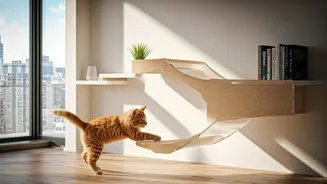
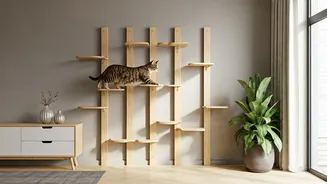
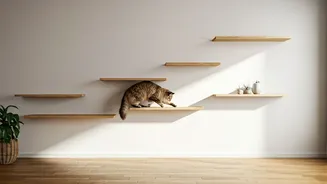
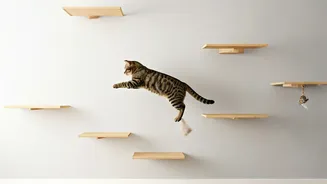
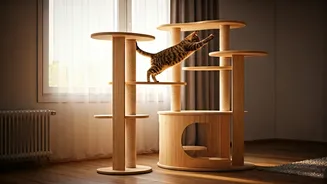
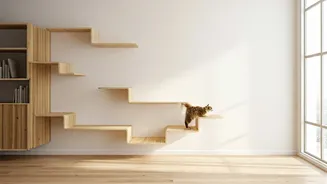
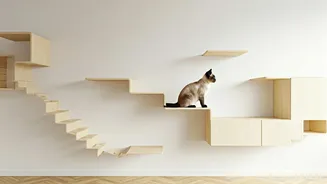
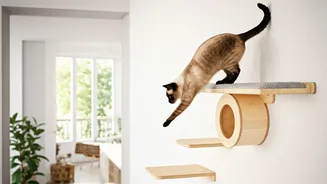
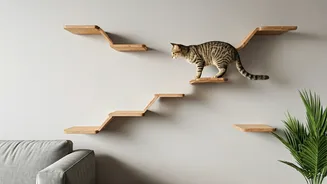
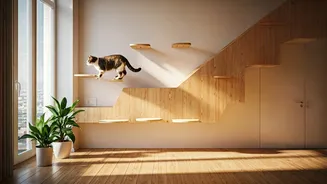
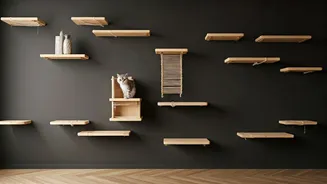
This is where 'catification'—the art of modifying your home to be more feline-friendly—comes in. Creating a 'cat superhighway' of shelves, perches, and steps allows your pet to navigate a room without ever touching the floor. This network of pathways taps directly into their instinct to explore and control their domain from above. Traditional cat trees are a great start, but they can have a large footprint. For those in smaller apartments or anyone seeking a more integrated and stylish solution, floating elements are the perfect answer. They use wall space efficiently, turning blank walls into an interactive 3D environment for your cat.
Rope Steps: A Stylish & Functional Choice
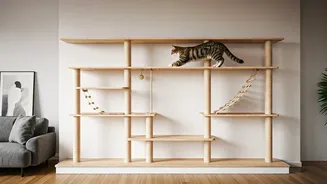
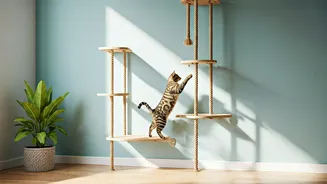
Floating rope steps and bridges are a fantastic component of any cat superhighway. They offer a unique challenge that engages both mind and body. Unlike a solid shelf, a rope bridge or step has a slight instability that requires your cat to use their balance, core strength, and problem-solving skills to cross. This mimics the experience of navigating tree branches in the wild. From a design perspective, they offer a rustic, minimalist aesthetic that can blend more seamlessly into home decor than a bulky, carpet-covered cat tree. Made from materials like natural jute or sisal rope and solid wood, they provide an excellent texture for gripping and even light scratching.
Installation and Safety First
Before you begin, safety is paramount. Ensure you are mounting the steps securely into wall studs, not just drywall. Use a stud finder to locate them. If studs aren't available in the desired location, use heavy-duty drywall anchors rated well above your cat's weight. Plan the route logically. Create a path that flows, with steps spaced appropriately for your cat’s size and agility—typically about 30-40 cm apart, both horizontally and vertically. The highway should have clear entry and exit points, like a sturdy piece of furniture or a low-mounted shelf. Avoid creating dead ends, which can cause anxiety or lead to falls if a cat feels trapped.
Encouraging Your Cautious Climber
Don't be discouraged if your cat doesn't immediately take to their new aerial playground. Cats are cautious creatures. Never force them onto the steps. Instead, use positive reinforcement. Place their favourite treats or a sprinkle of catnip on the first few steps to entice them. Use a wand toy to guide them up, turning exploration into a game. Make the destination appealing by placing a comfortable perch or shelf at the end of the path. Patience is key. Let them discover and conquer their new territory on their own terms. Soon enough, you’ll find them confidently surveying their kingdom from their new favourite spot.