





A High-Tech Look at the Past
Scientists are using high-resolution computed tomography (CT) scanning, a technique familiar from medical diagnostics, to create detailed 3D digital models of fossil specimens. This method is entirely non-destructive, which is crucial when dealing with
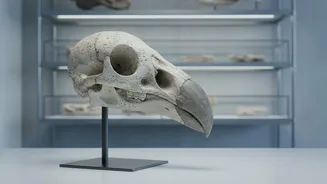
incredibly rare artifacts. There are only two complete dodo skulls known to exist in the world, housed at museums in Denmark and Oxford. Using CT scanners, researchers can create a 'virtual fossil,' allowing them to examine the skull’s internal structure—including the cavity where the brain once sat—without ever risking damage to the actual bone. The brain leaves an imprint on the inside of the skull as it develops, and by analyzing this digital reconstruction, scientists can infer a surprising amount about the animal's sensory capabilities and behaviour.
Smarter Than We Thought
For centuries, the dodo has been unfairly painted as a clumsy, unintelligent bird that was doomed to extinction. However, the latest research strongly challenges this myth. By comparing the digital brain cavity of the dodo to its closest living relatives, pigeons and doves, scientists found no evidence that the dodo had reduced cognitive abilities. The part of the brain associated with higher-order functions like learning was proportionally similar, suggesting its reputation for being 'dumb' was entirely undeserved. This perception likely arose because the dodo evolved on the isolated island of Mauritius with no natural predators, so it showed no fear of the sailors who first encountered it. Its naivety was mistaken for stupidity.
A Secret Sensory World
The CT scans revealed a fascinating and unique combination of sensory adaptations. The shape of the dodo's brain cavity suggests it had a much stronger sense of smell than modern pigeons, which would have been useful for finding food on its island home. Furthermore, the anatomy of its large, distinctive beak indicates it was a highly sensitive tool, rich with nerves capable of processing tactile information from the environment. Perhaps most surprisingly, the dodo’s visual system was unusual. While its optic lobes were smaller than expected, its eye sockets were quite large. This combination points to a visual system adapted for lower-light conditions, suggesting the dodo wasn't just active during the day but also during dawn and dusk—a behavior known as being crepuscular.
A Blueprint for Lost Species
The success of this dodo research highlights the revolutionary power of non-destructive analysis in paleontology. For countless fragile and irreplaceable fossils, traditional methods that involve cutting into or taking samples from a specimen are simply too risky. Digital reconstruction techniques allow scientists to study the internal anatomy of everything from dinosaur embryos still inside their eggs to the delicate skulls of early human ancestors. It’s like performing a virtual autopsy on an animal that has been extinct for centuries. This approach not only preserves the original fossil for future generations but also provides a level of detail that was previously unimaginable, offering a new window into the biology and behavior of the lost worlds of our planet.