







The Invisible Plastic Invasion
First, what exactly are microplastics? They are tiny plastic particles, less than five millimetres in size, that result from the breakdown of larger plastic items like bottles, bags, and packaging. They can also be manufactured intentionally, like the microbeads
once common in personal care products. These minuscule particles are now ubiquitous in our environment—found in oceans, soil, and even the air we breathe. This widespread contamination means they inevitably find their way into the food chain, and from there, onto our plates and into our cups.
The Salt of the Earth… and Plastic?
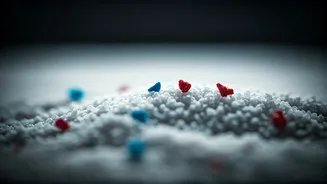
Salt, a fundamental ingredient in every Indian kitchen, is unfortunately a primary route for microplastic consumption. A 2024 study by the environmental organization Toxics Link found microplastics in all tested salt brands in India. The contamination happens primarily in two ways. For sea salt, the most common type, microplastics that pollute our oceans get trapped during the water evaporation process. Studies have consistently found that sea salt contains higher levels of microplastics compared to other types. A study by IIT-Bombay highlighted this issue years ago, finding dozens of microplastic particles per kilogram of salt tested. Even rock salt (sendha namak), which is mined from ancient deposits, is not entirely safe. While generally containing fewer particles than sea salt, it can become contaminated during processing, packaging, and from airborne plastic fibers. The Toxics Link study surprisingly found the highest concentration in common iodised salt and the lowest in organic rock salt.
A Not-So-Soothing Cup of Chai
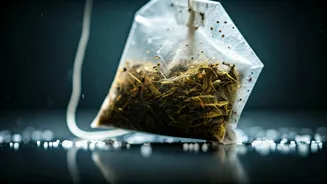
For many of us, the day doesn't start without a hot cup of tea. But your daily chai might be serving up a dose of plastic. The main culprit isn't the tea leaves themselves, but the tea bags. Many modern tea bags, especially the pyramid-shaped or 'silken' mesh ones, are made from plastics like nylon or polypropylene (PET). When you dip one of these bags into boiling water, it can release billions of microplastic and even smaller nanoplastic particles into your brew. One study found that a single plastic tea bag steeped at brewing temperature could release over 11 billion microplastic particles. Even standard paper tea bags often contain a small amount of plastic in the form of thermoplastic fibres used to heat-seal the edges, which can also leach particles.
Should You Be Worried?
This is the million-rupee question, and scientists are still working on a complete answer. The World Health Organization (WHO) states that based on limited current evidence, the risk to health is considered low, but more research is urgently needed, especially on smaller nanoparticles. What we know is that these particles are entering our bodies; they've been found in human blood, lungs, and other organs. The concern is that long-term exposure could lead to chronic inflammation, oxidative stress, or other issues. The plastics themselves, as well as the chemical additives they contain, could pose health risks over time.
Cleaning Up Your Kitchen
While you can't eliminate exposure completely, you can significantly reduce it with a few simple changes. For tea, the best option is to switch to loose-leaf tea brewed in a metal or ceramic infuser. If you prefer tea bags, look for brands that explicitly state they are 100% plastic-free and made from natural, compostable materials like organic cotton. For salt, consider opting for rock salt over sea salt, as studies often show it has lower levels of contamination, and buy it in cardboard or glass packaging where possible. Beyond salt and tea, think about reducing plastic use in the kitchen overall. Use glass or stainless steel containers for storing and reheating food instead of plastic ones, and choose wooden cutting boards and utensils over their plastic counterparts.