





A Partnership for the Future
India's decision to join the U.S.-led Artemis Accords and cooperate on ambitious lunar exploration projects marks a significant shift from its traditional path of self-reliance in space. This partnership provides India access to a global framework for
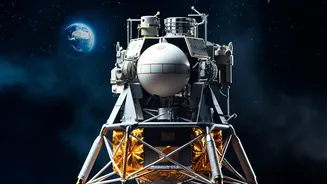
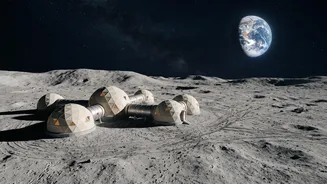
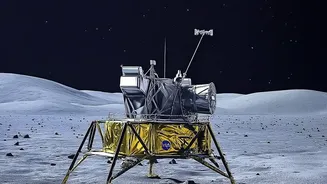
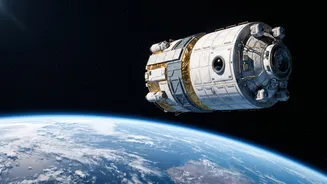
lunar infrastructure, allowing it to co-develop systems rather than building everything from scratch. It's a strategic move that integrates India into a collaborative international effort to establish a sustainable human presence on the Moon and, eventually, Mars. This cooperation isn't just about planting flags; it's about building a shared technological future, with recent invitations from NASA for ISRO to participate in its Moon base program underscoring the depth of this growing alliance.
Fueling the Private Space Revolution
For decades, India's space sector was synonymous with ISRO. However, policy reforms since 2020 have opened the floodgates for private enterprise. The NASA-ISRO partnership acts as a powerful stimulant for this burgeoning private ecosystem. The number of space startups in India has surged, growing from just a handful in 2014 to over 400 by 2024. These companies are not just peripheral suppliers; they are building launch vehicles, designing satellites, and developing sophisticated space-enabled applications. International collaborations lend credibility and create opportunities for these private players to integrate into global supply chains, attracting foreign direct investment—especially with new policies allowing up to 100% FDI in satellite manufacturing. This is expected to help India's space economy grow from around $9 billion in 2023 to over $40 billion by the early 2030s.
The New Frontier of Job Creation
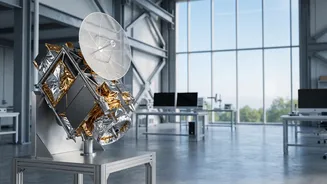
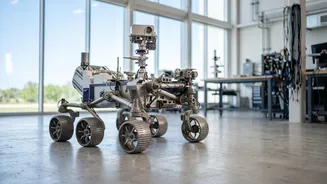
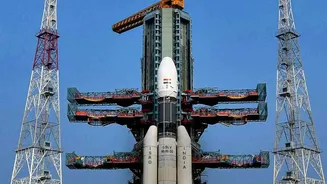
The collaboration demands a workforce with cutting-edge skills far beyond traditional aerospace engineering. The future of space jobs in India lies in high-tech, specialized fields. There will be a significant demand for experts in robotics, artificial intelligence and machine learning for autonomous systems and data analysis. Satellite technology, particularly for small satellite constellations used in communications and Earth observation, will be a major growth area. The joint NASA-ISRO Synthetic Aperture Radar (NISAR) mission is a prime example, a $1.5 billion project creating demand for data analysts and scientists to process vast amounts of climate and geological information. Furthermore, as India advances its own human spaceflight program (Gaganyaan) in concert with these collaborations, opportunities will arise in life support systems, space medicine, and human-rated engineering.
Beyond Engineering: A Wider Economic Impact
The ripple effects of the space partnership will extend across the Indian economy. The immense volume of data from missions like NISAR will fuel innovation in downstream applications, creating jobs in sectors like agriculture, disaster management, and urban planning. Lawyers specializing in space law, financiers structuring investments for space startups, and cybersecurity experts protecting space-based assets will all be in high demand. The growth of the sector will also necessitate a parallel expansion in education and research, creating roles for academics and researchers. This ecosystem effect means that the growth is not confined to ISRO's campuses or startup hubs but will foster a nationwide knowledge economy built around space technology.