




A New Cosmic Gold Rush
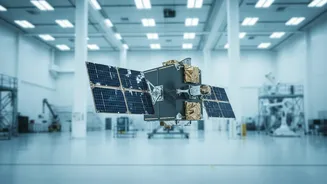
India is witnessing a cosmic gold rush, and the prospectors are a new breed of entrepreneur. In just a few years, the number of space startups has skyrocketed from a mere handful in 2019 to over 400 by early 2026. These companies are not just building
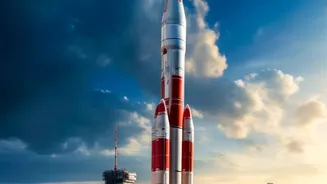
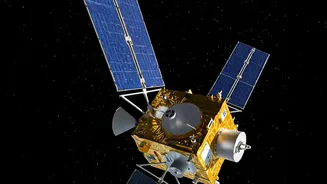
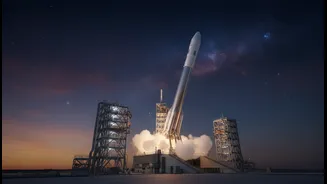
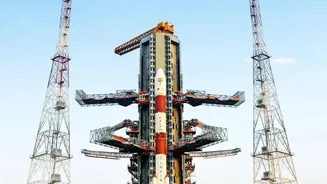
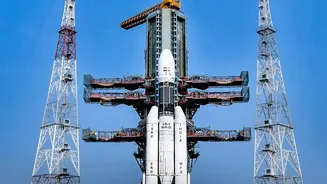
components; they are designing and launching their own rockets, deploying satellite constellations, and creating cutting-edge propulsion systems. A landmark moment arrived in July 2026 when Skyroot Aerospace's Vikram-1 rocket successfully reached orbit on its maiden flight, making India only the third country, after the US and China, to have a private company achieve this feat. This success has supercharged the sector, with companies like Agnikul Cosmos, which specializes in 3D-printed rocket engines, and Pixxel, building a constellation of hyperspectral imaging satellites, also making significant strides. This surge isn't happening in a vacuum; it’s the result of a deliberate and game-changing policy shift.
The Policy That Unlocked The Stars
The primary catalyst for this explosion was the government's decision in 2020 to open up the space sector to private participation. This reform was formalized with the Indian Space Policy of 2023 and the creation of a crucial new body: the Indian National Space Promotion and Authorisation Centre (IN-SPACe). Acting as a single-window agency, IN-SPACe is designed to promote, authorize, and supervise private space activities, effectively ending the era where ISRO was both player and referee. Its role is to help private companies navigate regulations, access ISRO's world-class facilities, and facilitate technology transfers. This shift from a government-led, supply-driven model to a demand-driven one has been revolutionary, creating a predictable and encouraging environment for private investment and innovation. The goal is ambitious: to grow India's share of the global space economy from 2% to over 8% by 2033, expanding its value to an estimated $44 billion.
ISRO’s New Role: From Player to Mentor
With the private sector now handling more routine commercial launches and satellite manufacturing, the Indian Space Research Organisation (ISRO) is free to focus on its core mandate: pioneering research and development, deep-space exploration, and national security missions. This includes ambitious projects like the Gaganyaan human spaceflight program, further lunar explorations with Chandrayaan, and the development of an Indian space station by 2035. Rather than being diminished, ISRO's role has evolved into that of a mentor and enabler. The agency is actively transferring technology—over 100 technologies so far—to private entities and is set to share the know-how for its workhorse PSLV rocket with eligible firms. This collaboration is creating a powerful synergy, with seasoned engineers even moving from ISRO to the more agile startup environment, creating a reverse brain drain and cross-pollinating expertise across the ecosystem.
Challenges on the Final Frontier
Despite the incredible momentum, the path ahead is not without its asteroids. A major hurdle is the absence of a comprehensive, codified Space Activities Act. While policies and bodies like IN-SPACe provide guidelines, a formal legislative framework is needed to address critical issues like liability, intellectual property rights, and dispute resolution. Funding also remains a challenge. Although investment is growing—with the sector attracting nearly $390 million over the past three years—it pales in comparison to the multi-billion-dollar government contracts that fuel private space industries in the US. Indian startups face a long and capital-intensive journey from prototype to profitability, and investors are becoming more focused on execution and a clear path to revenue. Furthermore, there is a need to build a more robust domestic supply chain for critical, space-grade components to reduce dependency on imports and compete globally.