


The Power of the Plume
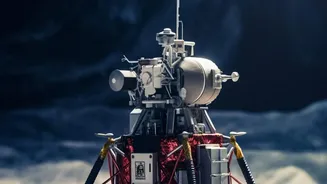
The core of the issue is something called plume-surface interaction. When a lander's powerful rocket engines fire to slow its descent, the exhaust, or plume, hits the lunar surface at supersonic speeds. On Earth, a thick atmosphere contains and slows
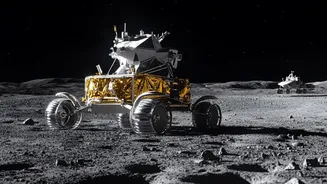
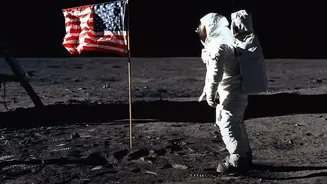
this blast. But on the airless Moon, there’s nothing to stop it. The result is a high-speed spray of lunar soil, called regolith, shooting outwards. This isn't just fine dust; it's a sandblasting jet of sharp, abrasive particles and even small rocks. The Apollo missions gave us our first look at this problem, with astronauts reporting how the clingy, damaging dust got into everything, from spacesuit joints to scientific instruments.
Recreating the Moon on Earth
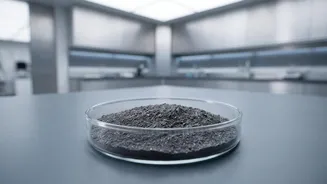
To understand and predict these effects, NASA has begun a series of complex tests at its Langley Research Center in Virginia. Inside a massive, 60-foot spherical vacuum chamber, engineers are firing scaled-down rocket engines at a bin of simulated lunar regolith. This 'fake Moon dirt,' known as Black Point-1, mimics the jagged and cohesive properties of actual lunar soil. The tests use different types of propulsion systems to simulate various lander engines, from an ethane system that produces about 100 pounds of thrust to a 3D-printed hybrid rocket motor. By conducting these six-second blasts in a vacuum, scientists can replicate the conditions of a lunar landing with high fidelity.
Measuring the Lunar Kick-Up
So, what are scientists looking for in the chaotic aftermath of these blasts? A suite of high-tech instruments measures every aspect of the event. They are primarily focused on crater formation—how deep and wide a hole the engine plume digs into the surface. They also track the ejecta, which is the sheet of debris that gets kicked up. Cameras and sensors measure its angle, height, and how the particles are distributed. Critically, they measure the speed of the regolith particles as they are blasted away. This data is essential because a particle travelling at high velocity can cause significant damage to anything it hits, turning a simple landing into a hazardous event for any nearby equipment or future habitats.
Protecting Astronauts and Infrastructure
The ultimate goal of this research is safety and mission success for the Artemis program and beyond. The data gathered from these tests will be used to create and refine computer models that can accurately predict the effects of a landing. This will help NASA and its commercial partners design safer landers. For instance, understanding how debris sprays from under a lander could influence the height of its legs or the placement of sensitive instruments. It is especially critical for planning a permanent lunar base, where multiple assets—like habitats, rovers, and scientific experiments—could be located near a landing zone. Protecting this expensive hardware, and the astronauts who rely on it, from being sandblasted by a landing or departing spacecraft is pivotal.
Paving the Way for a Lunar Future
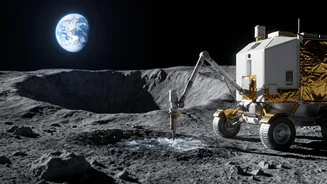
Beyond just preventing damage, understanding plume-surface interaction is key to unlocking the Moon's potential. Future missions aim to establish a long-term human presence, which involves building structures and using local resources. The same forces that kick up dust could potentially interfere with or even assist in mining operations for resources like water ice, which is believed to be mixed in the lunar regolith. The test campaign is designed to be modular, meaning the lunar simulant can be swapped for a Mars simulant, helping prepare for future crewed missions to the Red Planet as well. By studying these powerful interactions now, on Earth, NASA is developing the foundational knowledge needed not just to land on the Moon again, but to stay there.