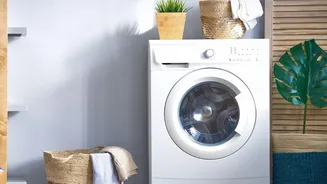




Wash Smaller, More Frequent Loads
It might feel efficient to stuff the washing machine to capacity, but during the monsoon, this is a mistake. Overloading the drum prevents proper air and water circulation, meaning clothes don't get rinsed thoroughly and come out wetter. Washing smaller
loads allows for a better clean and more effective water extraction during the spin cycle. This simple change is one of the most effective ways to combat dampness, as it prevents garments from clumping together and trapping moisture that later causes that signature musty odour. If you get caught in a downpour, wash those drenched clothes immediately instead of letting them sit in a laundry basket, which is an open invitation for germs and smells to develop.
Harness the Power of the Spin Cycle
Your washing machine's spin cycle is your most valuable tool during the rainy season. Using the highest spin speed appropriate for your fabrics is a non-negotiable step. A faster spin uses centrifugal force to wring out significantly more water from your clothes, which can reduce the moisture content by 40-50%. Many experts even recommend running an extra spin cycle after the wash is complete. This trick uses very little electricity compared to a tumble dryer but can cut down indoor drying time by hours, sometimes even a full day. Less water in the clothes from the start means a much shorter journey to being fully dry and fresh.
Add a Natural Deodoriser to Your Wash
That persistent damp smell in monsoon laundry is caused by bacteria and mildew thriving in the moist fabric fibres. To combat this, consider adding a natural antibacterial agent to your wash. Distilled white vinegar is a fantastic choice; adding about half a cup to the final rinse cycle helps neutralize odours and dissolve detergent residue that can cause stiffness. Don't worry, your clothes won't smell like vinegar, as it rinses out completely. Another option is baking soda, which acts as a powerful deodorizer. Adding half a cup to your rinse cycle can help absorb musty smells and soften fabrics naturally. However, use either vinegar or baking soda, not both in the same load, as they can neutralize each other's effects.
Optimise Your Indoor Drying Strategy
With sunlight being a rare commodity, how you dry clothes indoors makes all the difference. The key is to maximize air circulation. Always hang clothes on a drying rack with ample space between each item—at least a few inches—to allow air to move freely. Avoid stacking garments or hanging them in enclosed, stuffy corners. Placing the rack near a window or in a well-ventilated area is ideal. To significantly speed up the process, position a fan to blow air across the clothes. This constant airflow helps whisk moisture away from the fabric, mimicking a natural breeze and preventing the dampness that leads to bad smells. A dehumidifier can also be a game-changer in very humid homes.
The Finishing Touches for Dryness
Even after air-drying, some fabrics might retain a hint of dampness, especially around thick seams, cuffs, and waistbands. Before folding and storing, ensure every item is completely dry. Running a hot iron over clothes that feel mostly dry is an excellent way to eliminate any last trace of residual moisture. The heat provides a final, crisp finish and helps kill any remaining odour-causing bacteria. This step is particularly useful for heavier items like jeans and bedsheets. Once dry, don't pack your wardrobe too tightly. Allowing for airflow between your stored clothes prevents moisture from getting trapped and keeps them smelling fresh until you're ready to wear them.