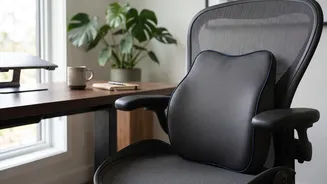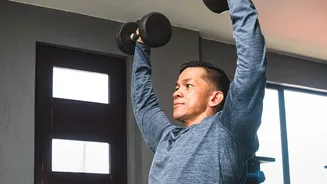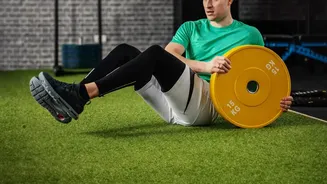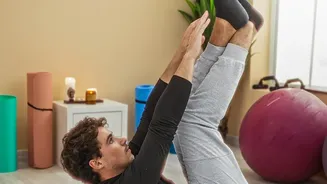






Years of sitting at a desk can lead to rounded shoulders, a sore neck, and lower back pain. But the damage isn't permanent. Targeted gym workouts can reverse these effects and build a stronger, more resilient posture.
The Problem: 'Desk Body'
Before diving into the solution, it's
important to understand the problem. The typical desk setup encourages the body to slump forward. The head drifts in front of the shoulders ('forward head posture'), the upper back rounds, and the chest muscles tighten. Meanwhile, the muscles on the backside of the body—like the glutes, hamstrings, and upper back muscles—become underused and weak. This combination creates a muscular imbalance that pulls your skeleton out of alignment, leading to the aches and stiffness many office workers feel daily. The key to fixing this is to strengthen the weak muscles and stretch the tight ones.
Seated Cable Rows: Pull Your Shoulders Back
One of the most effective ways to combat slouching is to strengthen your upper back. The seated cable row directly targets the rhomboids and middle trapezius, the muscles responsible for pulling your shoulder blades together. A strong back provides the foundation for an upright posture. Because the machine provides stability, you can focus on proper form without straining your lower back, making it a great exercise for beginners. Focus on squeezing your shoulder blades together with each pull, keeping your chest up and your torso still. Think about pulling your elbows back towards your hips.
Face Pulls: The Ultimate Posture Corrector
If there's one exercise specifically designed to fix rounded shoulders, it's the face pull. This movement strengthens the rear deltoids and the small rotator cuff muscles that are crucial for shoulder health and stability. These are the very muscles that become weak and overstretched from hunching over a keyboard. To perform it correctly, set a rope attachment on a cable machine at eye level. As you pull the rope towards your face, focus on pulling your hands apart and driving your elbows back. The goal is to finish with your hands by your ears in a 'biceps flex' position, which promotes external rotation of the shoulder—the direct opposite of slouching.
Romanian Deadlifts: Rebuild Your Foundation
Sitting all day doesn't just affect your upper body; it deactivates your posterior chain—the powerful muscles of your glutes, hamstrings, and lower back. The Romanian Deadlift (RDL) is a powerhouse exercise for rebuilding this entire area. A strong posterior chain is essential for supporting your spine and maintaining an upright posture when standing and walking. To perform an RDL, hold a barbell or dumbbells and hinge at your hips, pushing them straight back while keeping your back flat and knees slightly bent. Lower the weight until you feel a deep stretch in your hamstrings, then squeeze your glutes to drive your hips forward and return to a standing position.
Glute Bridges : Wake Up Your Glutes
When you sit for hours, your glute muscles can effectively 'fall asleep', a condition often called gluteal amnesia. This forces other muscles, like your lower back and hamstrings, to overcompensate, often leading to pain. Glute bridges are a simple yet powerful exercise to reactivate these muscles. Lie on your back with your knees bent and feet flat on the floor. Drive through your heels and lift your hips toward the ceiling, squeezing your glutes at the top. This movement strengthens the glutes and improves pelvic stability, which is vital for a healthy posture.
Planks : Solidify Your Core
Good posture isn't just about your back and shoulders; it begins with a strong, stable core. The plank is a fundamental core exercise that teaches you to brace your entire trunk, which helps protect your spine and maintain a neutral position. A strong core acts as a natural corset, providing the stability needed to sit and stand tall without fatiguing. Ensure your body forms a straight line from your head to your heels, engaging your abs and glutes to prevent your hips from sagging.
< / div >