



India’s Unblinking Eye on the Sun
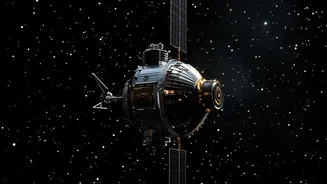
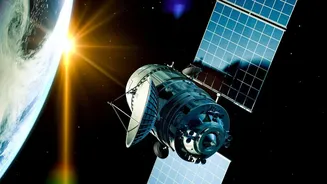
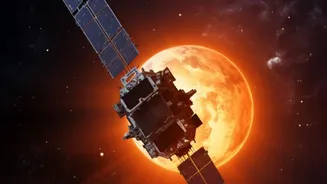
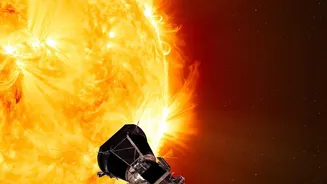
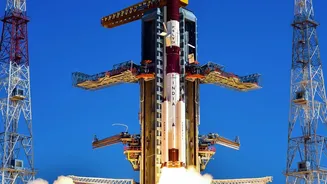
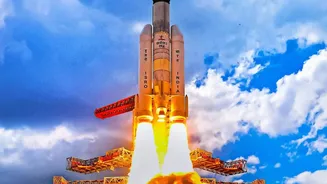
Perched 1.5 million kilometres from Earth at a special spot called Lagrange Point 1 (L1), the Aditya-L1 observatory has an uninterrupted view of the Sun. This strategic location is crucial because it allows the spacecraft to stay in a fixed position relative
to the Earth and Sun, meaning it never enters an eclipse or has its view blocked. Unlike previous missions that might have offered snapshots, Aditya-L1 acts like a dedicated sentinel, providing a continuous stream of data. This constant vigilance is the key to its transformative potential. It’s not just observing; it’s monitoring every subtle shift and gust in the solar wind, which is vital for understanding what scientists call "space weather".
What Is Space Weather and Why Care?
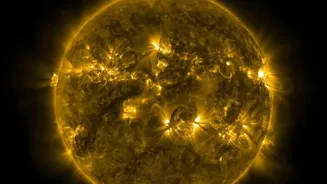
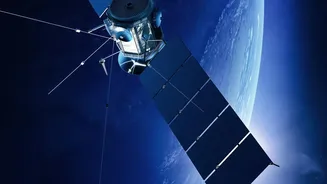
Space weather refers to the changing conditions in space, driven by the Sun's activity. The most significant component of this is the solar wind, a stream of charged particles—mostly protons and electrons—that flows from the Sun’s corona at incredible speeds, sometimes over 800 kilometres per second. When these solar winds, especially those carrying powerful bursts from events like Coronal Mass Ejections (CMEs), smash into Earth’s magnetic shield, they can cause geomagnetic storms. These aren't storms in the earthly sense, but they can have very real consequences. They can disrupt power grids, damage satellites essential for communication and GPS, interfere with radio signals, and even pose a radiation risk to astronauts. Essentially, our modern, technology-dependent world is vulnerable to weather that starts 150 million kilometres away.
The Power of Continuous Data
Before Aditya-L1, our understanding of the solar wind was built from intermittent observations. While valuable, this was like trying to understand a complex weather pattern by looking out the window only once every few hours. Aditya-L1 changes this by providing a non-stop feed of information. Continuous data on solar wind velocity, density, and temperature allows scientists to build far more accurate and predictive models. It's the difference between seeing a single frame and watching the entire movie. This constant monitoring helps scientists identify the sequence of processes that lead to solar eruptions and gives a much earlier warning for potentially disruptive space weather events headed towards Earth. This advance warning is critical for taking protective measures, such as adjusting satellite orbits or preparing power grids for an impact.
The Instruments Behind the Breakthrough
Two key in-situ instruments aboard Aditya-L1 are at the heart of this new capability: ASPEX and PAPA. The Aditya Solar wind Particle EXperiment (ASPEX) has two components: SWIS (Solar Wind Ion Spectrometer) and STEPS (SupraThermal and Energetic Particle Spectrometer). Together, they measure the direction, energy, and composition of solar wind particles, like protons and alpha particles. SWIS, for example, can detect changes in the ratio of alpha particles to protons, which is a known indicator of an approaching CME. Complementing this is the Plasma Analyser Package for Aditya (PAPA), which also studies the composition of solar wind electrons and ions, and has already proven its ability to detect the impact of CMEs. These instruments work in tandem to provide a comprehensive profile of the solar wind in near real-time.
A New Era for Global Forecasting
The data from Aditya-L1 is not just an Indian asset; it's a global one. By feeding this continuous, high-quality information into international space weather models, scientists worldwide can significantly improve their forecasting accuracy. This collaborative effort enhances our collective ability to protect critical infrastructure. Aditya-L1’s detailed observations of solar wind dynamics help answer long-standing questions about the Sun, such as the mystery of why its outer atmosphere, the corona, is millions of degrees hotter than its surface. By providing crucial data on the origin and acceleration of solar wind, the mission is helping to solve fundamental puzzles in solar physics while simultaneously performing a very practical task: safeguarding our technological way of life. India has not just launched a satellite; it has deployed a crucial node in Earth's planetary defence system.