


The Battery: An EV’s Costly Heart
To understand why electric cars have been so expensive, you have to start with the battery. It’s the single most significant cost in an EV, often accounting for a third or more of the vehicle's total price. The cost is measured in dollars per kilowatt-hour
($/kWh), a unit representing the battery's energy capacity. For years, the industry has aimed to get this cost below $100/kWh, a widely believed tipping point where EVs can achieve price parity with their petrol and diesel counterparts without subsidies. The primary drivers of battery cost are the raw materials inside, especially lithium, cobalt, and nickel. When the prices of these metals soared, so did the cost of producing batteries, keeping EV prices stubbornly high.
A Global Price Plunge
In recent years, the market for these critical minerals has seen a dramatic reversal. After reaching record highs, prices for materials like lithium have fallen significantly. This is due to a combination of factors: new mining projects increased the global supply, while growth in EV demand in some major markets cooled slightly, easing the pressure. Though prices for battery metals show some volatility, the general downward trend has provided crucial relief for manufacturers. Furthermore, there is a growing shift towards battery chemistries like Lithium Iron Phosphate (LFP), which don't require cobalt, a particularly expensive and controversial material. LFP batteries are not only cheaper but are also proving to be a reliable choice for standard-range, affordable EVs, which is exactly what the Indian market needs.
From Raw Material to Cheaper Car
The connection is straightforward: cheaper raw materials lead to cheaper battery cells, which in turn lead to cheaper battery packs. This cost reduction at the manufacturing level gives automakers more flexibility. According to Goldman Sachs Research, this trend is a major driver, with one forecast predicting average battery prices could fall toward $80/kWh by 2026. This creates a powerful ripple effect. Automakers can either absorb the savings to boost their profit margins or, more importantly for consumers, pass them on by lowering the sticker price of their cars. In a competitive market, the latter often wins out. When one brand lowers its prices to attract buyers, others are often forced to follow suit, accelerating the trend toward more affordable entry-level models.
The Impact on the Indian Market
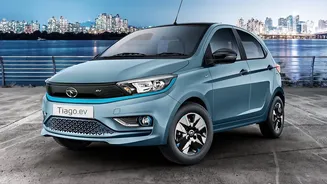
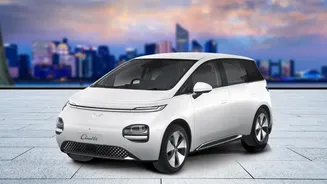
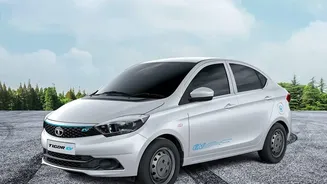
This global trend is particularly significant for India, where price sensitivity is a major factor in car-buying decisions. Currently, entry-level electric cars from brands like Tata Motors and MG, such as the Tiago EV and Comet EV, are priced under ₹10 lakh. While impressive, bringing these prices even lower is key to mass adoption. Lower battery costs will empower manufacturers like Tata, Mahindra, and incoming players like Hyundai and Renault to price their future entry-level EVs more aggressively. Cheaper batteries reduce the upfront price gap between electric and petrol cars, making the long-term savings on fuel and maintenance an even more attractive proposition for Indian buyers. While India is still building its domestic cell manufacturing ecosystem, the fall in global material prices provides an immediate benefit.
The Next Wave: Sodium-Ion and Beyond
The good news doesn't stop with lithium. The industry is actively commercializing the next generation of battery technology: sodium-ion. Sodium is thousands of times more abundant in the Earth's crust than lithium, is geographically widespread, and is significantly cheaper. These batteries don't require lithium, cobalt, or nickel, offering a path to even more affordable and stable energy storage. While they currently offer lower energy density, making them more suitable for stationary storage or compact city cars, the technology is rapidly improving. Chinese manufacturers are already scaling up production, with some batteries demonstrating impressive cycle life and performance in extreme temperatures. As this technology matures, it could provide another powerful tool for driving down the cost of entry-level EVs in India and around the world.